
Oriental fire-bellied toad
Bombina orientalis
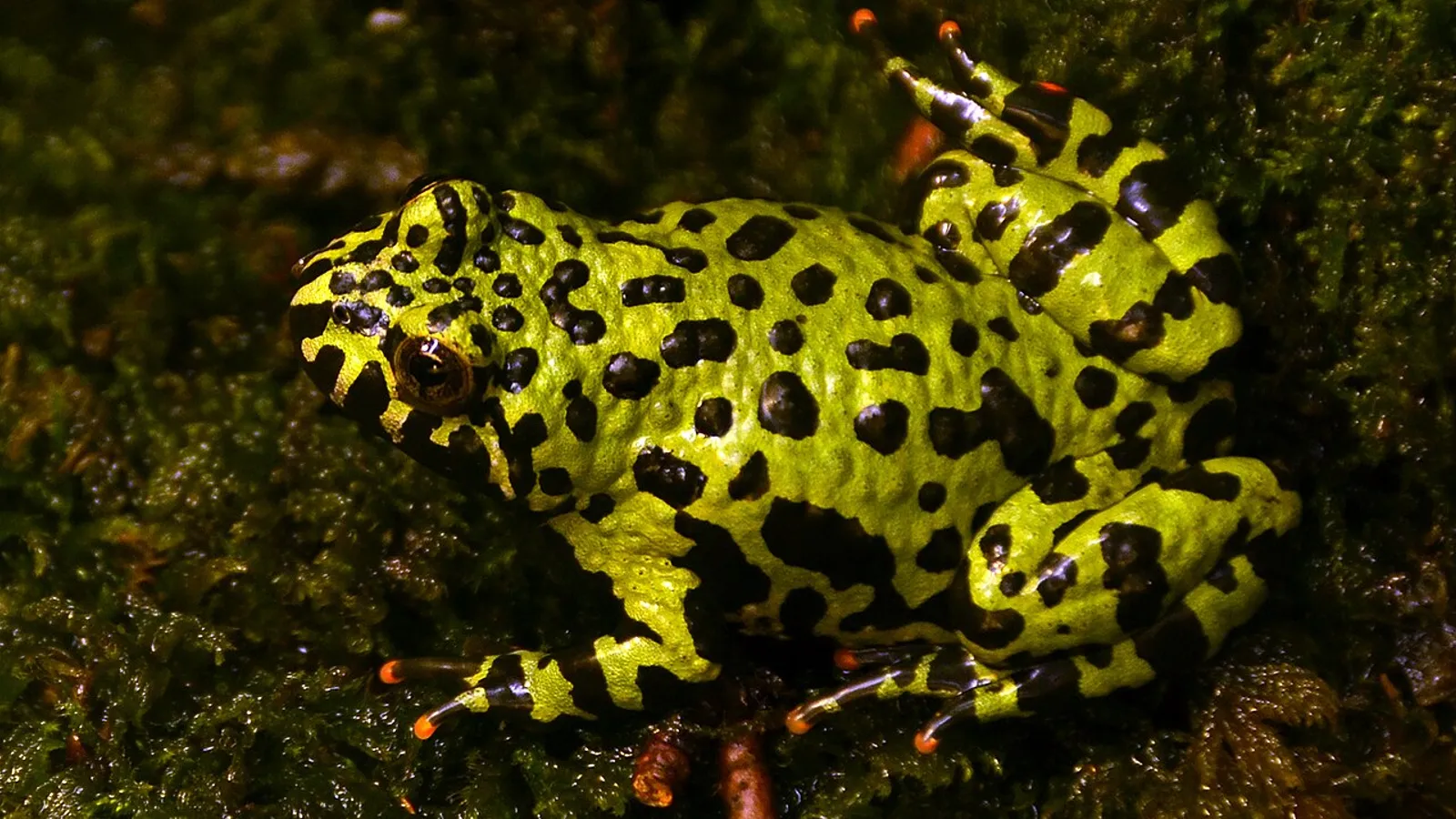
— Where the name comes from
Bombina comes from the Latin bombus, a deep humming, and describes the call: a repeated, hollow “ooh” audible a long way off although produced by an animal five centimetres long. Orientalis names the Far East. The Italian name looks at the same thing; the English and German ones look at the belly.
— Facts
- Group
- Amphibians · Amphibia
- Order
- Frogs and toads
- Habitat
- Pools, rice paddies, slow streams, mountain ditches
- Range
- North-eastern China, Korea, south-eastern Russia
- Size
- 4–7 cm, 15–30 g
- Diet
- Insects, worms, molluscs
- Lifespan
- 20 years in captivity
— Characteristics
- 01
The back is green and warty, the belly orange and black.
- 02
It spends most of the day floating at the surface.
- 03
Its skin secretes an irritant with an extremely bitter taste.
— What sets it apart
Threatened, it arches its back, lifts its legs over its body and shows its belly: the posture is called the unken reflex, and it exists to display all at once a colour that means “I am poisonous”. From its skin, in the 1970s, was isolated bombesin, a peptide that in humans regulates gastric secretion and the sense of fullness: out of a Korean pond came a molecule now studied for obesity and in oncology.
