
Common midwife toad
Alytes obstetricans
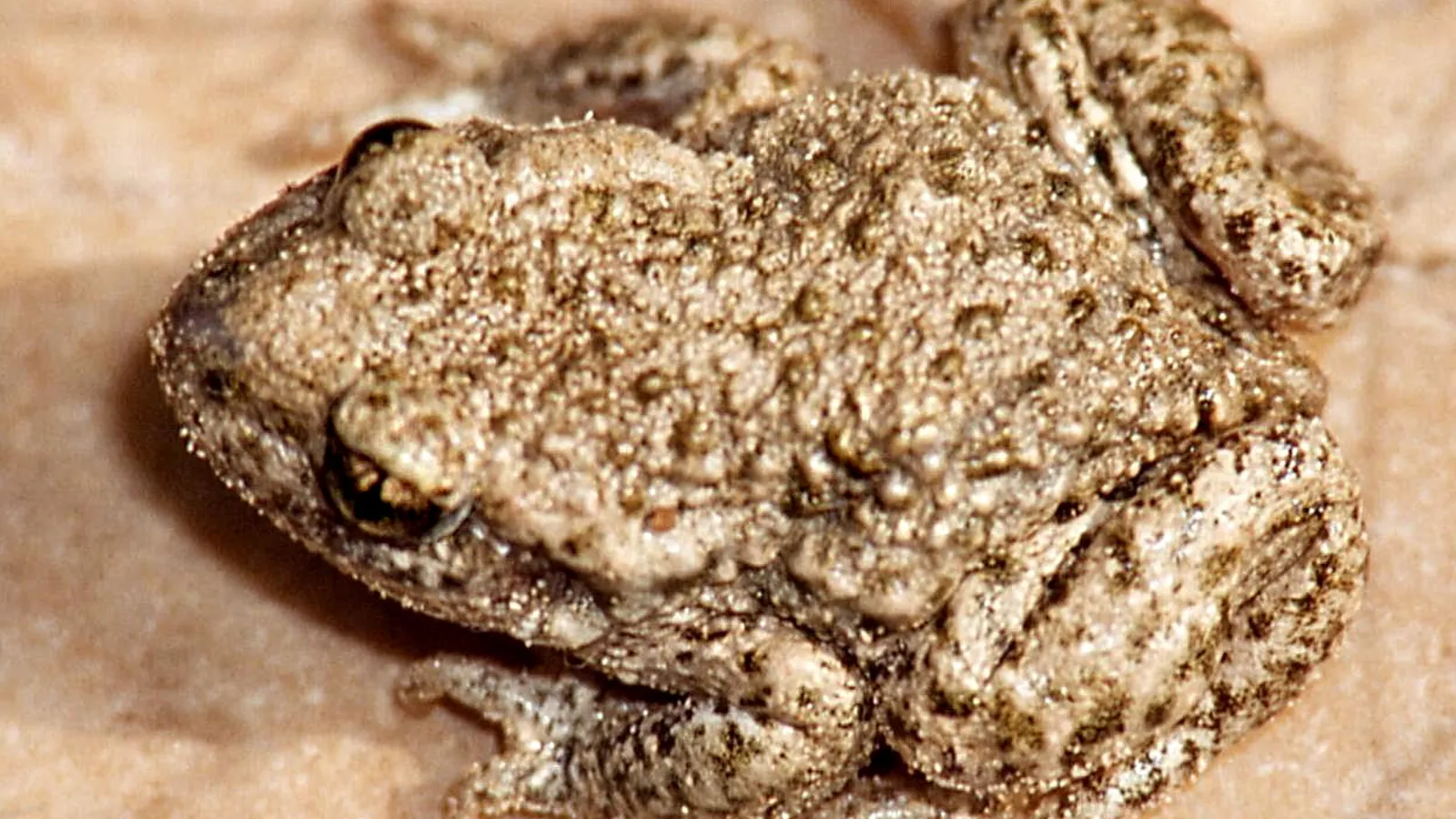
— Where the name comes from
Alytes means “unbound”, from the Greek privative a- and lytós: it refers to the strings of eggs the male winds around his hind legs and does not let go of. Obstetricans means “acting as midwife”, the same idea seen from another side: it was chosen because the male seemed to be helping the female to lay.
— Facts
- Group
- Amphibians · Amphibia
- Order
- Frogs and toads
- Habitat
- Walls, scree, quarries, gardens with water nearby
- Range
- Western Europe: Spain, France, Belgium, Germany, Switzerland
- Size
- 3.5–5.5 cm, 7–12 g
- Diet
- Insects, spiders, earthworms, small slugs
- Lifespan
- 8 years
— Characteristics
- 01
The male carries the eggs wound around his thighs for three to six weeks.
- 02
He wets them by going into water at night and guards them from fungus with his skin.
- 03
The call is a short fluted whistle, repeated at regular intervals.
— What sets it apart
This animal is at the centre of one of biology’s loudest scandals. In the 1920s the Viennese Paul Kammerer claimed to have produced midwife toads that mated in water and developed the nuptial pads of aquatic toads, and that the character passed to their offspring: it would have been proof that acquired characteristics are inherited. In 1926 an American herpetologist examined the last surviving specimen and found that the pads were Indian ink injected under the skin. Kammerer shot himself six weeks later, and who faked the preparation has never been established.
