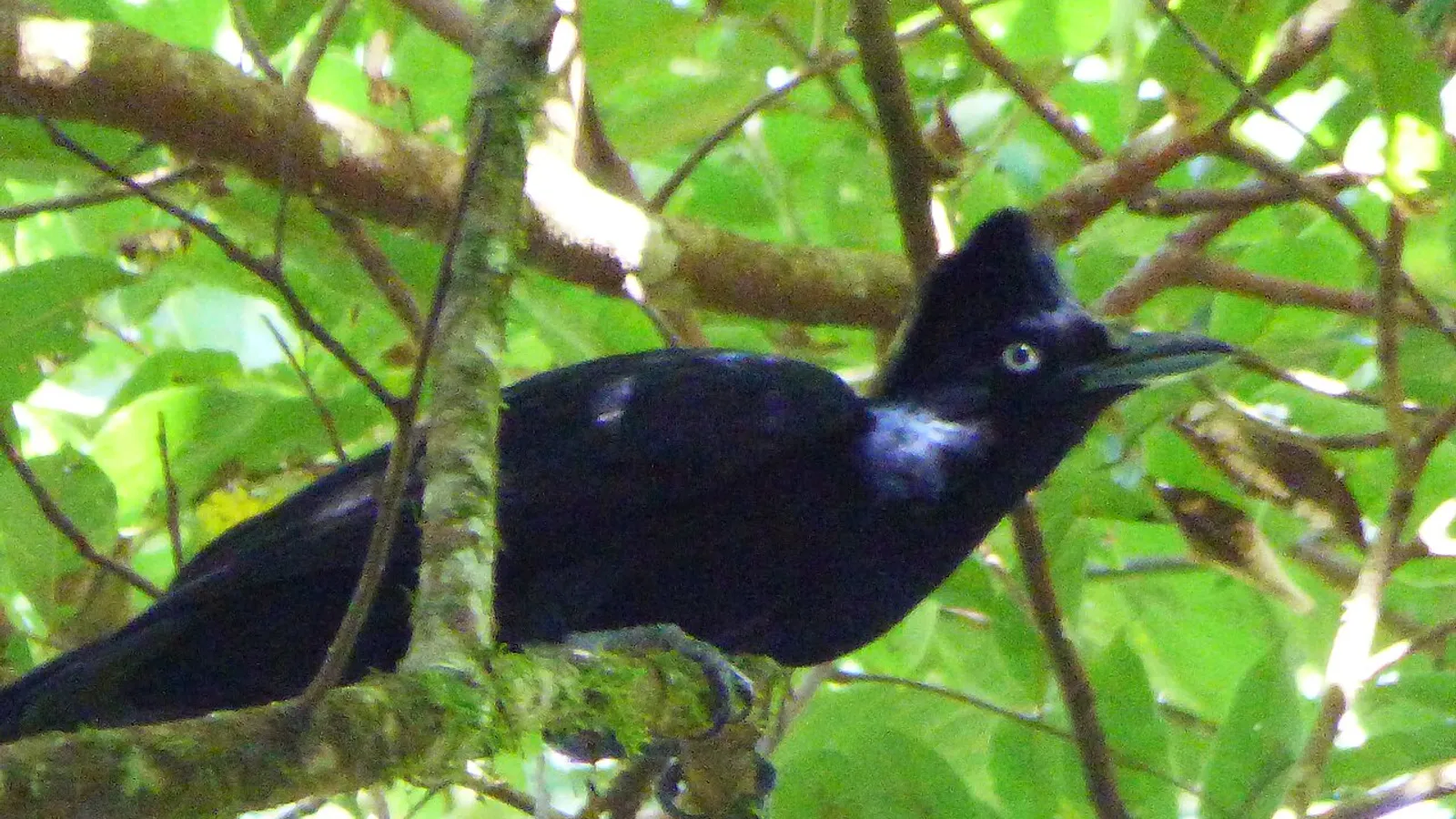
Amazonian umbrellabird
Cephalopterus ornatus
— Where the name comes from
Cephalopterus joins the Greek kephalḗ, “head”, and pterón, “wing, feather”: a head crowned with feathers. Ornatus means “adorned”. The Italian name, “parasol bird”, like the English umbrellabird, describes the male’s crest, which opens above the bill like a little umbrella.
— Facts
- Group
- Birds · Aves
- Order
- Passerines
- Habitat
- Riverside forest and river islands
- Range
- The Amazon basin: Colombia, Ecuador, Peru, Bolivia, Brazil, Venezuela
- Size
- Male 48–51 cm, about 570 g; female smaller
- Diet
- Fruit, large insects, small vertebrates
- Lifespan
- Not precisely known
— Characteristics
- 01
The male has an umbrella-shaped crest and a long feathered wattle on the breast.
- 02
It gives a deep boom by inflating its throat.
- 03
It moves with an undulating flight from one river island to another.
— What sets it apart
It is the largest of the cotingas, the South American family that also includes the Andean cock-of-the-rock and the bellbirds, famous for having one of the loudest calls in the world. The male shows off at dawn on a high branch: he opens his crest until it covers his bill, stretches the feathered wattle hanging from his breast and gives a hollow boom, amplified by his swollen throat. With his black feathers and open crest, seen against the light, he really does look like a small umbrella perched on a branch.