
Superb lyrebird
Menura novaehollandiae
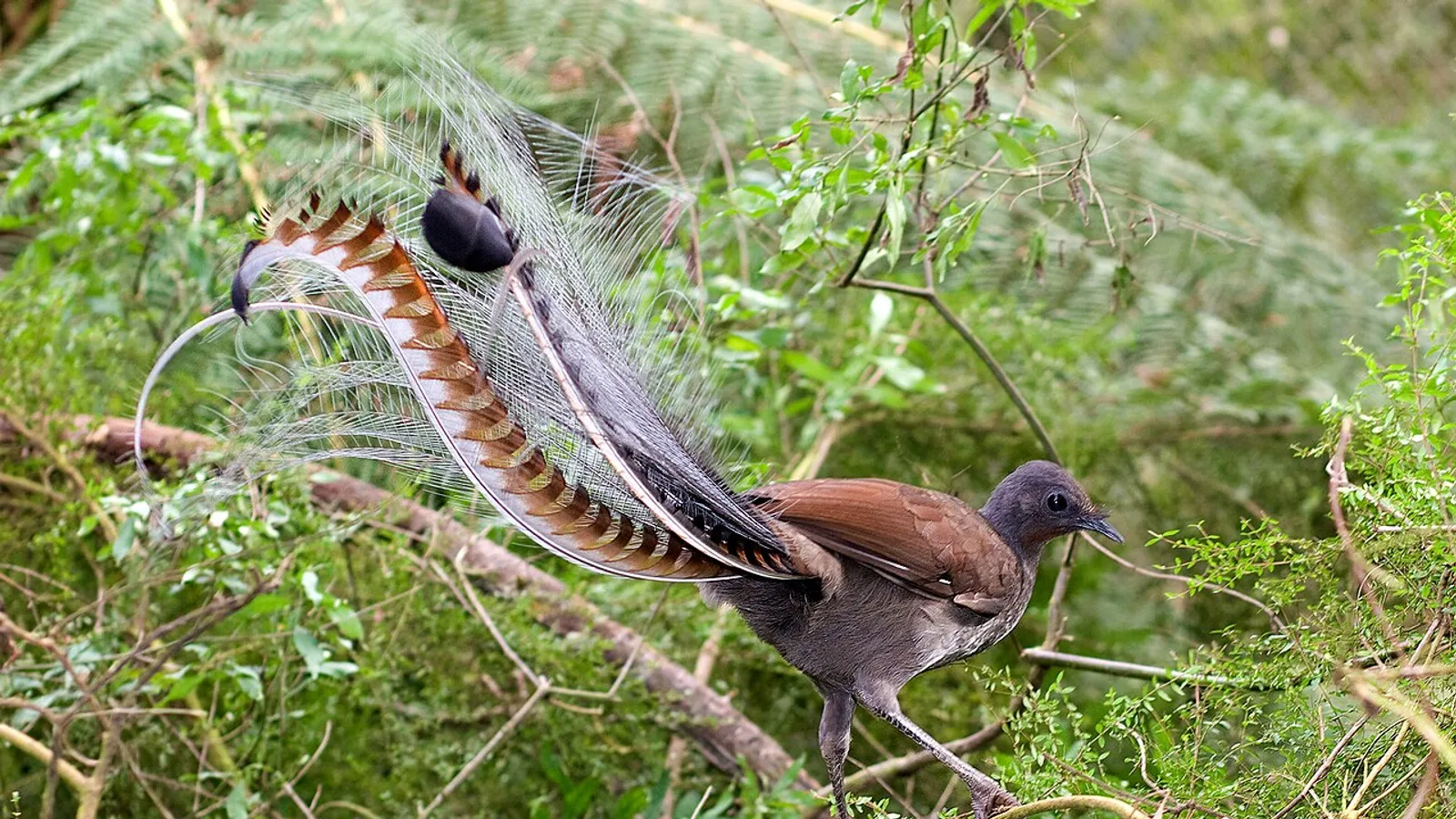
— Where the name comes from
Menura is “moon tail”, from the Greek mḗnē, the crescent moon, and ourá: the outer tail feathers carry crescent-shaped markings. Novaehollandiae means “of New Holland”, the name Australia carried on European maps before the present one prevailed. The common name comes from the shape the tail takes when the male raises it: that of a Greek lyre.
— Facts
- Group
- Birds · Aves
- Order
- Passerines
- Habitat
- Wet forest and fern-filled understorey
- Range
- South-eastern Australia
- Size
- 80–100 cm including the tail, 0.9–1.1 kg
- Diet
- Insects, earthworms, spiders, grubs dug from the leaf litter
- Lifespan
- 30 years in the wild
— Characteristics
- 01
It barely flies: it runs and hops between the trunks.
- 02
The male builds mounds of earth to stand on while singing.
- 03
It turns over the forest floor like a plough, shifting tonnes of litter.
— What sets it apart
It imitates what it hears, and its fame rests on a misunderstanding. The famous films in which it reproduces chainsaws, camera shutters and car alarms almost always involve birds raised in captivity, which had those sounds around them all day; in the wild it imitates mostly other birds, with an accuracy that fools the birds themselves. The truly remarkable thing is something else: in some populations, musical phrases belonging to no Australian species have been passed down for decades, learned once and handed on from generation to generation like a tradition.
