
Satin bowerbird
Ptilonorhynchus violaceus
— Where the name comes from
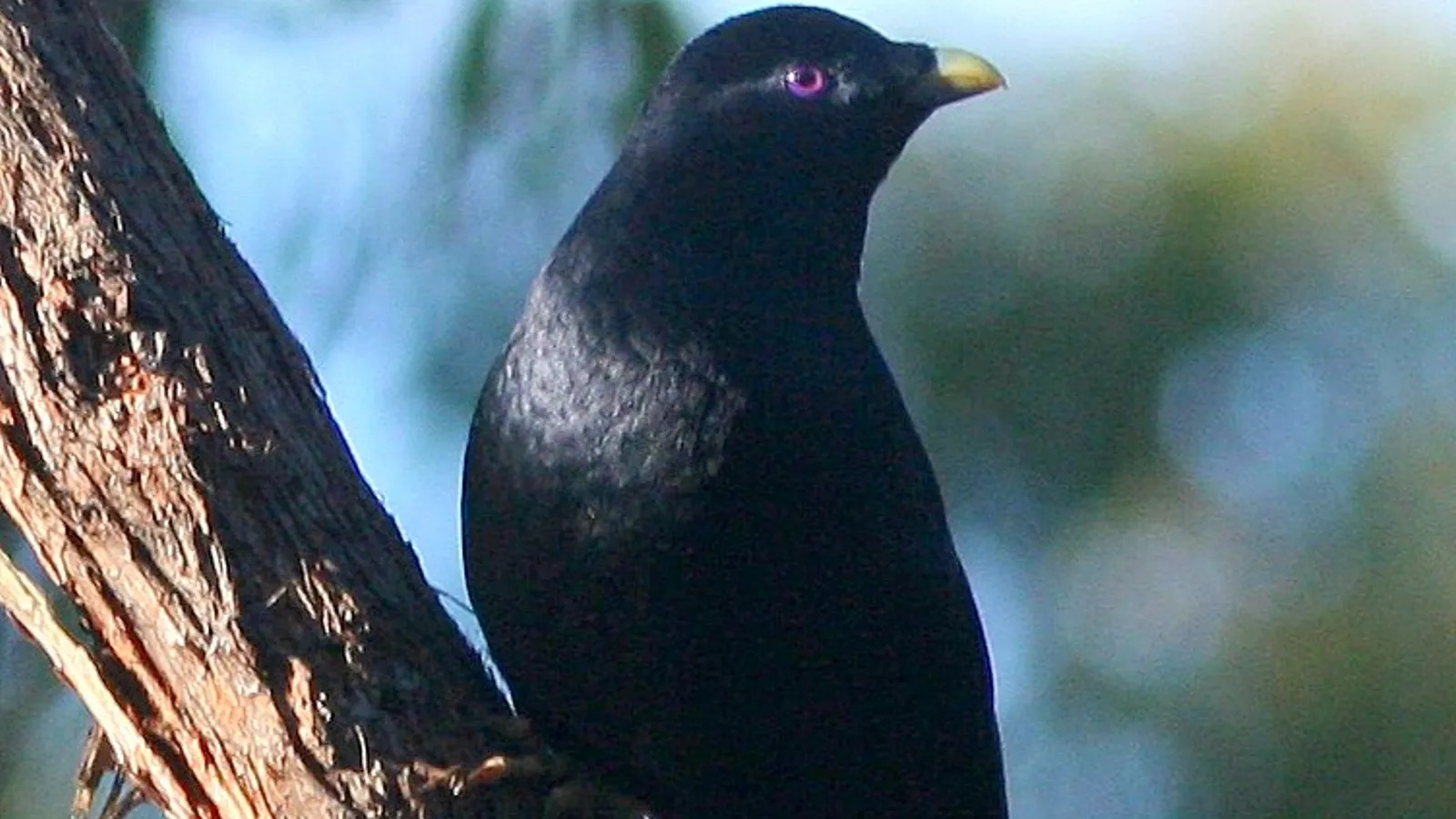
Ptilonorhynchus is “feather bill”, from ptílon and rhýnchos, for the small feathers covering the base of the bill. Violaceus describes the glossy blue-black of the adult male, which takes him seven years to acquire. The common name comes from the structure he raises on the ground: it is not a nest, it is a theatre, and the naturalists of the nineteenth century called it a bower.
— Facts
- Group
- Birds · Aves
- Order
- Passerines
- Habitat
- Rainforest and sclerophyll forest, edges, gardens
- Range
- Eastern Australia
- Size
- 27–33 cm, 170–290 g
- Diet
- Fruit, leaves, insects, seeds
- Lifespan
- 20 years in the wild
— Characteristics
- 01
The male builds two vertical walls of twigs and dances in the avenue between them.
- 02
He collects blue objects: straws, bottle caps, pegs, parrot feathers.
- 03
He paints the walls with chewed fruit pulp using a piece of bark.
— What sets it apart
He arranges the objects so that his audience sees what he wants it to see. Females look down the avenue of twigs from one precise spot, and males set the nearer objects small and the further ones large, in increasing order, so that from the female’s viewpoint they all appear the same size: the scene reads as smaller and more regular than it is, and the male at the centre as larger. If a researcher moves the objects, the male has the perspective back in order within three days.
