
Australian zebra finch
Taeniopygia castanotis
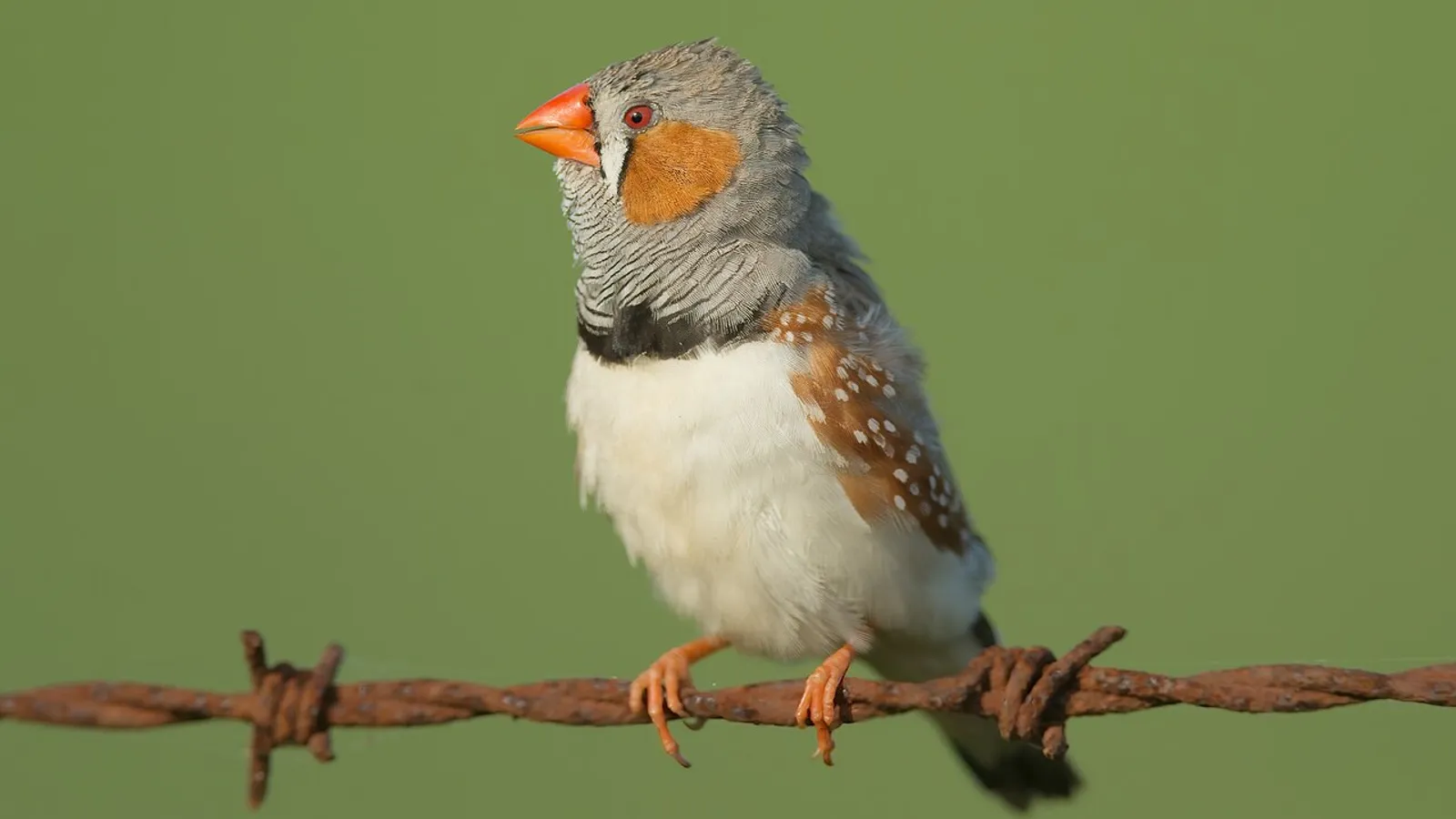
— Where the name comes from
Taeniopygia is “banded rump”, from tainía, the ribbon, and pygḗ; castanotis means “chestnut-eared”, for the rusty patch on the male’s cheek. Until a few years ago the Australian species was confused with the one from the Lesser Sunda Islands and carried its name: the split is recent, and for half a century of scientific papers the most studied bird in the world’s laboratories was called by somebody else’s name.
— Facts
- Group
- Birds · Aves
- Order
- Passerines
- Habitat
- Arid grassland, scrub, farmland near water
- Range
- Mainland Australia
- Size
- 10–11 cm, 10–16 g
- Diet
- Grass seeds, shoots, the occasional insect
- Lifespan
- 5 years in the wild
— Characteristics
- 01
It nests as soon as it rains, wherever it happens to be, with no fixed season.
- 02
The male learns his song from an adult within three months and never changes it.
- 03
It lives in noisy flocks and forms pairs that last for life.
— What sets it apart
It speaks to its young before they are born. When the heat passes twenty-six degrees the parents give a particular call over the eggs, unlike any of their others, and the chicks that heard it hatch and grow smaller — which in a desert is an advantage, because a small body sheds heat better. As adults, those same individuals choose to nest in the hotter places. It is one of the clearest cases ever documented of a parent tuning a child’s development with a sound, before the child exists as an animal at all.
