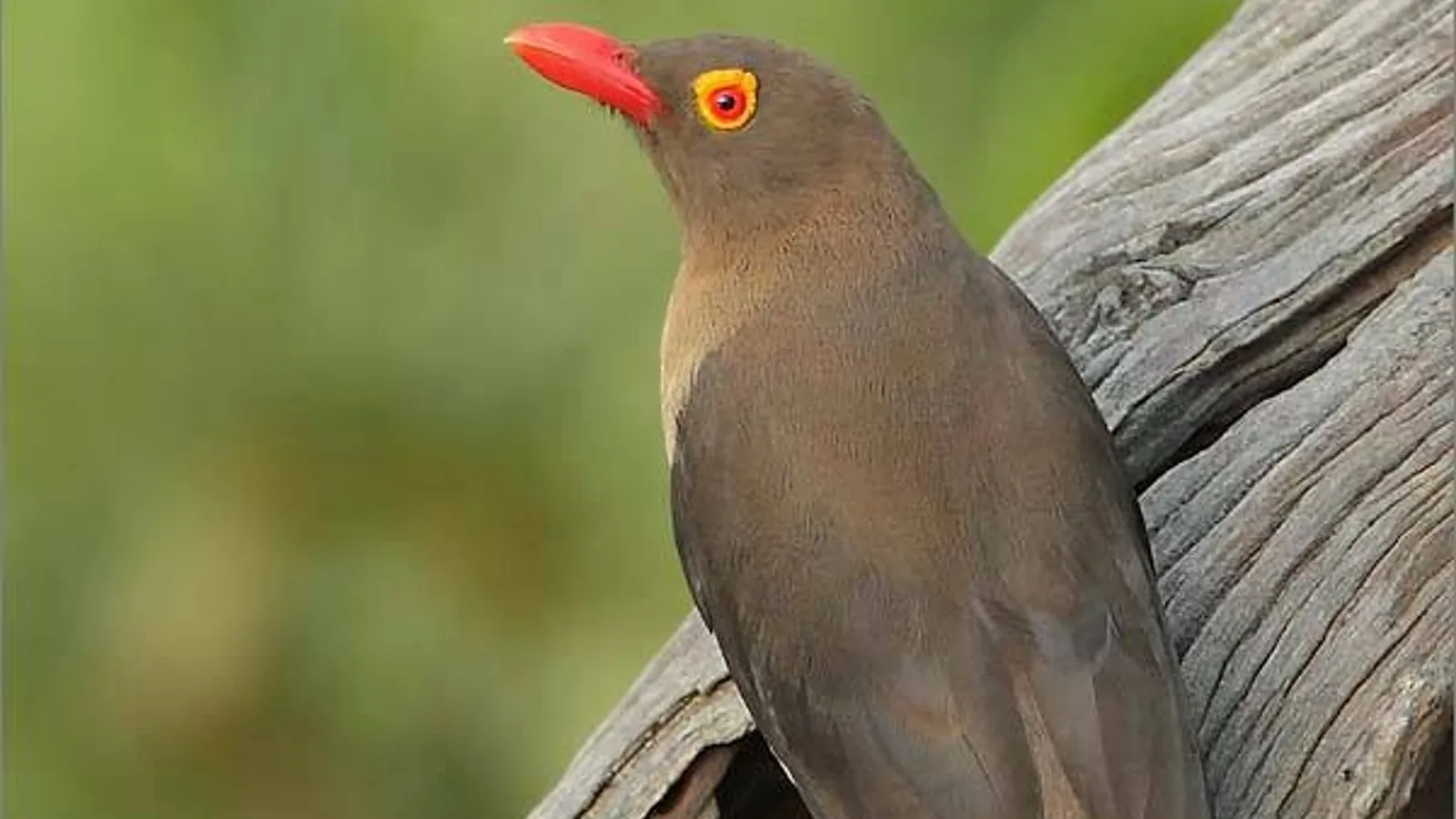
Red-billed oxpecker
Buphagus erythrorynchus
— Where the name comes from
Buphagus is “ox-eater”, from boûs and phageîn, and in Greek myth it was the name of a hero destroyed by his own hunger. Erythrorynchus means “red-billed” and separates this species from its yellow-billed relative. Every language defines this bird by the animal it happens to be sitting on.
— Facts
- Group
- Birds · Aves
- Order
- Passerines
- Habitat
- Savannah and pasture with large mammals
- Range
- Eastern and southern Africa
- Size
- 19–21 cm, 42–59 g
- Diet
- Ticks, larvae, blood and tissue from wounds, earwax
- Lifespan
- 15 years in the wild
— Characteristics
- 01
It sleeps clinging to the neck or armpit of hoofed animals.
- 02
The bill is flattened sideways to comb the coat and lever off ticks.
- 03
It nests in cavities lined with hair pulled from the animals it rides.
— What sets it apart
Its relationship with its hosts is not the fable it is made out to be: besides ticks it eats the tissue of wounds and keeps them open, and in some experiments animals that could not shake it off healed more slowly. But in 2020 the other half was measured: black rhinos carrying oxpeckers detected an approaching human far more often and from much further away than those without, warned by the alarm call. The Shona name for the bird in Zimbabwe is askari wa kifaru, the rhino’s guard.