
Blue jay
Cyanocitta cristata
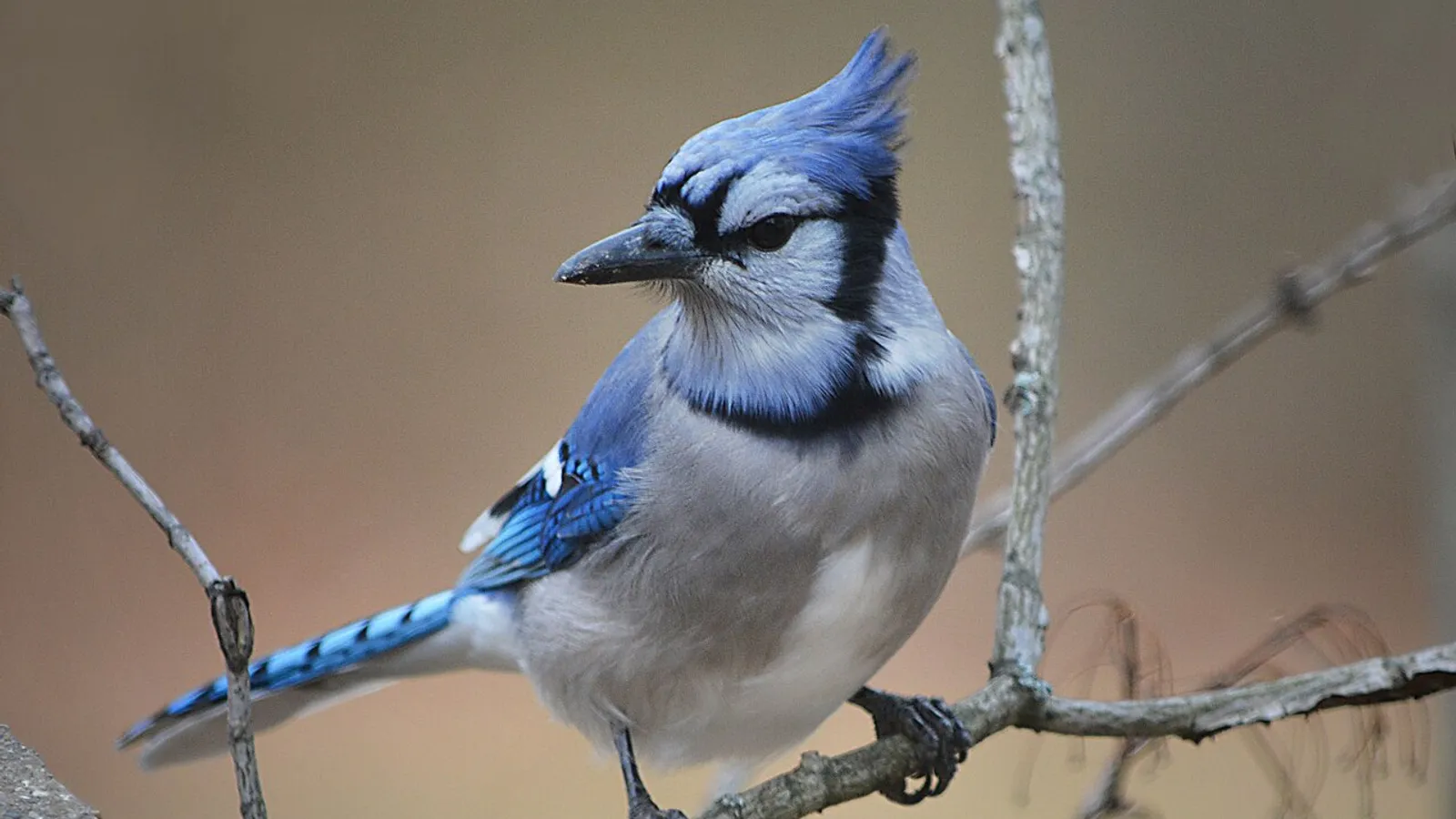
— Where the name comes from
Cyanocitta joins the Greek kýanos, blue, to kítta, which was the name of the jay; cristata is Latin for the crest it raises when agitated. The blue of its feathers is not a pigment: no blue colourant exists in any bird’s plumage, and what one sees is light scattered by a microscopic keratin structure full of air pockets. Crush a feather of this species and the colour is gone.
— Facts
- Group
- Birds · Aves
- Order
- Passerines
- Habitat
- Oak and beech woodland, town parks, gardens
- Range
- Eastern and central North America
- Size
- 22–30 cm, wingspan 34–43 cm, 70–100 g
- Diet
- Acorns, beech mast, insects, eggs, nestlings
- Lifespan
- 7 years in the wild
— Characteristics
- 01
It imitates the scream of the red-shouldered hawk to clear a bird table.
- 02
It carries up to five acorns at a time in its throat.
- 03
Pairs stay together all year and travel together.
— What sets it apart
When the ice withdrew from North America, oaks moved north towards Canada at a speed the models could not account for: an acorn falls under its tree, and a squirrel does not take it far. The blue jay carries one as much as four kilometres and buries it in an open, sunny spot — which is exactly where an oak needs to be to grow. The oak forests of eastern America are, in large part, an archive of forgotten acorns.
