
Greater bird-of-paradise
Paradisaea apoda
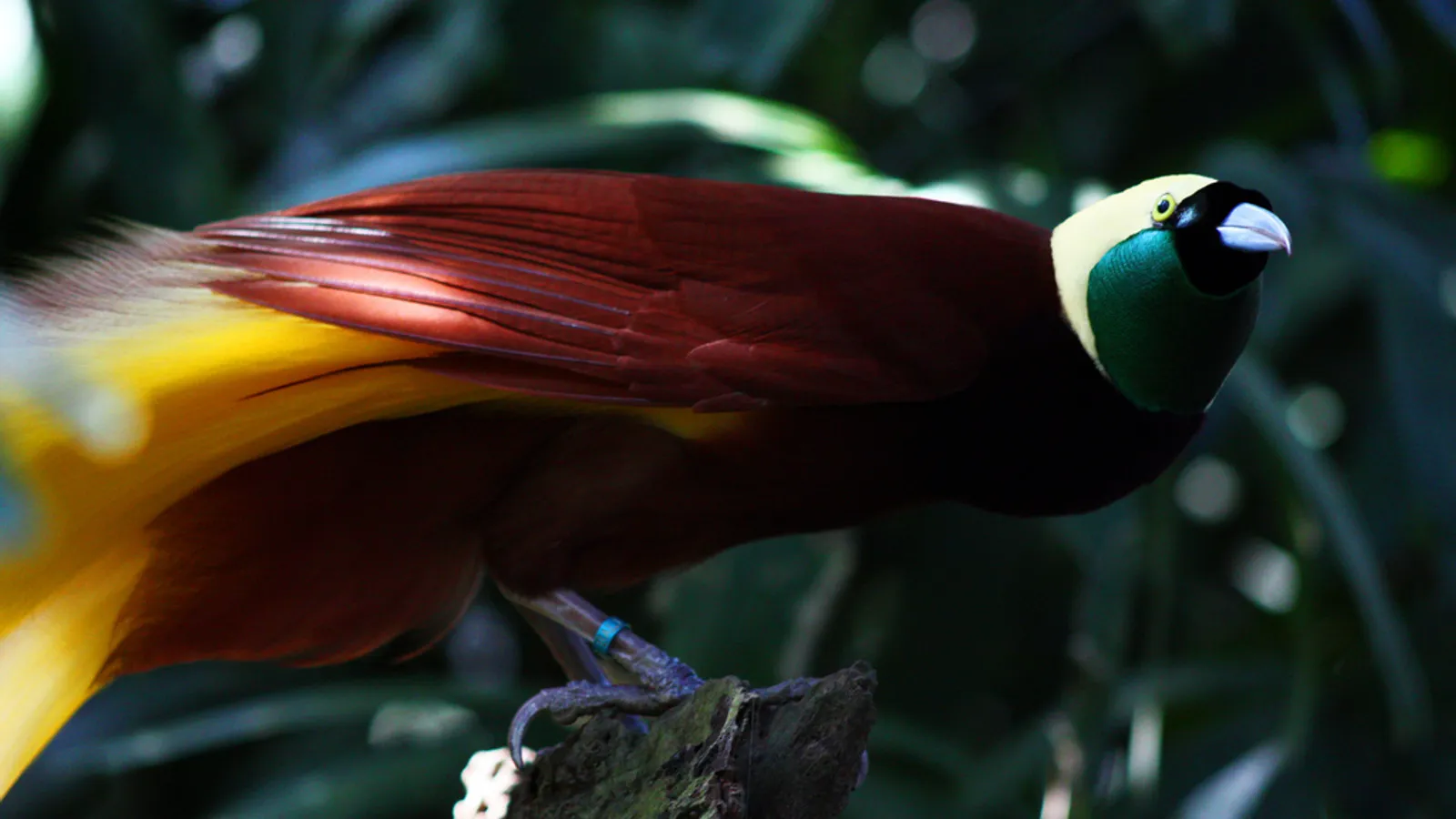
— Where the name comes from
Paradisaea points to paradise, the heavenly place where these birds were believed to live without ever alighting. The epithet apoda, from the Greek privative a- and poús, podós, “foot”, means literally “without feet”: the first specimens to reach Europe in the 16th century were dried skins prepared by Malay traders, who cut off the legs and wings. Convinced the animal never touched the ground, naturalists imagined creatures perpetually in flight, fed on dew alone. Linnaeus fixed the error in the scientific name for ever.
— Facts
- Group
- Birds · Aves
- Order
- Passerines
- Habitat
- Lowland and hill tropical rainforest.
- Range
- South-eastern New Guinea and the Aru Islands, introduced to Little Tobago.
- Size
- 43 cm of body, up to 100 cm in the male with the ornamental plumes; 170–300 g
- Diet
- Omnivore — fruit, berries and arthropods
- Lifespan
- Little known in the wild, up to about 30 years in captivity
— Characteristics
- 01
Only the adult male carries the famous spray of long yellow-orange flank feathers.
- 02
The birds gather at “leks”, traditional trees where the males compete in collective displays.
- 03
The female, brown and unadorned, chooses her mate by judging posture, colour and vigour.
— What sets it apart
The male’s courtship is an acrobatic inversion: hanging head down from a branch, he spreads the ornamental plumes into a cascade that hides his body, turning himself into a flower of quivering feathers. For generations Europeans knew this species only through mutilated skins, and the missing legs fed the myth of a bird that was born, lived and died without ever leaving the sky. Only direct observation in the forest gave it back the feet that science had taken away.
