
Great spotted woodpecker
Dendrocopos major
— Where the name comes from
Dendrocopos joins the Greek déndron, “tree”, and kópos, “blow, beating”, from kóptein, “to strike”: literally “the one who beats on trees”. The epithet major sets it apart by size from smaller relatives such as the lesser spotted woodpecker. The Italian picchio comes from the verb picchiare, to knock, and traces the same gesture: the rhythmic drumming against wood that rings through the spring woods.
— Facts
- Group
- Birds · Aves
- Order
- Woodpeckers and toucans
- Habitat
- Broadleaf and coniferous woodland, parks and wooded gardens.
- Range
- Most of Eurasia, from the British Isles to Japan, and North Africa.
- Size
- 22–23 cm, wingspan 34–39 cm; 70–98 g
- Diet
- Omnivore — wood-boring grubs, conifer seeds, eggs and nestlings
- Lifespan
- Usually a few years, up to about 11
— Characteristics
- 01
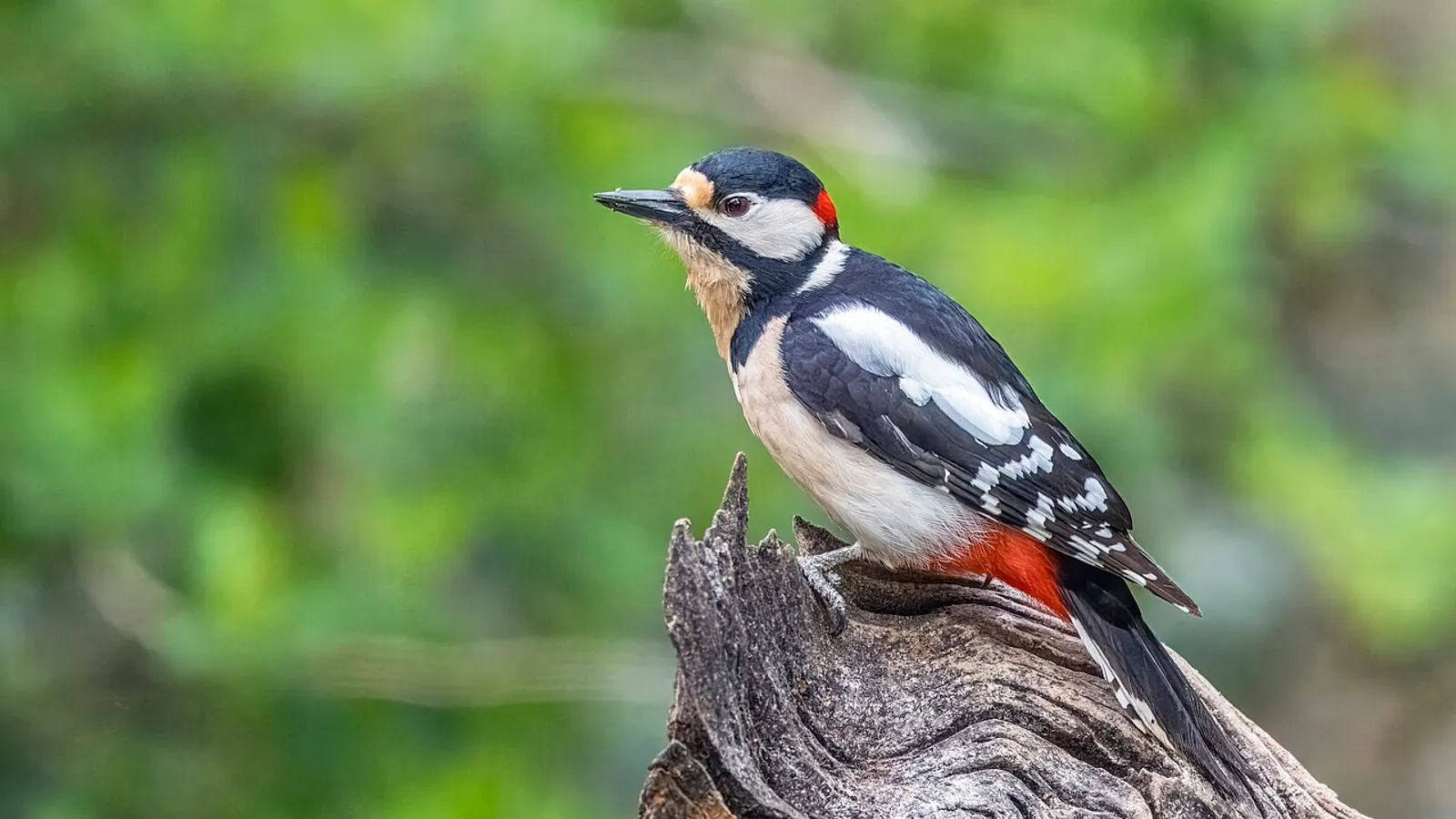
The male is told by a red patch on the nape, absent in the female.
- 02
The drumming, up to twenty strikes in under a second, marks territory rather than excavating.
- 03
Skull and bill rest on shock-absorbing structures that take up the repeated impacts against wood.
— What sets it apart
The woodpecker’s tongue is a hidden marvel: up to three times the length of the bill, it coils inside the skull, running around the back of the head and anchoring near the nostril. Everted, it reaches into galleries in the wood to harpoon grubs with a horny, sticky tip. The same bone-and-muscle sheath that houses this extraordinary tongue also serves as padding against the violent decelerations of the drumming.
