
Great blue turaco
Corythaeola cristata
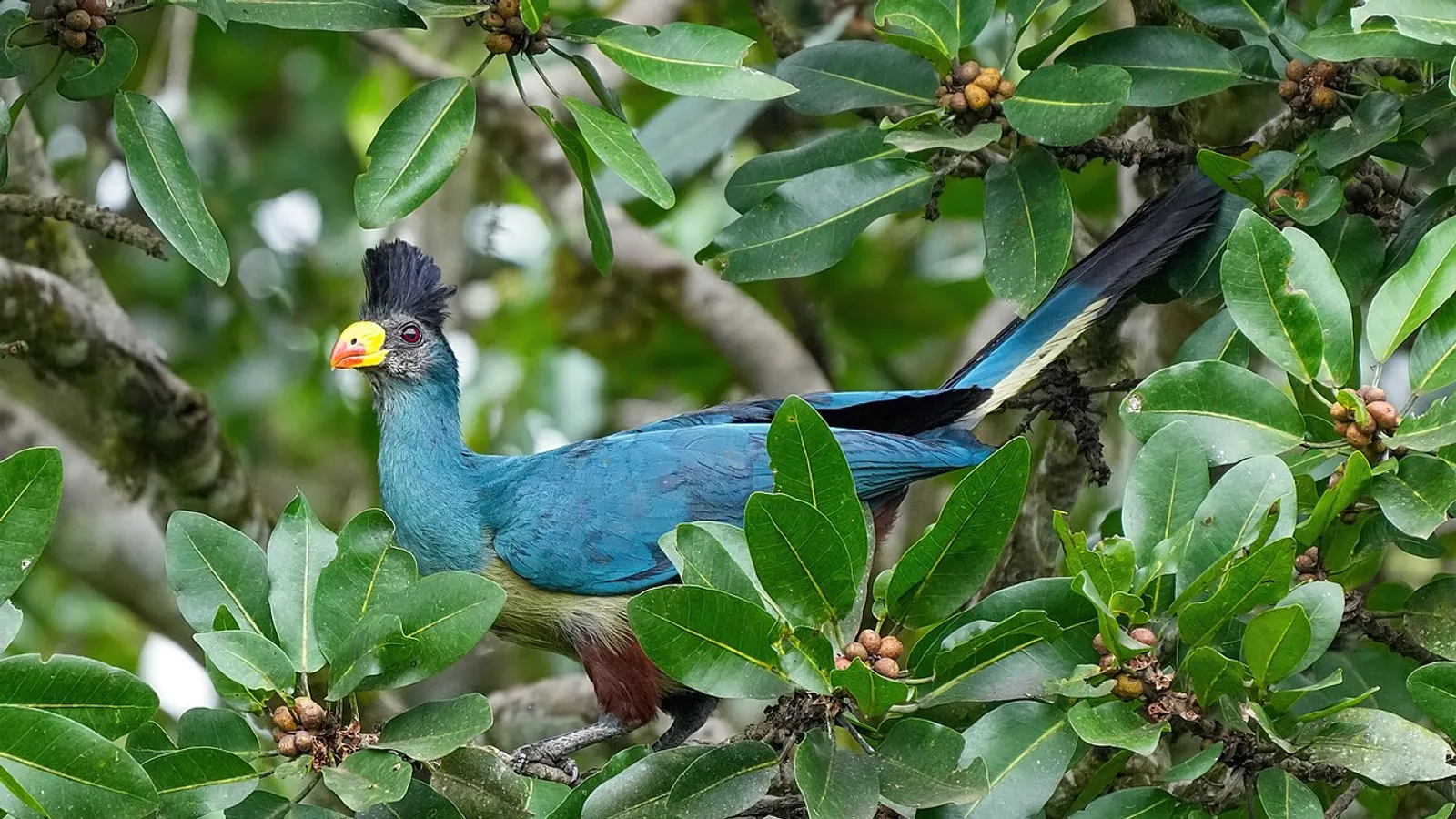
— Where the name comes from
Corythaeola comes from the Greek kórys, the helmet, for the stiff black crest it carries; cristata says the same thing again in Latin. The order is called Musophagiformes, “banana-eaters”, after an old and mistaken conviction: turacos do eat fruit, but hardly ever bananas, and the name survives out of nineteenth-century inertia.
— Facts
- Group
- Birds · Aves
- Order
- Turacos
- Habitat
- Primary and secondary rainforest, gallery forest
- Range
- Central and West Africa, from Guinea to Kenya
- Size
- 70–75 cm, 0.8–1.2 kg
- Diet
- Fruit, leaves, flowers, shoots
- Lifespan
- 15 years in captivity
— Characteristics
- 01
It is the largest of the turacos: you hear it coming by the rush of its wings.
- 02
It runs along branches like a squirrel instead of flying from tree to tree.
- 03
The call is a deep booming that carries across the forest.
— What sets it apart
Turacos possess two pigments that exist in no other animal in the world: turacin, which is red and contains copper, and turacoverdin, which is green. It is very nearly unique — in the rest of the birds, green and blue arise from the microscopic structure of the feather and from light, not from a dye. Because turacin is soluble, it was said in the nineteenth century that turacos ran in the rain; that is an exaggeration, but the substance really is fragile enough to leave traces in the water the bird bathes in.
