
European nightjar
Caprimulgus europaeus
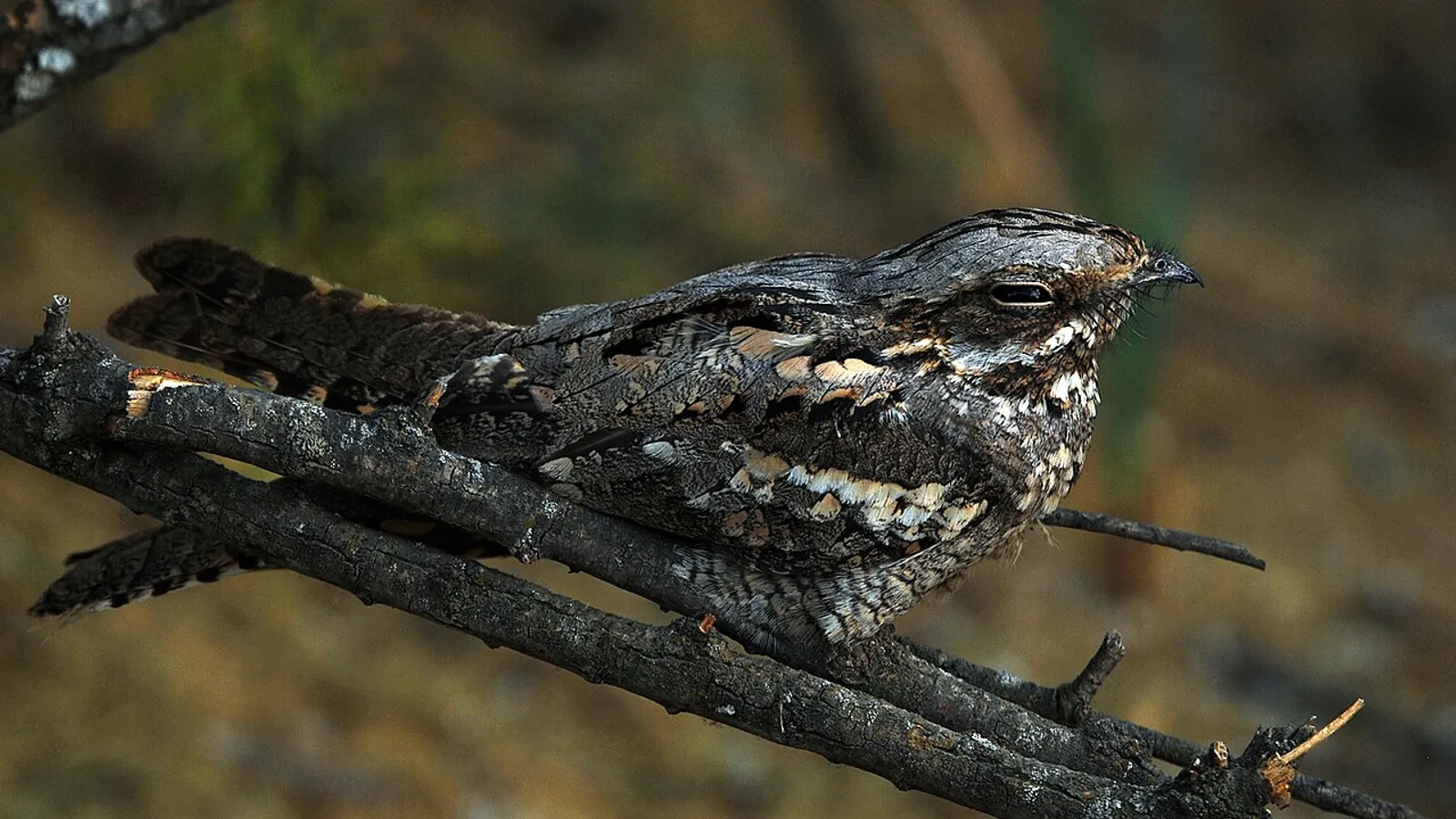
— Where the name comes from
Caprimulgus means “goat-milker”, from capra and mulgere, and comes from a tale Aristotle reports and Pliny repeats: these birds were said to enter the folds at night to suck milk, and the goats they visited went blind. It is false from beginning to end — they follow livestock for the insects it stirs up — but the scientific name has fixed the slander for ever, and the Italian name translates it.
— Facts
- Group
- Birds · Aves
- Order
- Nightjars
- Habitat
- Heathland, open pinewoods, clearings, Mediterranean scrub
- Range
- Europe, North Africa and western Asia; winters in southern Africa
- Size
- 24–28 cm, wingspan 52–59 cm, 51–101 g
- Diet
- Moths and beetles taken in flight
- Lifespan
- 11 years in the wild
— Characteristics
- 01
By day it lies motionless along a branch, lengthways, and disappears.
- 02
It opens an enormous mouth fringed with bristles that work as a funnel.
- 03
Its song is a continuous mechanical churring that runs for minutes without a break.
— What sets it apart
The legend of the milked goat has ended up in every language in Europe, but the truly extraordinary thing about this family nobody had imagined: an American relative, the common poorwill, is the only bird in the world that truly hibernates. It spends months wedged in a rock crevice with its body temperature down to five degrees, almost impossible to rouse. The Hopi called it “the sleeping one”, and when an ornithologist found one in California in 1946 he had to convince his colleagues that it was not dead.
