
Tawny frogmouth
Podargus strigoides
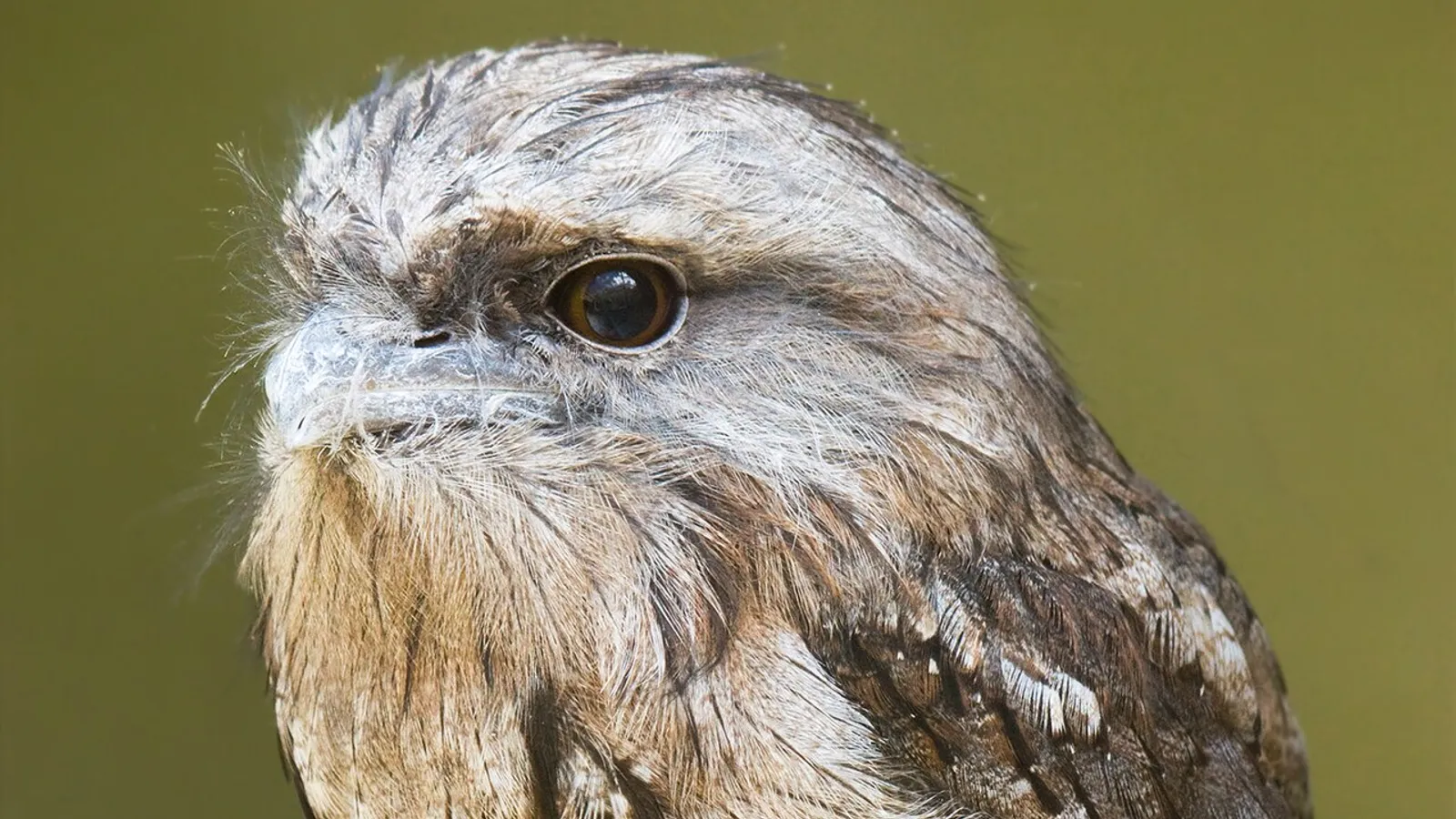
— Where the name comes from
Podargus comes from the Greek podargós, “swift-footed”, which in Homer is the name of one of Achilles’ horses: applied to a bird with tiny and nearly useless feet it is a choice nobody has ever managed to explain. Strigoides means “owl-like”, and that is wrong too: it is not a bird of prey and is related to none of them.
— Facts
- Group
- Birds · Aves
- Order
- Frogmouths
- Habitat
- Eucalypt woodland, parks, suburban gardens
- Range
- Australia and Tasmania
- Size
- 35–53 cm, 157–555 g
- Diet
- Insects, spiders, snails, small vertebrates taken on the ground
- Lifespan
- 14 years in the wild
— Characteristics
- 01
The bill is broad and flat like a frog’s mouth, not hooked.
- 02
It takes prey with the bill and not with its feet, which are weak.
- 03
It builds a twig platform so thin as to be nearly transparent.
— What sets it apart
By day it stops being a bird. It settles against a broken branch, stretches its neck, lines its bill up with the wood, half-closes its eyes leaving a slit to watch through, and stays put even if somebody passes a metre away: the plumage reproduces the bark grain for grain. It is one of the most effective camouflages in the animal world, and it works so well that in Australian photographic surveys this species ranks among the most photographed birds — precisely because, once found, it stays there to be portrayed.
