Little grebe
Tachybaptus ruficollis
— Where the name comes from
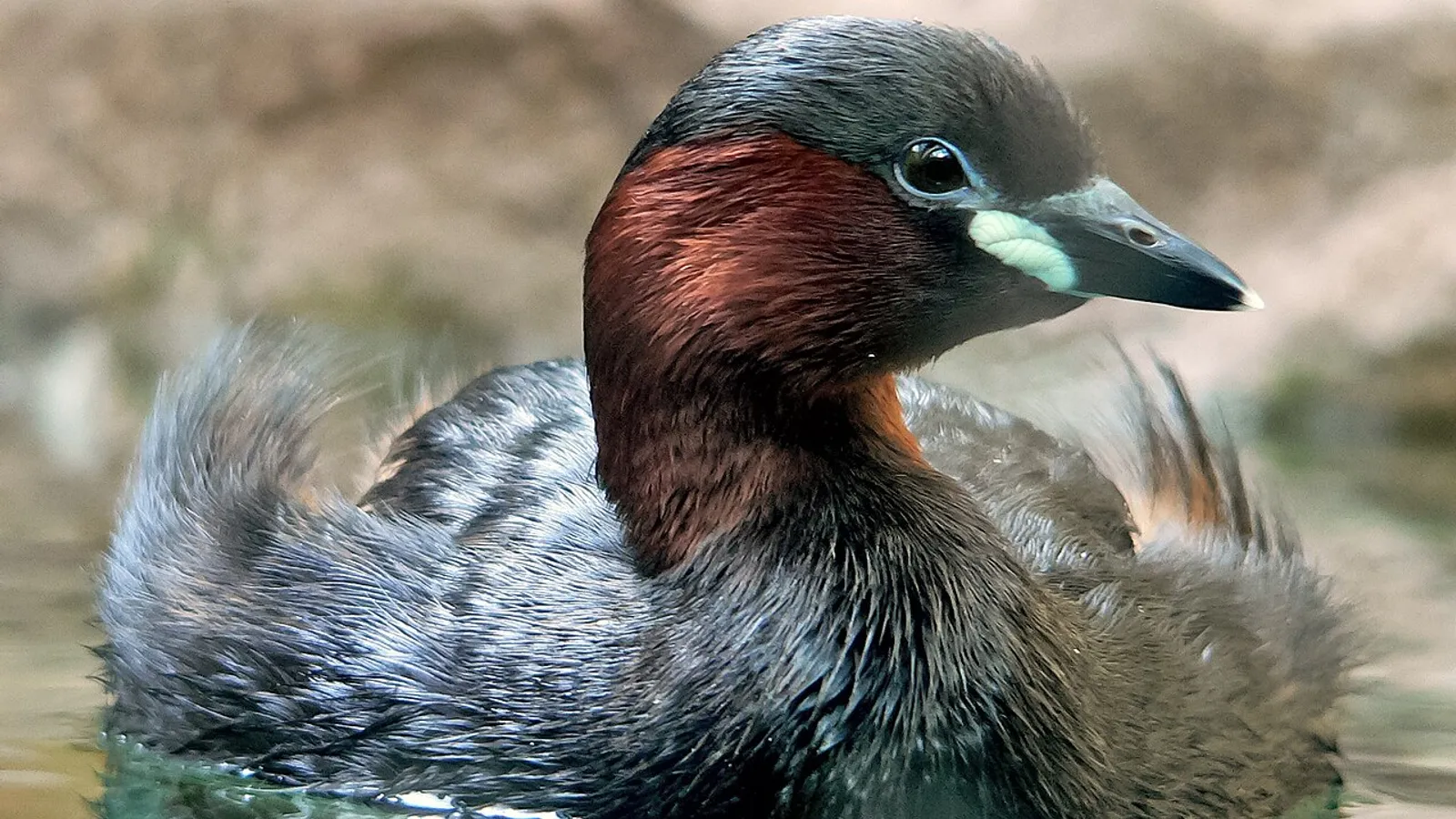
Tachybaptus joins the Greek tachýs, “swift”, and báptō, “to dip”: “the quick diver”, which vanishes underwater in an instant as soon as it feels watched. Ruficollis means “red-necked”, as it looks in breeding plumage. The Italian name is a diminutive of tuffo, “dive”: the smallest diver in our waters.
— Facts
- Group
- Birds · Aves
- Order
- Grebes
- Habitat
- Ponds, small lakes, canals, slow rivers with vegetation
- Range
- Europe, Africa, Asia to New Guinea
- Size
- 23–29 cm, 130–235 g
- Diet
- Aquatic insects and larvae, small fish, tadpoles
- Lifespan
- Up to 13 years
— Characteristics
- 01
Its legs are set far back, perfect for swimming but clumsy on land.
- 02
Its toes are not webbed but lobed, with flaps of skin along the sides.
- 03
It builds a floating nest anchored to vegetation.
— What sets it apart
It eats its own feathers. All grebes do, and the chicks are given feathers by their parents from their first days: in the stomach the feathers form a felt that wraps fish bones and the hard shells of insects, and is then brought up as a pellet. Without that filter the sharp bones would reach the intestine. When the chicks are small it carries them on its back, hidden among its feathers.