Common loon
Gavia immer
— Where the name comes from
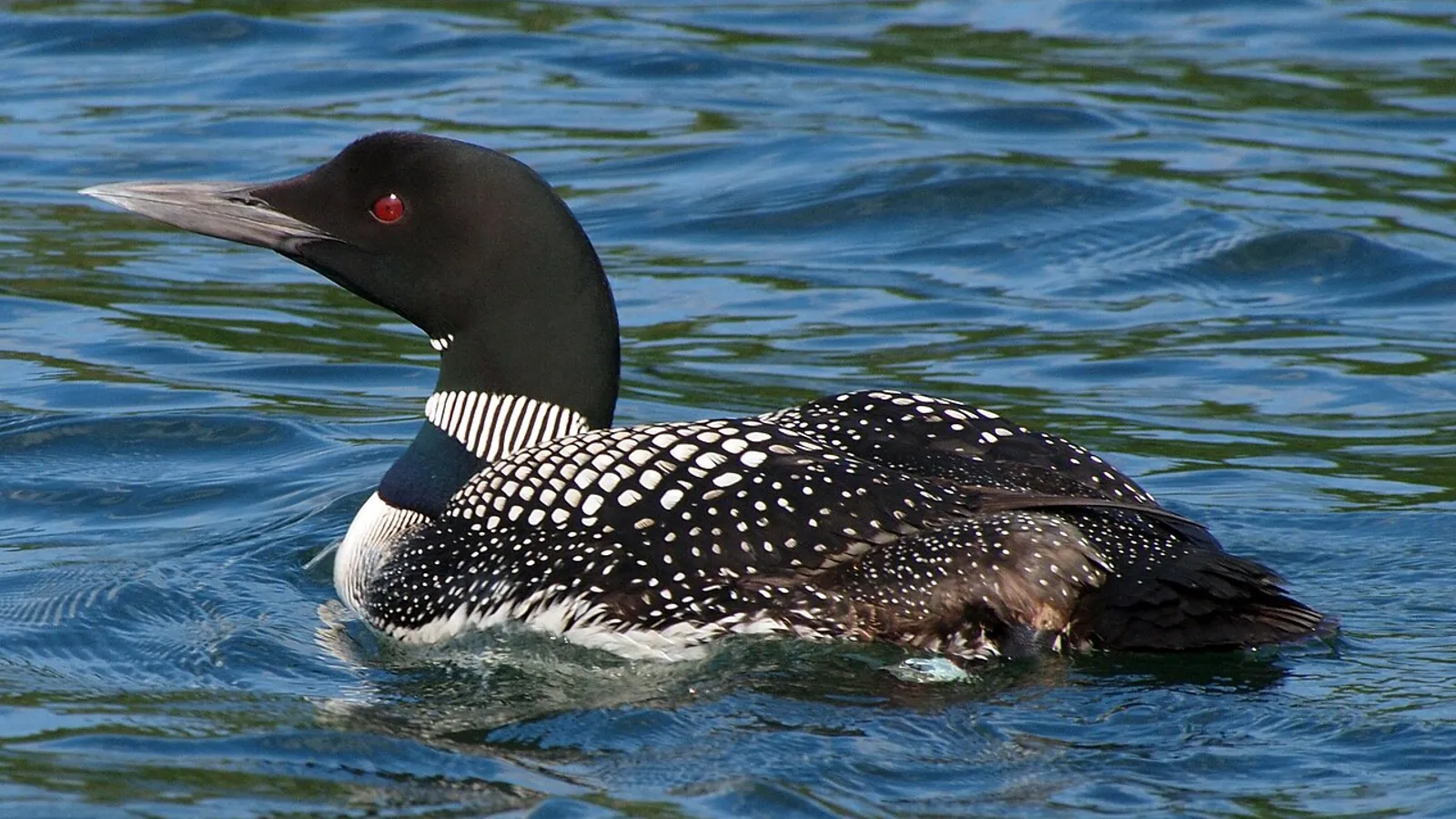
Gavia was, for Pliny, a seabird of uncertain identity. Immer comes from the Scandinavian languages, where it already named this bird, and shares a root with the Icelandic himbrimi. In English it is the common loon, and loon comes from the Old Norse lómr, a name that may imitate the call; the phrase “crazy as a loon” comes from its cry.
— Facts
- Group
- Birds · Aves
- Order
- Loons
- Habitat
- Inland lakes for breeding; coasts and bays in winter
- Range
- Canada, Alaska, the northern United States, Greenland, Iceland; winters on Atlantic and Pacific coasts
- Size
- 66–91 cm, wingspan 127–147 cm, 2.2–7.6 kg
- Diet
- Fish, crustaceans, frogs
- Lifespan
- 25–30 years
— Characteristics
- 01
Its bones are heavier and less hollow than other birds’, which helps it dive.
- 02
It goes down as deep as 60 metres.
- 03
Its legs are set so far back that on land it shuffles along on its belly.
— What sets it apart
Its voice has become the voice of the wilderness. The tremulous, mournful call it gives over Canadian lakes at dusk has been used in hundreds of films as a night-time background sound, often in landscapes where the loon does not live at all. Each male has his own recognisable territorial song, and if he moves to another lake he tends to change it. In Canada it is so loved that it is on the one-dollar coin, which everyone therefore calls the loonie.