
Toco toucan
Ramphastos toco
— Where the name comes from
Ramphastos comes from the Greek rhámphos, beak: “the beaked one”, an animal defined by its most outsized feature. Toco takes up an indigenous South American name for the bird. The Italian tucano likewise goes back to the Tupi tukana, the word the peoples of Brazil used for it before the Europeans arrived.
— Facts
- Group
- Birds · Aves
- Order
- Woodpeckers and toucans
- Habitat
- Open forest, wooded savannah, gallery forest
- Range
- Central and eastern South America
- Size
- 55–65 cm, of which nearly 20 is bill; 0.5–0.9 kg
- Diet
- Frugivore — fruit, but also eggs, insects and small animals
- Lifespan
- 15–20 years
— Characteristics
- 01
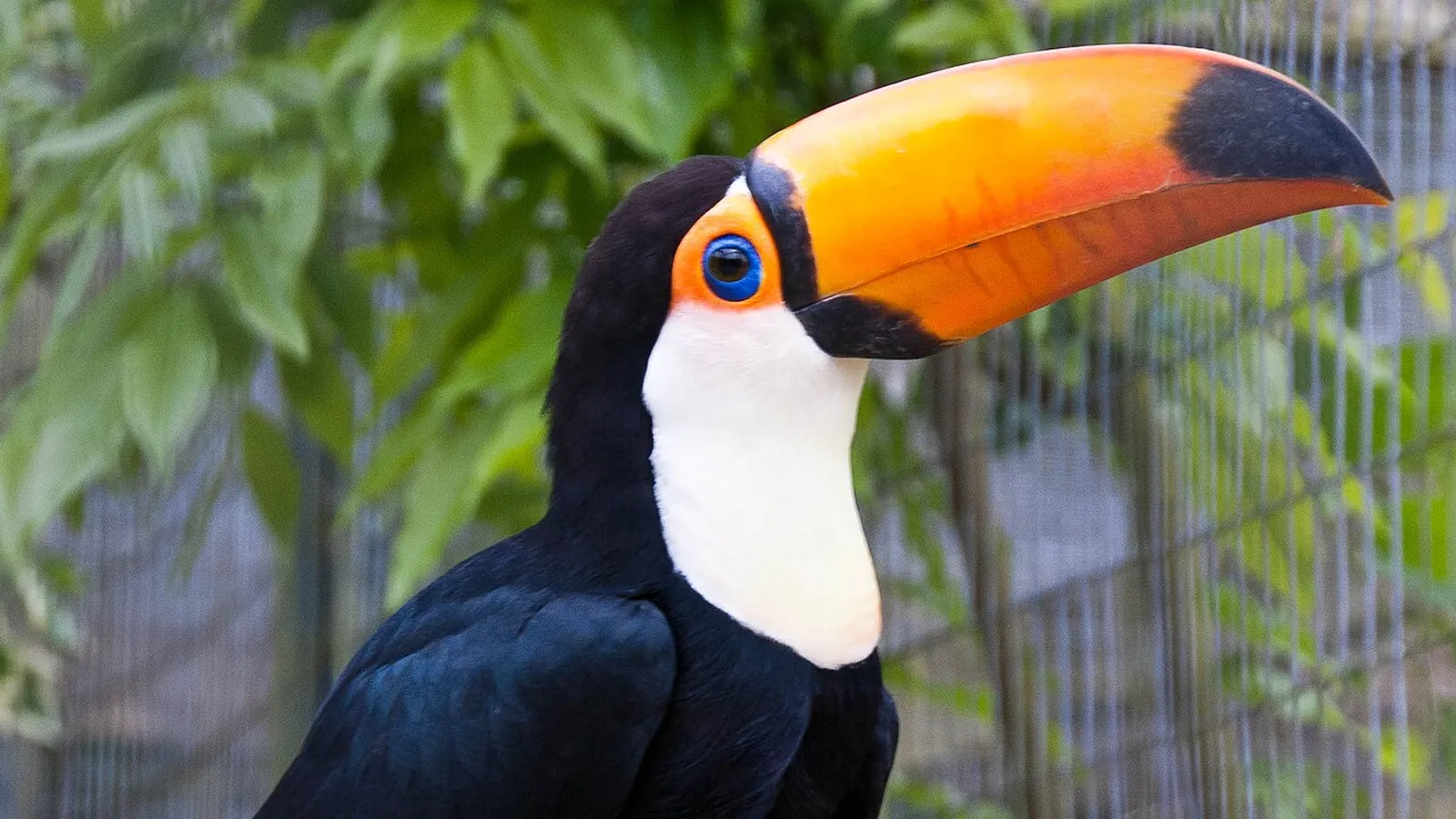
It has the largest bill, relative to body size, of any bird.
- 02
The bill is featherlight: hollow keratin braced by a honeycomb structure.
- 03
Flies in short bursts, alternating beats and glides, on an undulating line.
— What sets it apart
The toucan’s huge bill is less an eating tool than a way of shedding heat. It is run through by a dense net of blood vessels the bird can open or close: in the heat of the day it sends blood there and cools it against the air, at night it shuts the vessels off so as not to lose warmth. It is one of the most efficient biological radiators known — an adjustable heater the toucan carries on its face.
