
Nile crocodile
Crocodylus niloticus
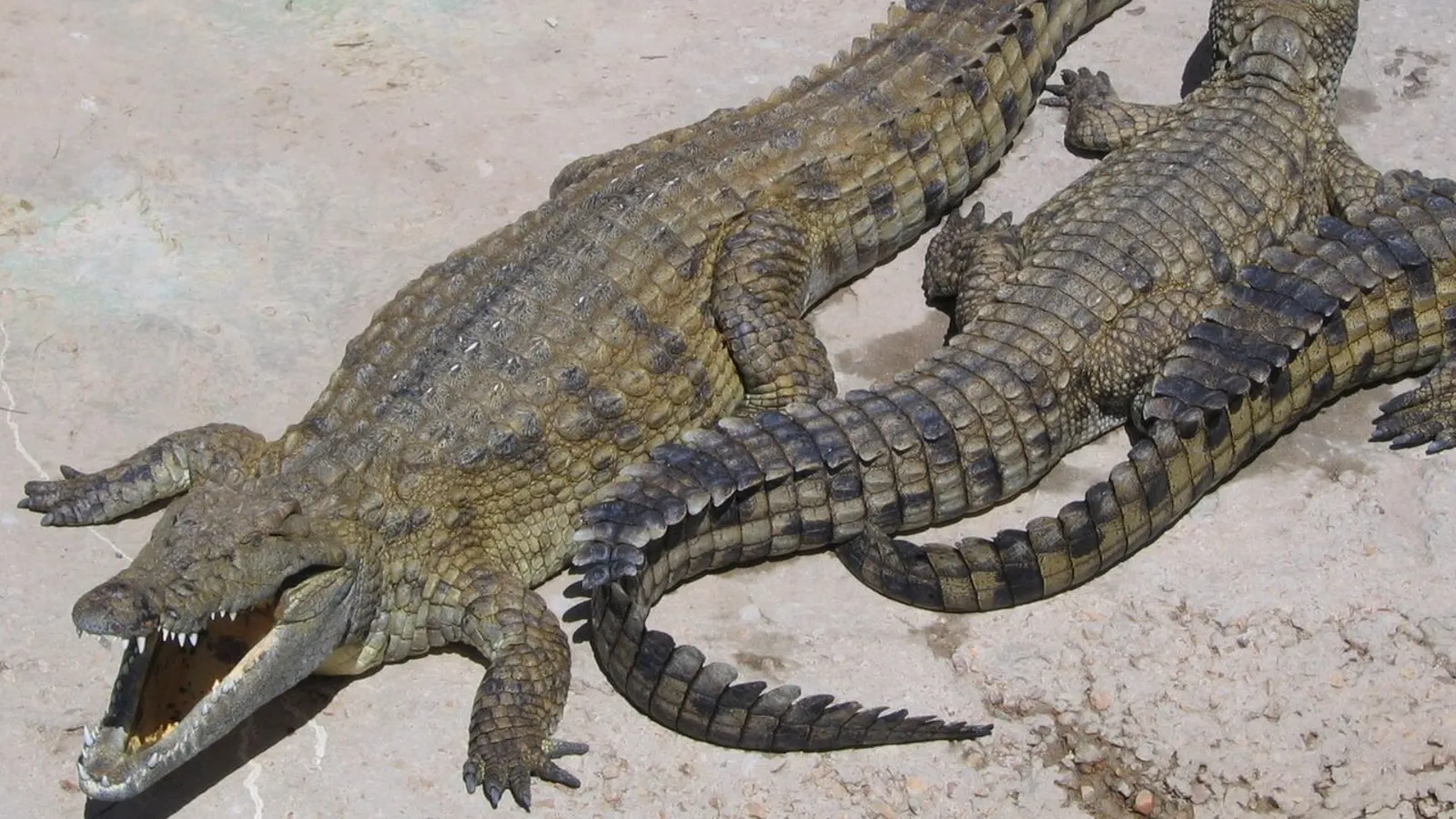
— Where the name comes from
From the Greek krokódeilos, made of krókē, “pebbles”, and drîlos, “worm”: “the worm of the pebbles”, for its habit of warming itself on stony riverbanks. The Greeks of Egypt gave the monster of the Nile the name they used at home for the lizard on the garden wall.
— Facts
- Group
- Reptiles · Reptilia
- Order
- Crocodilians
- Habitat
- Rivers, lakes, marshes, mangroves
- Range
- Sub-Saharan Africa and the Nile basin
- Size
- 3.5–5 m, up to 750 kg
- Diet
- Carnivore — fish, ungulates, carrion
- Lifespan
- 50–80 years
— Characteristics
- 01
The most powerful bite measured in a living animal: over 3,000 kg of force.
- 02
The muscles that open the jaw are weak: one hand is enough to hold it shut.
- 03
The mother carries her newly hatched young to the water in her mouth.
— What sets it apart
The sex of the hatchlings is written not in the chromosomes but in the temperature of the nest: below 31 °C and above 33 °C they come out female, and in the narrow window between, male. It is a mechanism that has worked for 200 million years and which today, as average temperatures rise, is skewing the sex ratio in many reptile populations.
