
Tuatara
Sphenodon punctatus
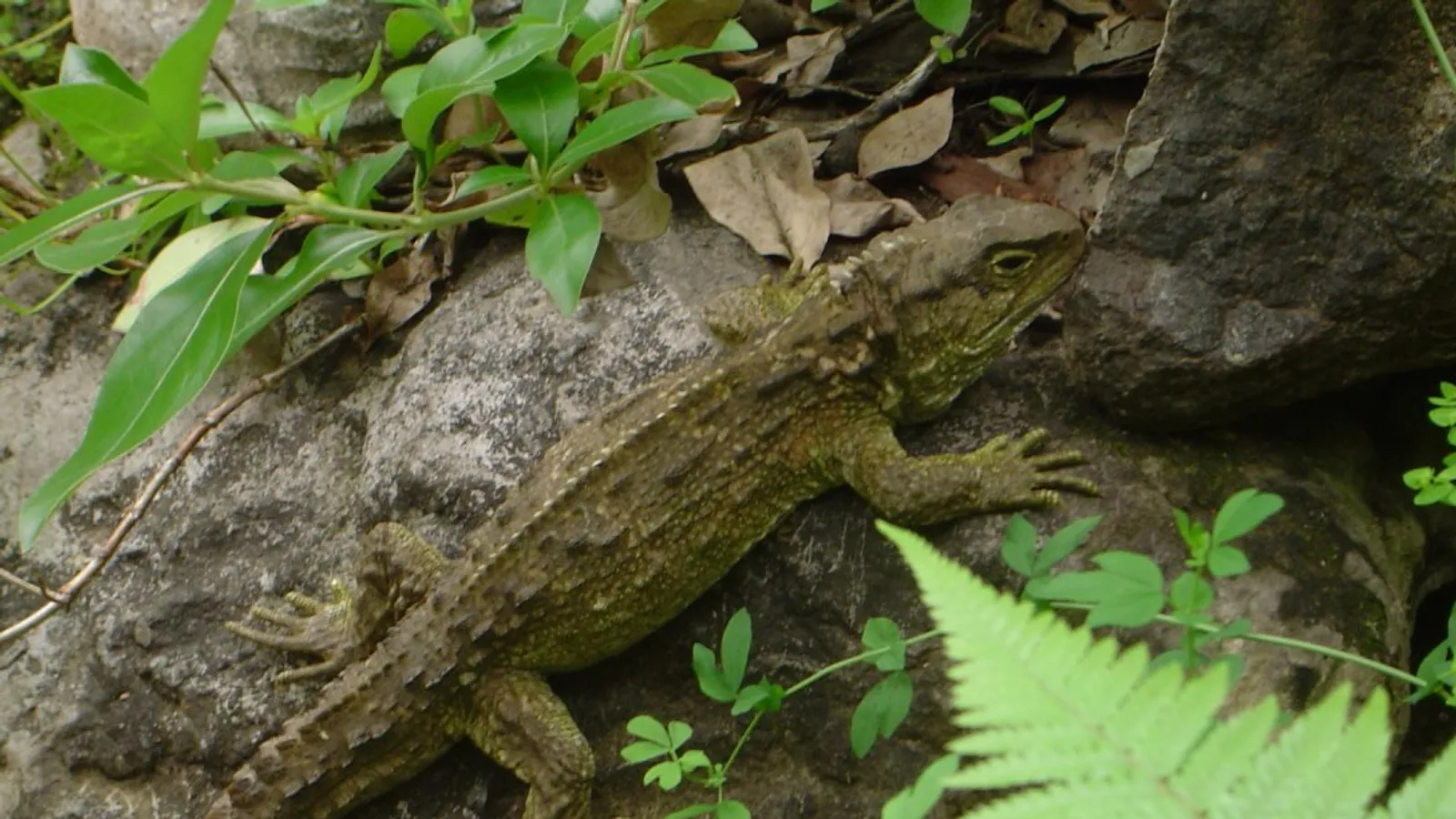
— Where the name comes from
Sphenodon, from the Greek sphḗn (wedge) and odoús (tooth): “wedge tooth”, for teeth fused to the bone of the jaw. Punctatus, spotted. “Tuatara” is a Māori word: it means “peaks on the back”, the crest of spines that runs along the animal’s spine. The European name describes the teeth; the Māori one, the silhouette.
— Facts
- Group
- Reptiles · Reptilia
- Order
- Tuatara
- Habitat
- Windswept rocky islands, in burrows often shared with seabirds
- Range
- Islets off New Zealand
- Size
- 50–80 cm, 0.5–1.3 kg
- Diet
- Carnivore — insects, lizards, seabird eggs and chicks
- Lifespan
- Over 100 years
— Characteristics
- 01
It is not a lizard: it is the last survivor of the Rhynchocephalia, an order that flourished 240 million years ago.
- 02
Stays active at temperatures very low for a reptile, below 11 °C.
- 03
Grows extremely slowly and goes on growing for decades.
— What sets it apart
On the top of its skull the tuatara has a third eye: the parietal eye, with a retina, a lens and a nerve connection, visible in newly hatched young as a spot that later grows over with scales. It does not form images but measures light — regulating the internal clock and the seasonal rhythms. It is a living fossil twice over: in the order it belongs to, and in the organ it kept while almost every other vertebrate was losing it.
