
King cobra
Ophiophagus hannah
— Where the name comes from
Ophiophagus, from the Greek óphis (snake) and phageîn (to eat): the “snake eater”, because it feeds mostly on other snakes. The epithet hannah points to the hamadryads, the tree nymphs of Greek myth. “Cobra” comes instead from the Portuguese cobra de capelo, “snake with a hood”.
— Facts
- Group
- Reptiles · Reptilia
- Order
- Squamates
- Habitat
- Rainforest, mangroves, plantations
- Range
- India and South-East Asia
- Size
- 3–4 m, up to 5.5 m: the longest venomous snake
- Diet
- Carnivore — almost exclusively other snakes
- Lifespan
- 20 years
— Characteristics
- 01
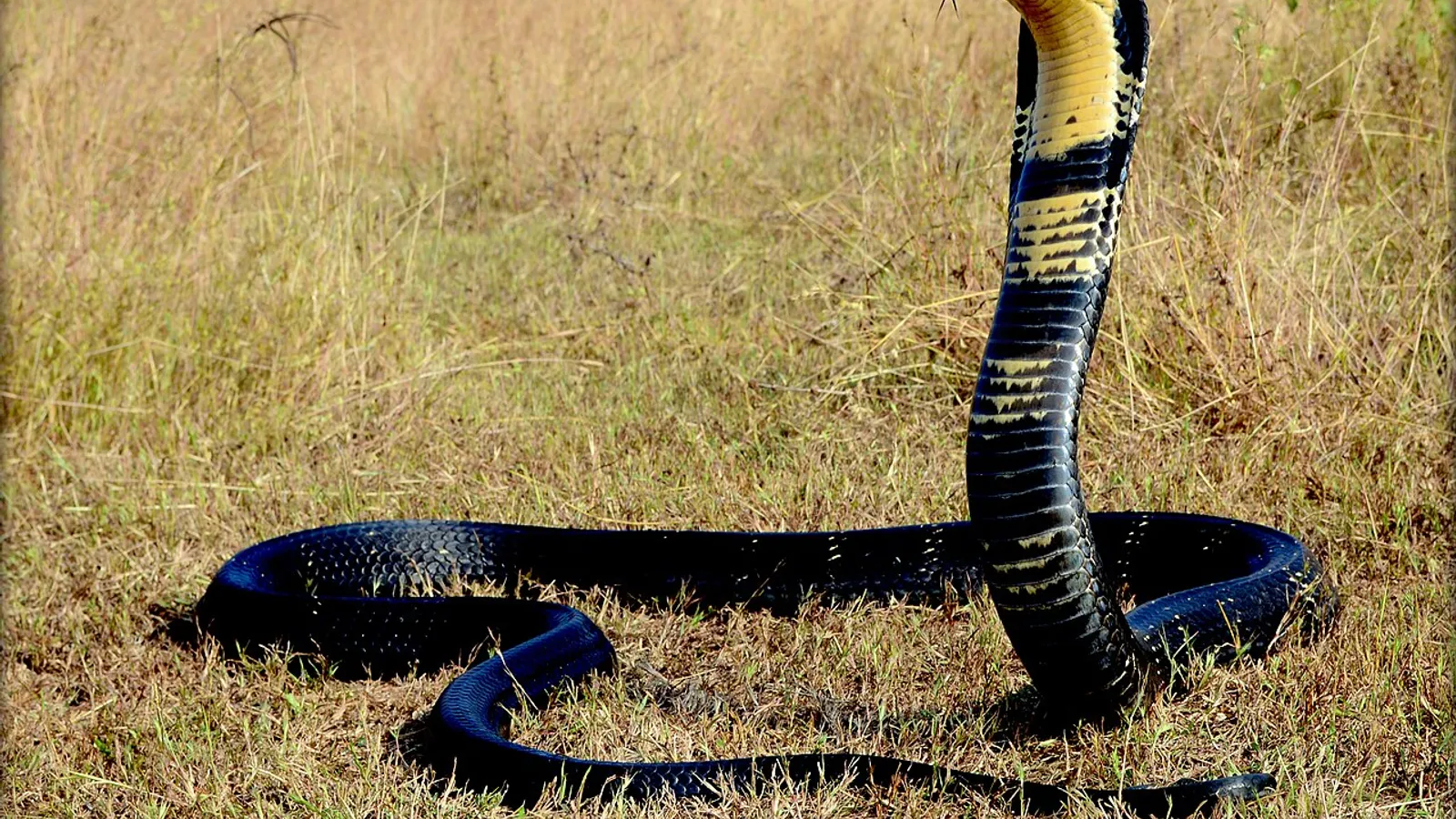
Reared up, it can lift a third of its body off the ground and look a person in the eye.
- 02
The hood is formed by ribs that spread under the skin of the neck.
- 03
A single bite delivers venom enough to kill an elephant.
— What sets it apart
The king cobra is the only snake in the world that builds a nest for its eggs: the female gathers leaves with her coils, heaps them into a mound and lays inside it, then coils on top on guard for months. The leaves rotting beneath warm the clutch like a small stove. It is a maternal instinct rare among reptiles, and more surprising still in an animal otherwise solitary and shy.
