
Eastern newt
Notophthalmus viridescens
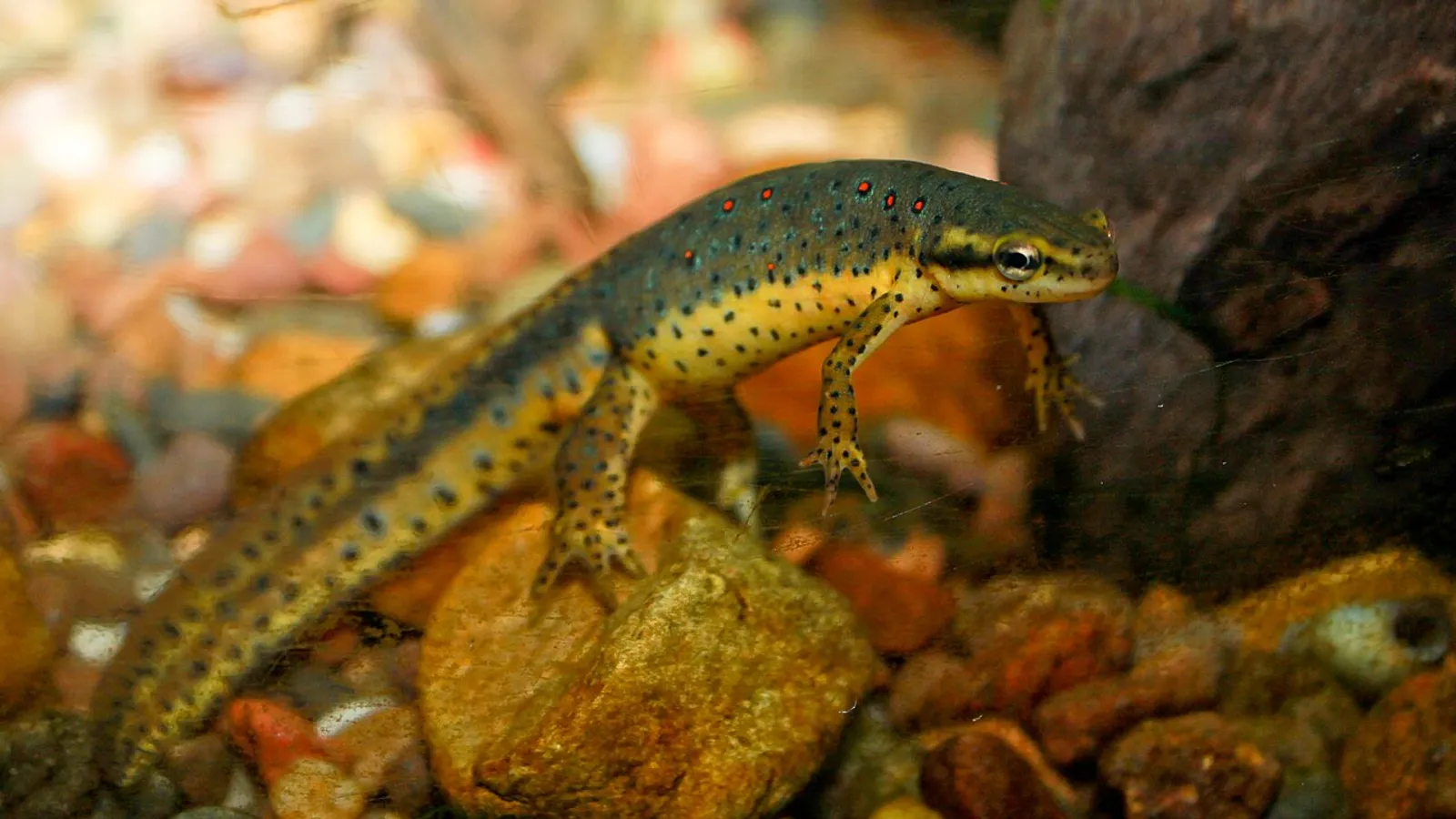
— Where the name comes from
Notophthalmus is “eye on the back”, from nôton and ophthalmós: it refers to the red ocelli ringed in black along its flanks. Viridescens means “turning green”, which is the colour of the aquatic adult — not of the juvenile stage, which is bright orange and lives in the woods.
— Facts
- Group
- Amphibians · Amphibia
- Order
- Salamanders
- Habitat
- Ponds for larvae and adults, damp woodland for the juvenile stage
- Range
- Eastern North America
- Size
- 7–12 cm, 3–8 g
- Diet
- Insects, frog spawn, snails, crustaceans
- Lifespan
- 15 years
— Characteristics
- 01
It lives three lives: gilled larva, terrestrial juvenile, aquatic adult.
- 02
The terrestrial orange stage lasts from one to seven years.
- 03
It too contains tetrodotoxin, in smaller amounts than its Californian relative.
— What sets it apart
It regenerates nearly everything. Amputate a limb and it rebuilds a complete one with bones, muscles and nerves in a few weeks; remove the lens of the eye and it makes a new one from the cells of the iris; damage the heart and it repairs the tissue without leaving a scar. It is among the most studied animals in the world’s regenerative medicine laboratories, because it has a capacity mammals have lost — and which, judging by the genes involved, we once had too.
