
Rio Cauca caecilian
Typhlonectes natans
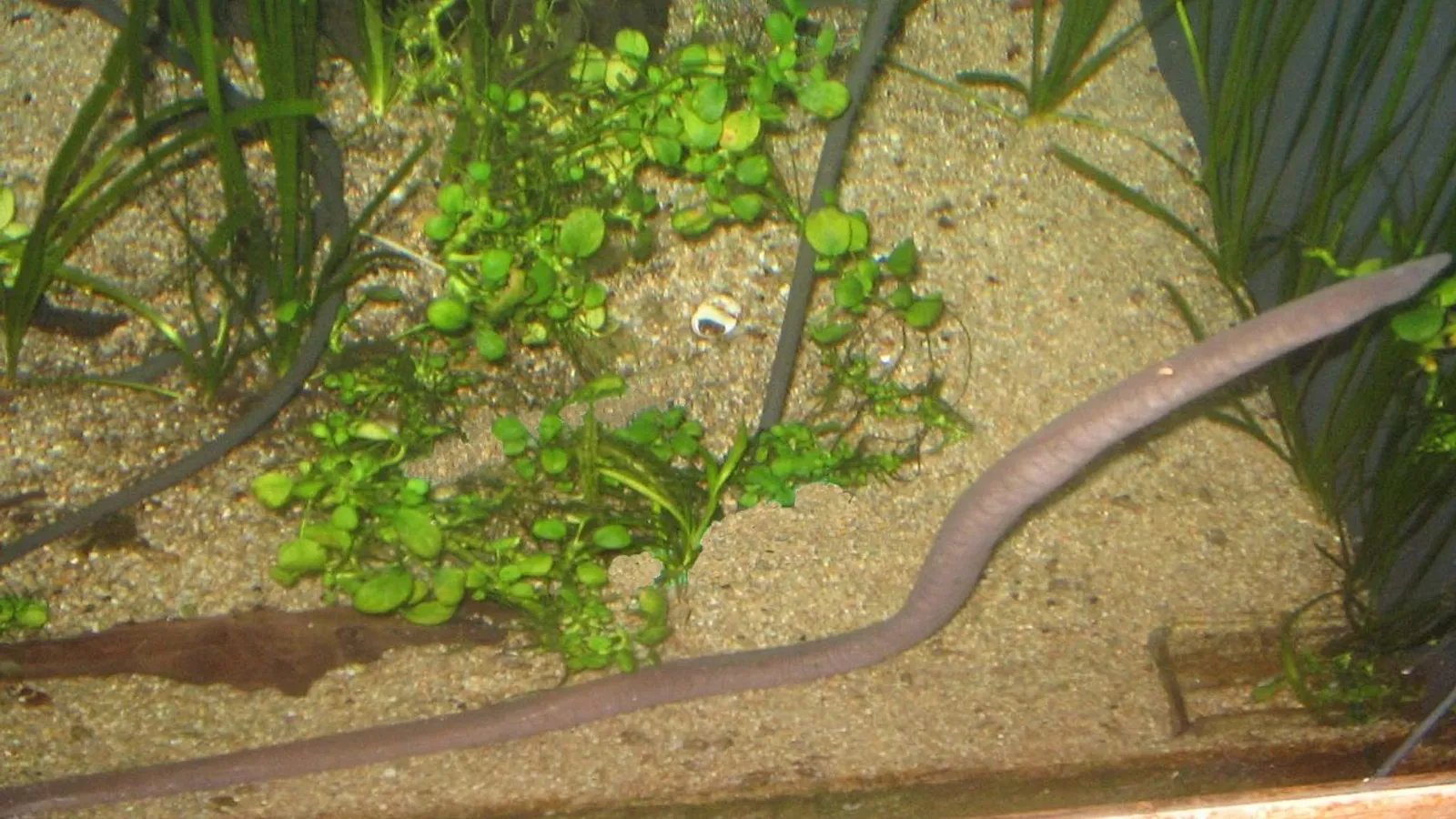
— Where the name comes from
Typhlonectes is “blind swimmer”, from typhlós and nēktēs; natans repeats the idea in Latin. Caecilian comes instead from the Latin caecilia, which denoted a blind lizard and derives from caecus: every name in this group turns on the absence of sight. They are amphibians without legs, and they form the third order — the one hardly anyone knows about.
— Facts
- Group
- Amphibians · Amphibia
- Order
- Caecilians
- Habitat
- Slow rivers, swamps, canals of the Magdalena and Orinoco basins
- Range
- Colombia and Venezuela
- Size
- 45–55 cm, 100–200 g
- Diet
- Worms, larvae, small fish, organic debris
- Lifespan
- 10 years
— Characteristics
- 01
It has no legs and no pelvic girdle: it looks like an eel or a huge earthworm.
- 02
The eyes are reduced to two dots under the skin and register only light.
- 03
Between eye and nostril it has a retractable tentacle with which it smells.
— What sets it apart
The young feed on their mother from the inside. Females of this group keep the embryos in the oviduct, and there the young scrape the innermost layer of its wall with temporary spoon-shaped teeth, a layer the mother regenerates continuously: it is a suckling made of tissue instead of milk, and it goes on for months. At birth the young are nearly half the mother’s length. It is one of the strangest ways of coming into the world that exist among vertebrates.
