
Mexican burrowing caecilian
Dermophis mexicanus
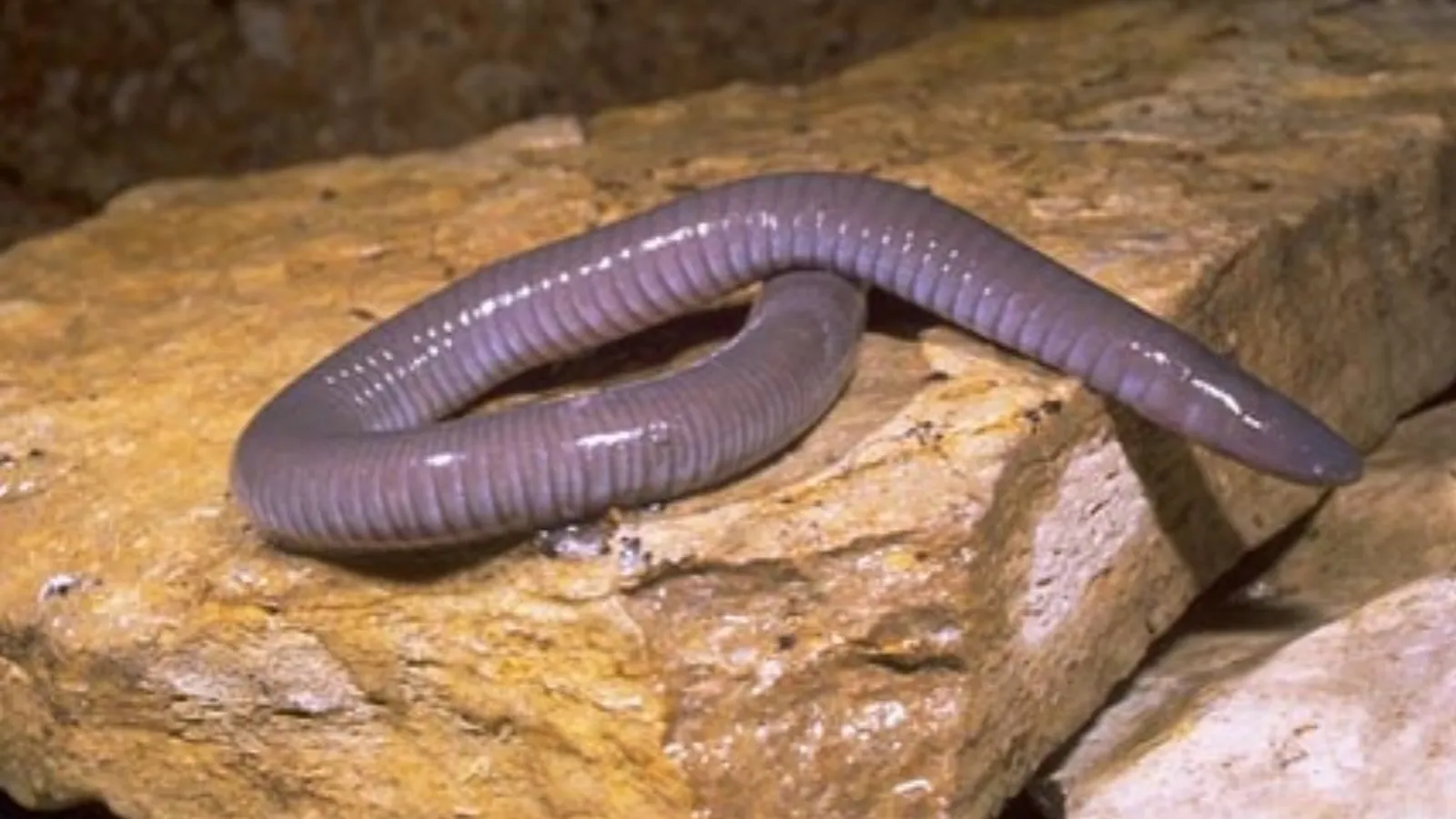
— Where the name comes from
Dermophis is “skin snake”, from dérma and óphis, and the name catches the look of it: a cylindrical, purple-grey body ringed along its length, which seems to be made of skin and nothing else. Mexicanus names the country, though it lives from southern Mexico to Panama. In Central American villages it is often called the blind snake and feared for no reason: it is entirely harmless.
— Facts
- Group
- Amphibians · Amphibia
- Order
- Caecilians
- Habitat
- Damp soil of forests, plantations, gardens, under rotting logs
- Range
- From southern Mexico to Panama
- Size
- 30–50 cm, 60–120 g
- Diet
- Earthworms, termites, larvae, small soil invertebrates
- Lifespan
- 10 years
— Characteristics
- 01
It digs actively, using its compact skull as a pick.
- 02
The rings along its body correspond to the vertebrae and give it purchase.
- 03
It bears fully formed young after eleven months of gestation.
— What sets it apart
The young eat their mother’s skin. After birth they stay with her and, using temporary hook-shaped teeth they will later lose, peel off and swallow the outermost layer of her epidermis, which is extremely rich in fat; she regrows it within three days and the meal begins again. The behaviour was first filmed in 2006 and has a technical name, maternal dermatophagy: the mother is, quite literally, the larder, and she comes through it perfectly well.
