
Sea lamprey
Petromyzon marinus
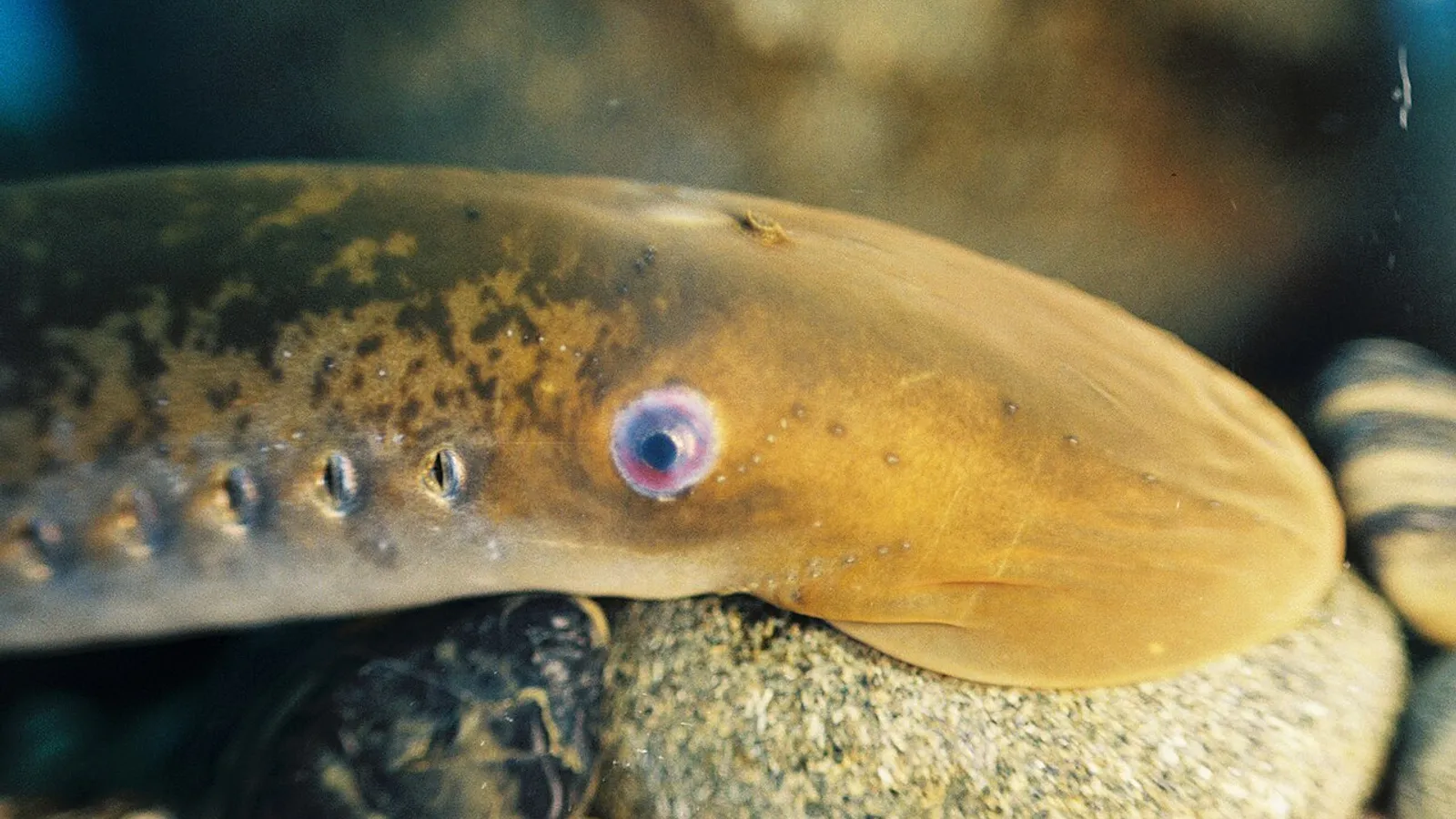
— Where the name comes from
Petromyzon is “stone sucker”, from pétros and myzáō: it fastens to rocks with its suction mouth so the current cannot drag it away. The Italian name comes from the medieval Latin lampetra, that is lambere petram, “to lick the stone”: two different languages looked at the same animal on the same rock and said the same thing.
— Facts
- Group
- Fish · Actinopterygii · Chondrichthyes
- Order
- Lampreys
- Habitat
- Open sea as an adult, rivers and streams to breed
- Range
- The northern Atlantic, the Mediterranean, the American Great Lakes
- Size
- 60–90 cm, up to 120 cm; 1–2.5 kg
- Diet
- Blood and tissue from the fish it fastens onto
- Lifespan
- 7 years, nearly all of them as a larva
— Characteristics
- 01
It has no jaws: the mouth is a circular disc covered in horny teeth.
- 02
It has no bones, no scales and no paired fins.
- 03
It dies shortly after spawning, as salmon do.
— What sets it apart
Its group already existed three hundred and sixty million years ago and has scarcely changed: Devonian fossils are recognisable at a glance. In the twentieth century it did do something new, though — it entered the American Great Lakes through canals built by people and collapsed the lake trout fishery that was the economic mainstay of the region. The control programme begun in 1958, based on a chemical that kills the larvae in tributary streams, is still running and is one of the longest wildlife management operations ever undertaken.
