
European river lamprey
Lampetra fluviatilis
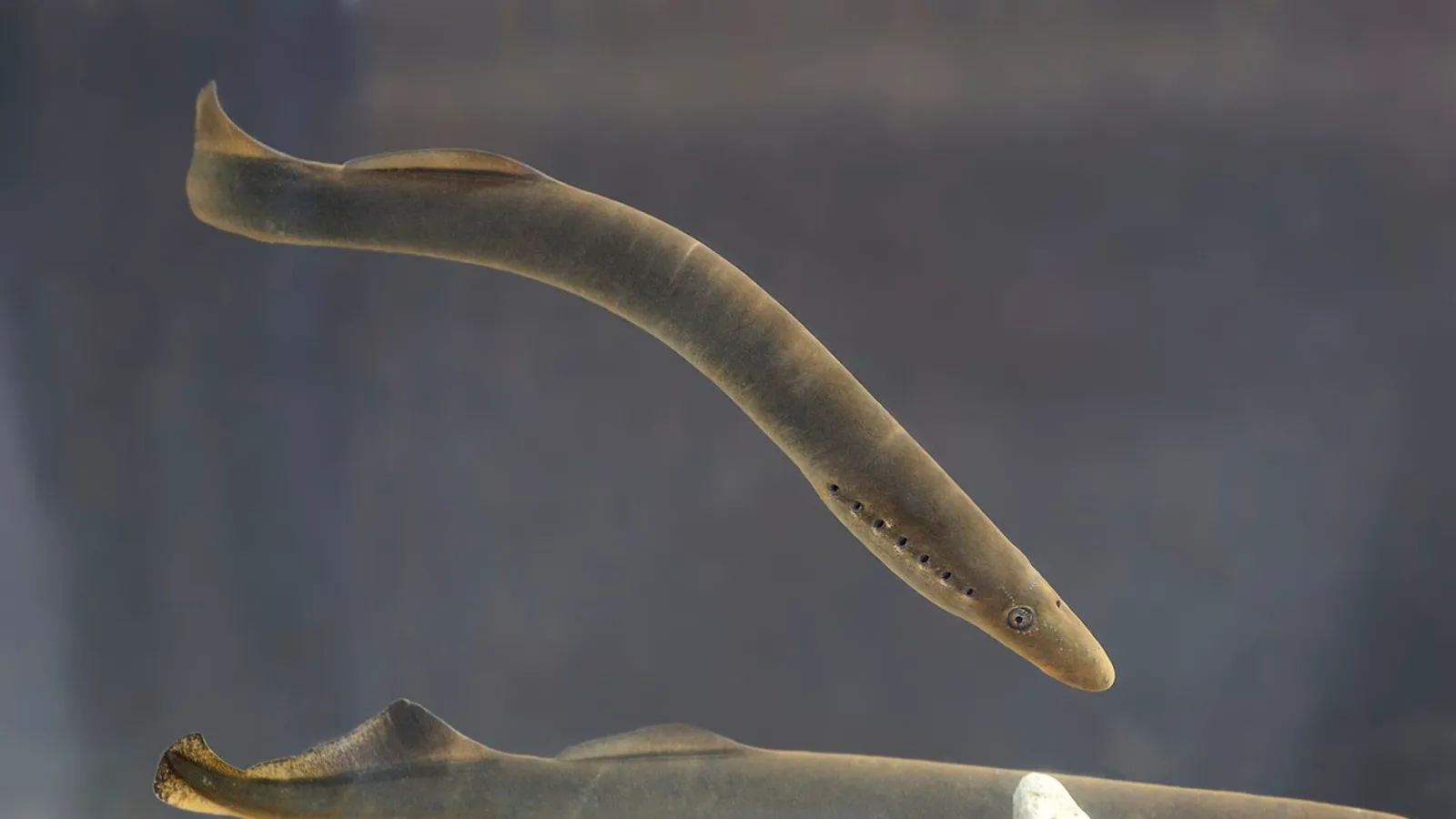
— Where the name comes from
Lampetra carries the same folk etymology as the Italian name — lambere petram — and fluviatilis names the river. It is the smaller relative of the sea lamprey, and its interest lies in something nobody understood for two centuries: its juvenile form was described as a different animal, and for a long while it had a scientific name of its own.
— Facts
- Group
- Fish · Actinopterygii · Chondrichthyes
- Order
- Lampreys
- Habitat
- Rivers and estuaries; the mud of slow reaches for the larvae
- Range
- Northern and western Europe, from the Mediterranean to Scandinavia
- Size
- 25–40 cm, 60–150 g
- Diet
- Fish blood as an adult; filtered detritus as a larva
- Lifespan
- 8 years
— Characteristics
- 01
The larva is blind, toothless and lives buried in mud for years.
- 02
As an adult it stops growing and no longer feeds after running upriver.
- 03
It spawns in gravel nests dug by shifting stones with its mouth.
— What sets it apart
The larva, called an ammocoete, is so unlike the adult — blind, toothless, a filter feeder buried in mud — that nineteenth-century naturalists classified it as a genus of its own, Ammocoetes, and it took decades to realise it was the same species before metamorphosis. It stays that way for between three and six years, which is nearly its whole life, and then transforms in a few weeks: eyes, teeth, sucker, and the end is close.
