
Greenland shark
Somniosus microcephalus
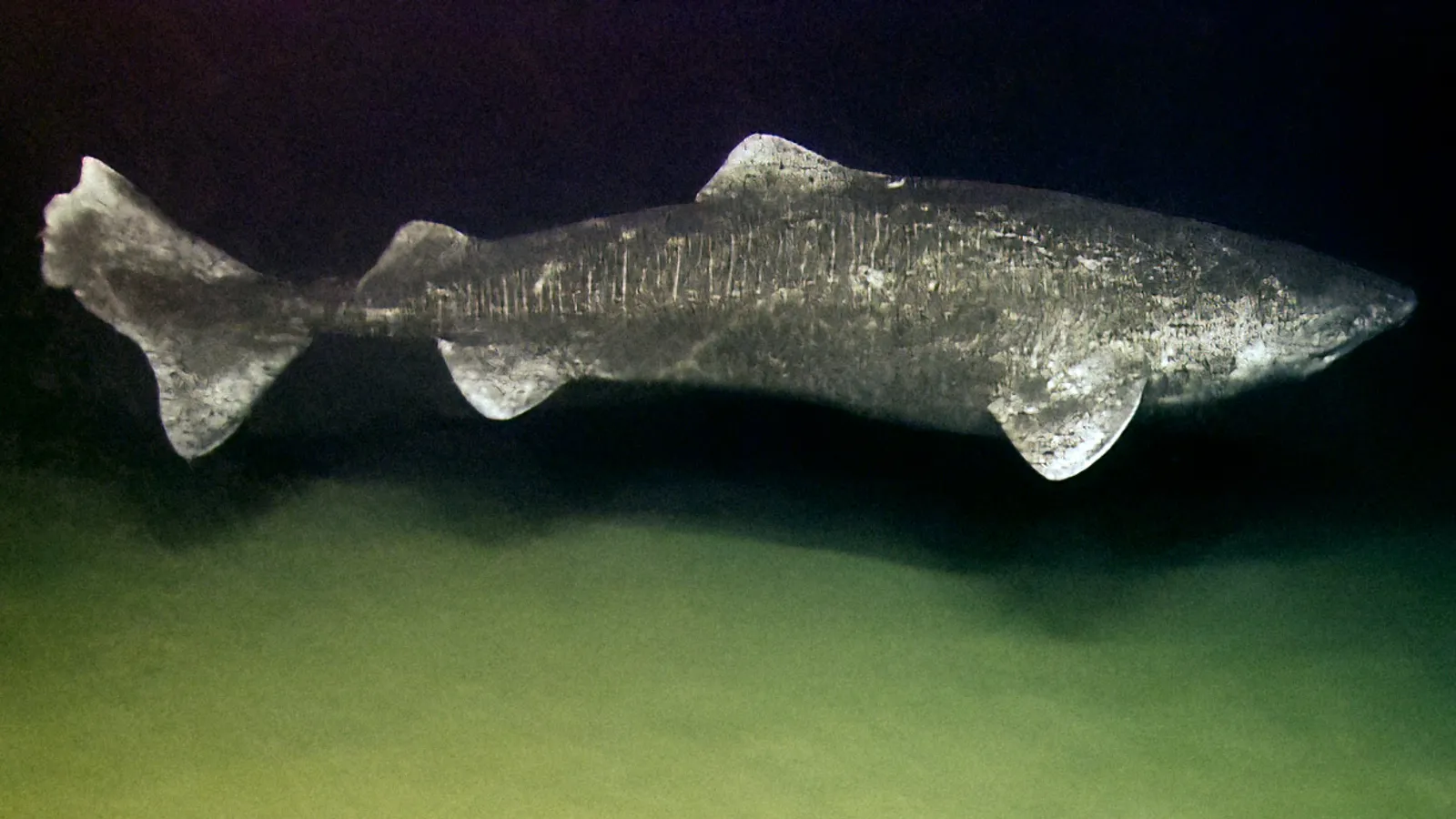
— Where the name comes from
Somniosus comes from the Latin somnus, sleep: it is the drowsy shark, for the slowness of its movements — it swims at little more than a kilometre an hour, more slowly than nearly anything that passes it. Microcephalus means “small-headed”. Neither word hints at how long it lives.
— Facts
- Group
- Fish · Actinopterygii · Chondrichthyes
- Order
- Dogfish sharks
- Habitat
- Cold deep water down to 2,200 metres, and the polar surface
- Range
- The northern Atlantic and the Arctic
- Size
- 4–5 m, up to 7 m; 400–1,000 kg
- Diet
- Fish, seals, carrion, the remains of reindeer and bears fallen into the water
- Lifespan
- estimated up to 400 years
— Characteristics
- 01
Nearly every individual carries a parasite attached to the cornea.
- 02
Its flesh contains trimethylamine oxide and is toxic when fresh.
- 03
It swims extremely slowly and yet catches seals: probably asleep ones.
— What sets it apart
In 2016 the ages of twenty-eight individuals were measured by radiocarbon dating the core of the eye lens, which forms before birth and is never renewed: the largest proved to be between two hundred and seventy and five hundred years old, with a central estimate of three hundred and ninety. It is the longest-lived vertebrate known, and it matures at around a hundred and fifty: the sharks breeding today in the Greenland Sea were born before the French Revolution.
