
California newt
Taricha torosa
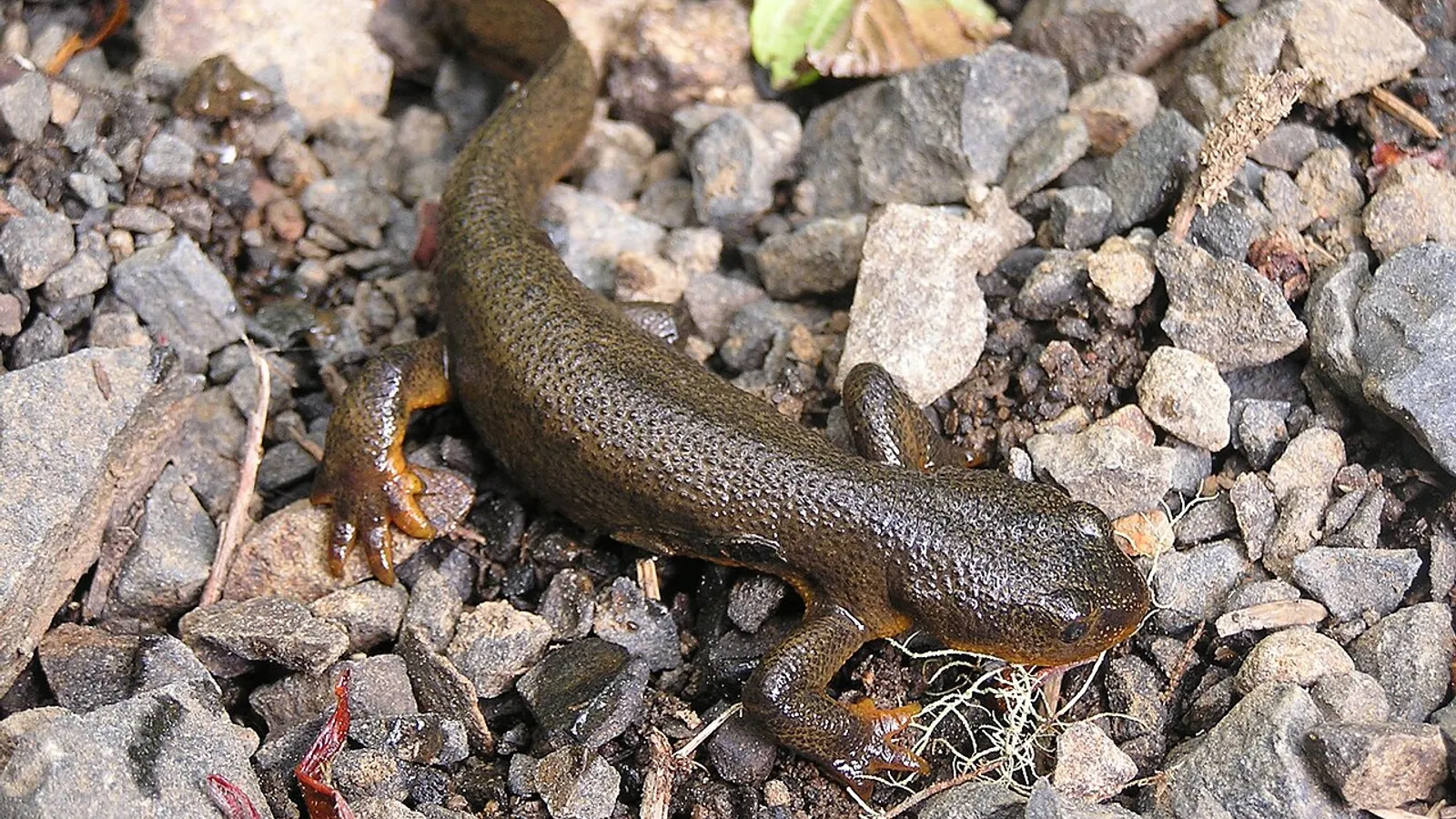
— Where the name comes from
Taricha comes from the Greek tarichos, which meant meat preserved in salt and by extension a mummy: it alludes to the dry, leathery feel of the skin. Torosa means “muscular”. Neither word says the important thing, which is how much poison an animal the size of a finger contains.
— Facts
- Group
- Amphibians · Amphibia
- Order
- Salamanders
- Habitat
- Damp woodland, chaparral, streams and pools of the coastal hills
- Range
- California, from San Francisco Bay to San Diego
- Size
- 12–20 cm, 15–30 g
- Diet
- Earthworms, slugs, insects, amphibian eggs
- Lifespan
- 20 years
— Characteristics
- 01
Threatened, it arches its body and displays its orange belly.
- 02
It returns each year to the same stream, navigating over kilometres.
- 03
Its skin contains tetrodotoxin, the same substance as the pufferfish.
— What sets it apart
One animal holds enough tetrodotoxin to kill several adults, and in 1979, in Oregon, a man swallowed one for a bet and died within hours. The amount of poison is not the same everywhere, though: where garter snakes live, which eat them and have evolved resistance, the newts are far more toxic, and where the snakes are absent they are barely toxic at all. It is a contest of potency fought between two species for millions of years, and the map of toxicity matches the map of their predators.
