
Giant clam
Tridacna gigas
— Where the name comes from
Tridacna comes from the Greek tridáknos, “eaten in three bites”, so large was its flesh; gigas is “giant”. It is the largest living bivalve mollusc, a shell that can weigh as much as a person and live over a century set into the coral reef.
— Facts
- Group
- Molluscs · Mollusca
- Order
- Giant clams and cockles
- Habitat
- Shallow, well-lit coral reefs
- Range
- The Indo-Pacific, from the Red Sea to the western Pacific
- Size
- Up to 1.2 m of shell, over 200 kg
- Diet
- A filter feeder, but fed mostly by symbiotic algae
- Lifespan
- Over 100 years
— Characteristics
- 01
It is the largest bivalve in the world: its shell can pass a metre.
- 02
It farms symbiotic algae in its tissues, which feed it by photosynthesis.
- 03
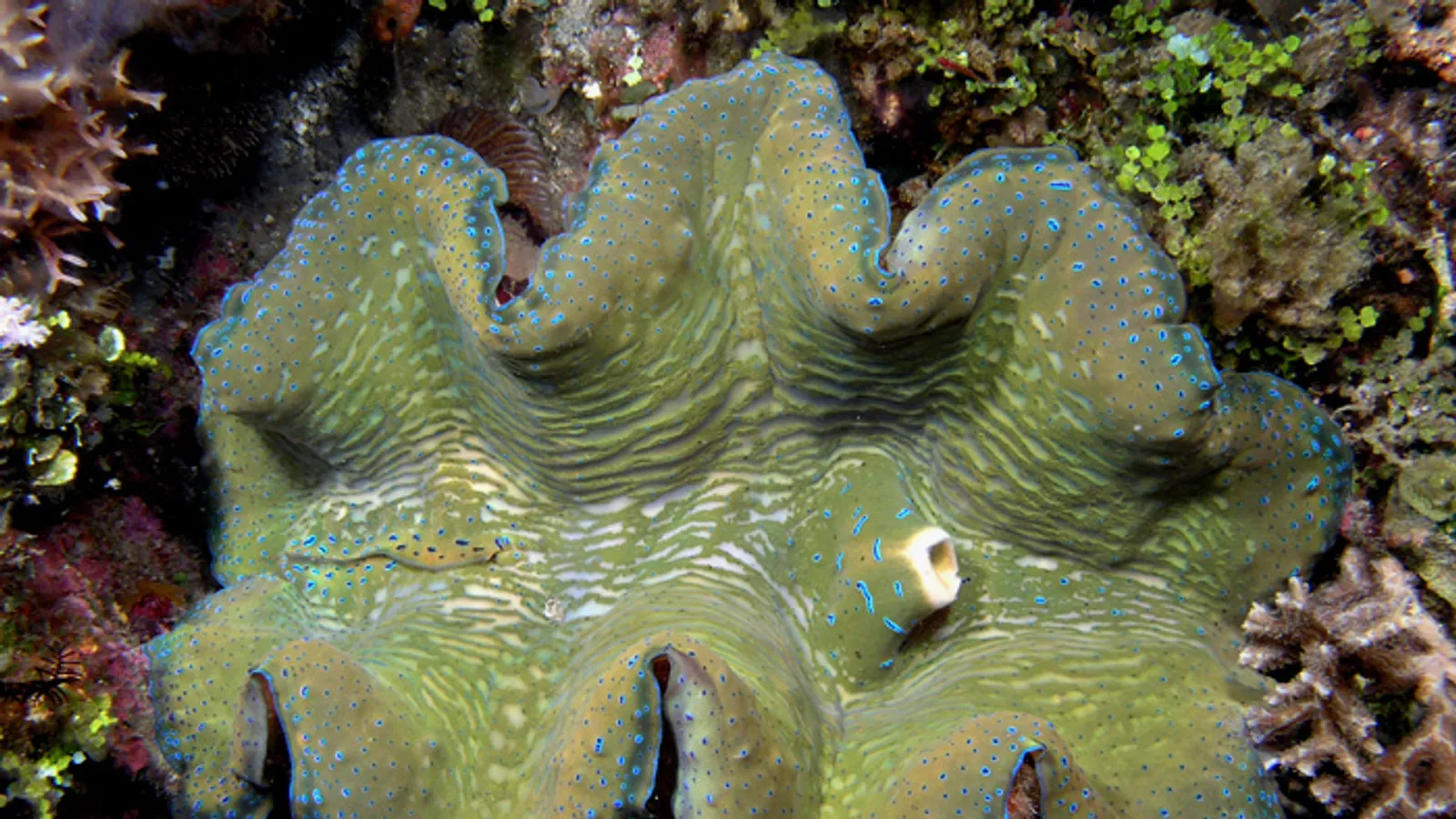
The coloured, iridescent mantle, spread in the sun, acts as a greenhouse for the algae.
— What sets it apart
The giant clam is half a farmer: in the fleshy mantle it spreads to the light between the half-open valves, it raises billions of microscopic algae which, photosynthesising, provide most of its food. That is why it lives only in clear, sunlit water, and the garish colours of its mantle are in fact a screen protecting the algae from too much light. Contrary to the legend of adventure stories, it does not trap divers: it closes far too slowly for a leg to be caught.
