
Blue dragon
Glaucus atlanticus
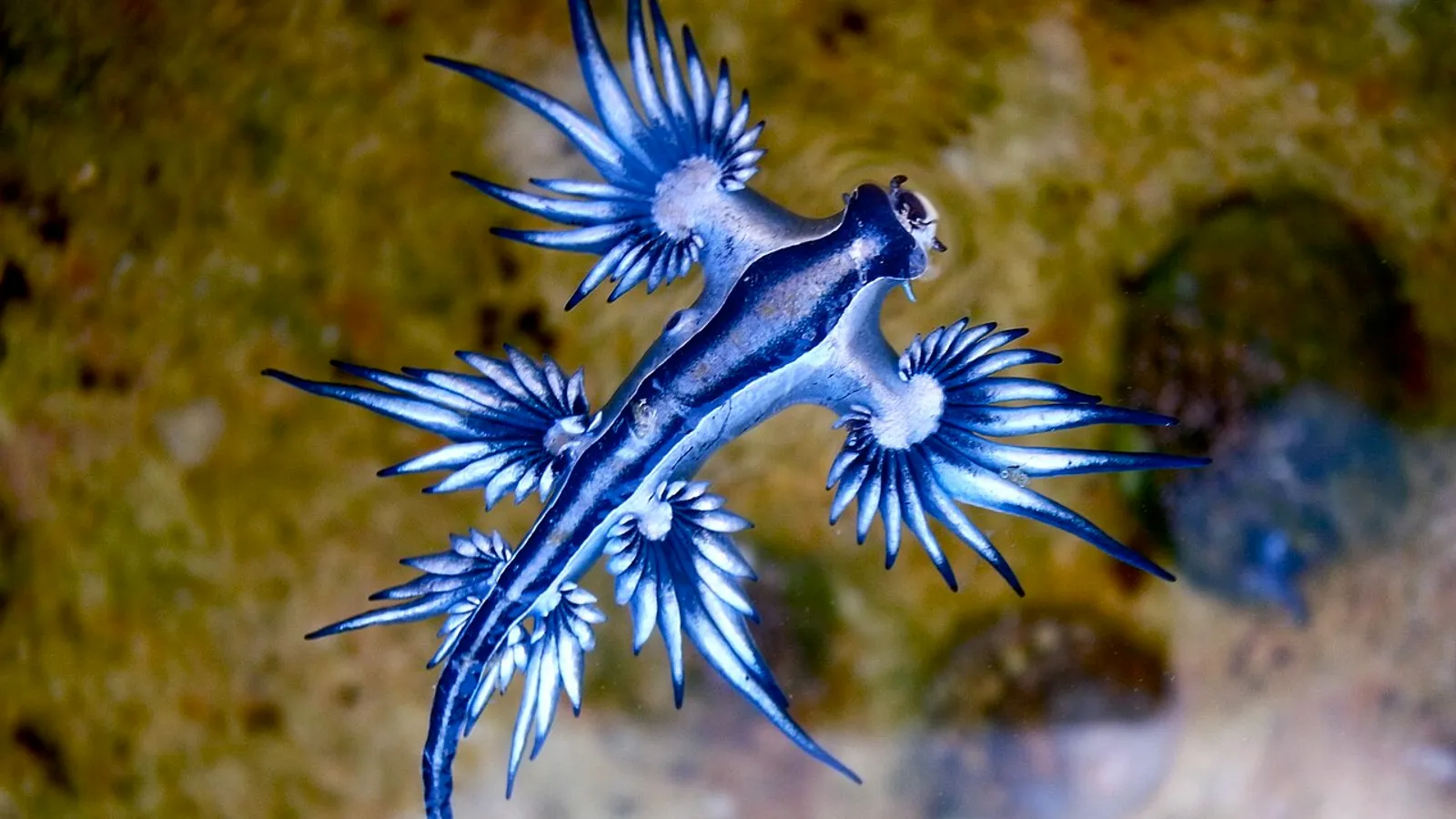
— Where the name comes from
Glaucus is a Greek sea deity, a fisherman turned into a god of the sea; the name recalls glaukós, blue-green. Atlanticus, from the ocean it inhabits. It is a nudibranch, a sea slug without a shell, and one of the most extraordinary drifting animals of the ocean surface.
— Facts
- Group
- Molluscs · Mollusca
- Order
- Nudibranchs
- Habitat
- The surface of the open sea, floating upside down
- Range
- Temperate and tropical waters of every ocean
- Size
- 3–4 cm
- Diet
- Carnivore — venomous siphonophores such as the Portuguese man o’ war
- Lifespan
- About a year
— Characteristics
- 01
It floats head down, hanging from the surface film thanks to a swallowed bubble of gas.
- 02
A blue belly turned to the sky and a silvery back turned downwards camouflage it from both sides.
- 03
It eats stinging animals and recycles their cells for its own defence.
— What sets it apart
The blue dragon is a small thief of weapons: it feeds on intensely venomous animals such as the Portuguese man o’ war, digests everything but the stinging cells, and stores those intact in the tips of its own body — concentrating them, so as to become more venomous than its prey. It floats head down, hanging from the “ceiling” of the water, blue belly to the sky and silver back to the depths: a double camouflage that hides it from the birds above and the fish below. An animal the size of a fingernail, wearing venom stolen from the giants of the sea.
