
Lion's mane jellyfish
Cyanea capillata
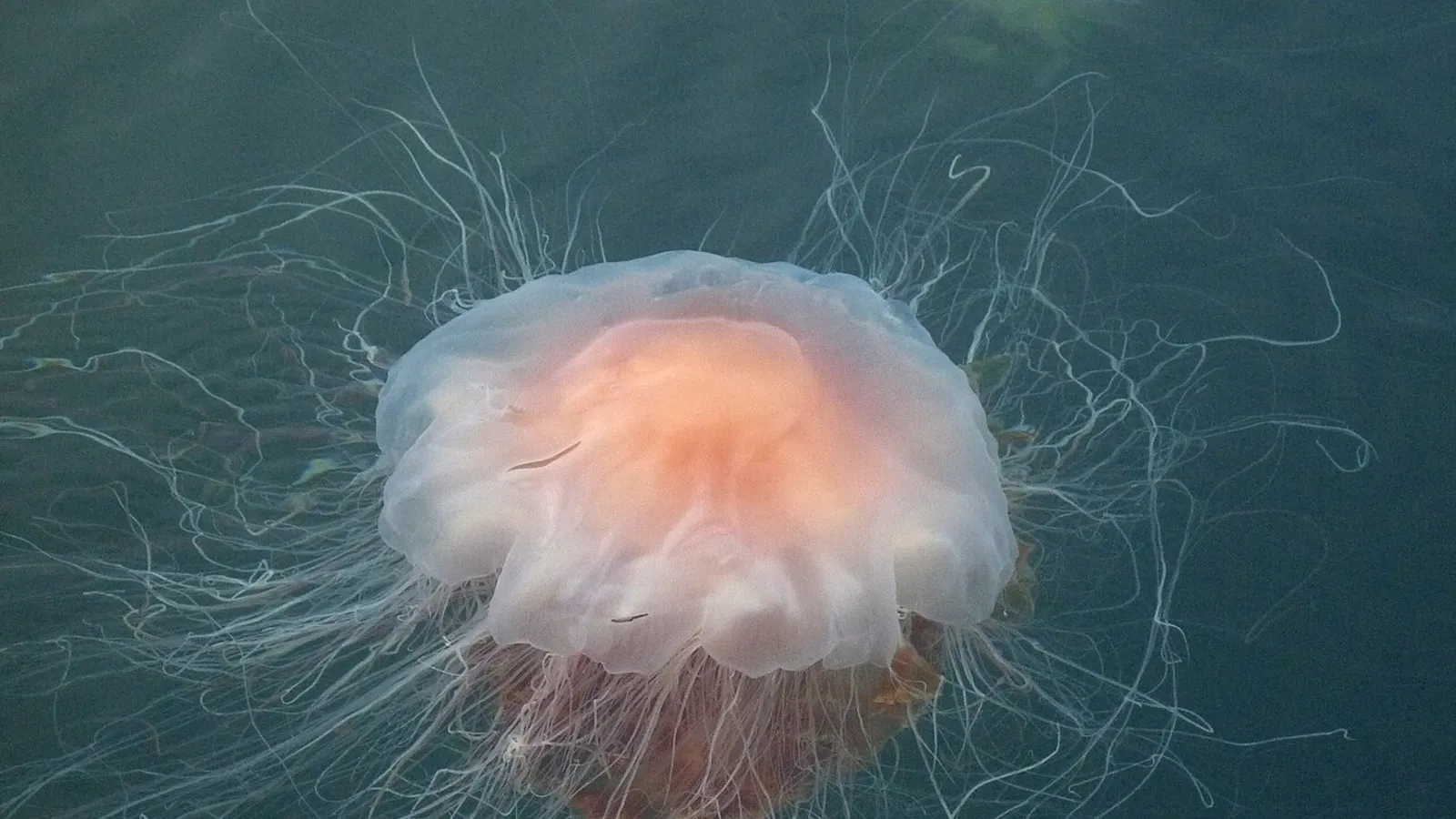
— Where the name comes from
Cyanea is from the Greek kýanos, deep blue; capillata is Latin, “with a head of hair”, from the very long filamentous tentacles that hang like locks. The common name evokes precisely a lion’s mane. It is the largest jellyfish known.
— Facts
- Group
- Cnidarians · Cnidaria
- Order
- True jellyfish
- Habitat
- Cold open water, often near the surface
- Range
- The cold seas of the northern hemisphere, the Arctic, the North Atlantic and North Pacific
- Size
- Bell up to 2 m, tentacles over 30 m long
- Diet
- Carnivore — plankton, small fish, other jellyfish
- Lifespan
- About a year
— Characteristics
- 01
It is the largest jellyfish in the world: with its tentacles extended it outreaches a blue whale.
- 02
Hundreds of stinging tentacles hang in bunches like thick hair.
- 03
The body is more than 95% water: out of the sea it collapses and vanishes.
— What sets it apart
By some measures the lion’s mane jellyfish is the longest animal on the planet: a specimen stranded in 1870 had tentacles estimated at over 36 metres, longer than a blue whale. And yet it is almost entirely water, and out of the sea it slumps into a transparent smear. It even turns up in literature: Arthur Conan Doyle made it the murderer in a Sherlock Holmes story, “The Lion’s Mane”, in which the victim dies of its stings, taken at first for the work of a man.
