
Portuguese man o' war
Physalia physalis
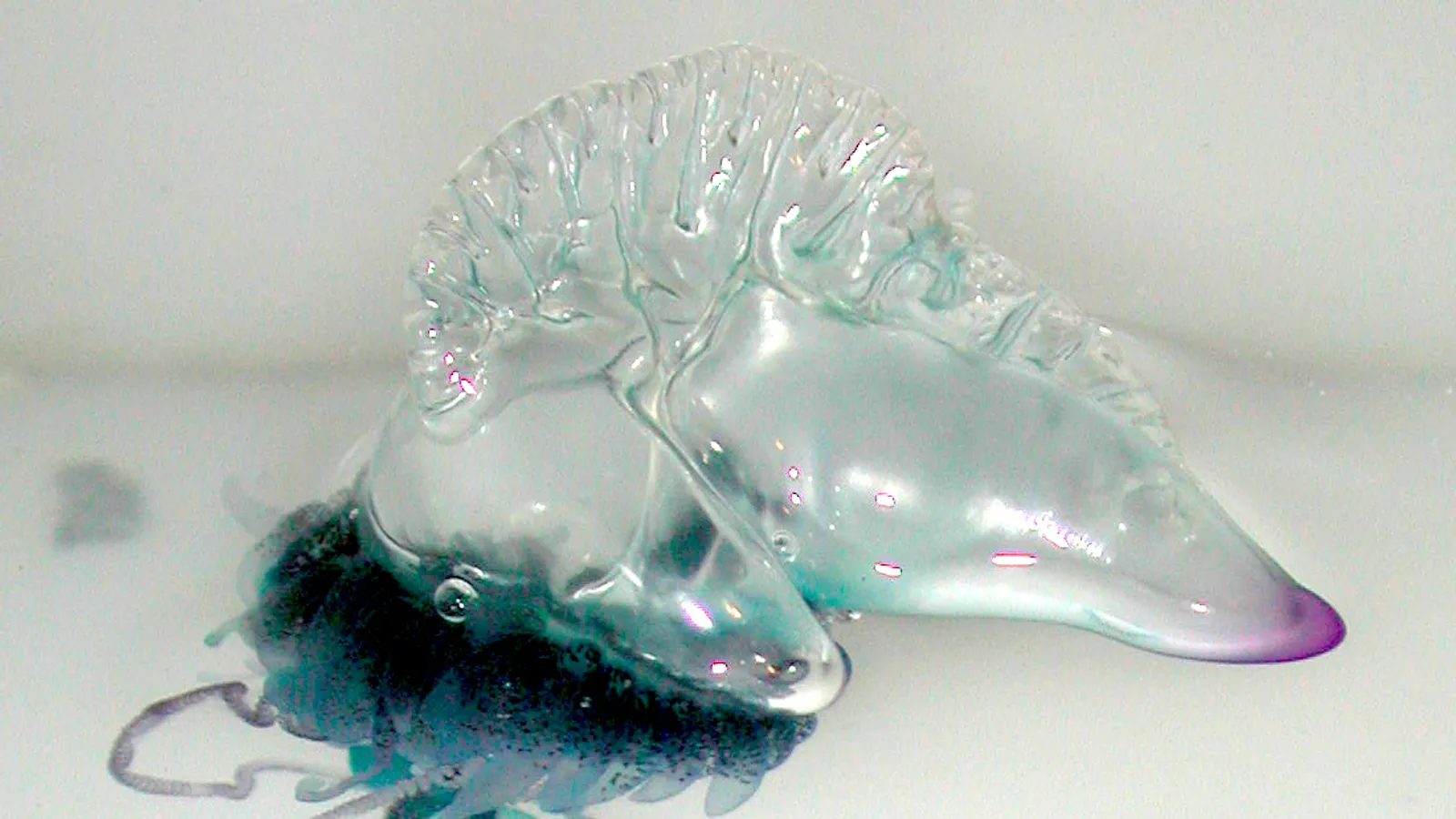
— Where the name comes from
Physalia comes from the Greek physallís, “bubble, bladder”, from the gas-filled float; the common name arose from the resemblance of that sail to the old Portuguese caravels on the horizon. It is not a jellyfish but a siphonophore: not an animal at all, but a colony of individuals.
— Facts
- Group
- Cnidarians · Cnidaria
- Order
- Siphonophores
- Habitat
- The surface of the open sea, driven by the wind
- Range
- Warm and temperate waters of every ocean
- Size
- Float up to 30 cm, tentacles as long as 30 m
- Diet
- Carnivore — fish and other small animals
- Lifespan
- About a year
— Characteristics
- 01
It is not an individual but a colony of specialised organisms that cannot live apart.
- 02
A gas-filled float works as a sail: the colony sails with the wind, without swimming.
- 03
The stinging tentacles, tens of metres long, stay dangerous even stranded and apparently dead.
— What sets it apart
The Portuguese man o’ war looks like a jellyfish, but it is not even a single animal: it is a colony of distinct individuals, the zooids, so specialised — one making the sail, one catching, one digesting, one reproducing — that none could survive alone. Not one of them is a complete organism by itself; together they work as one. The sail, moreover, leans right in some individuals and left in others, so that the winds scatter the population in different directions rather than driving it all onto the same beach.
