
Greater weever
Trachinus draco
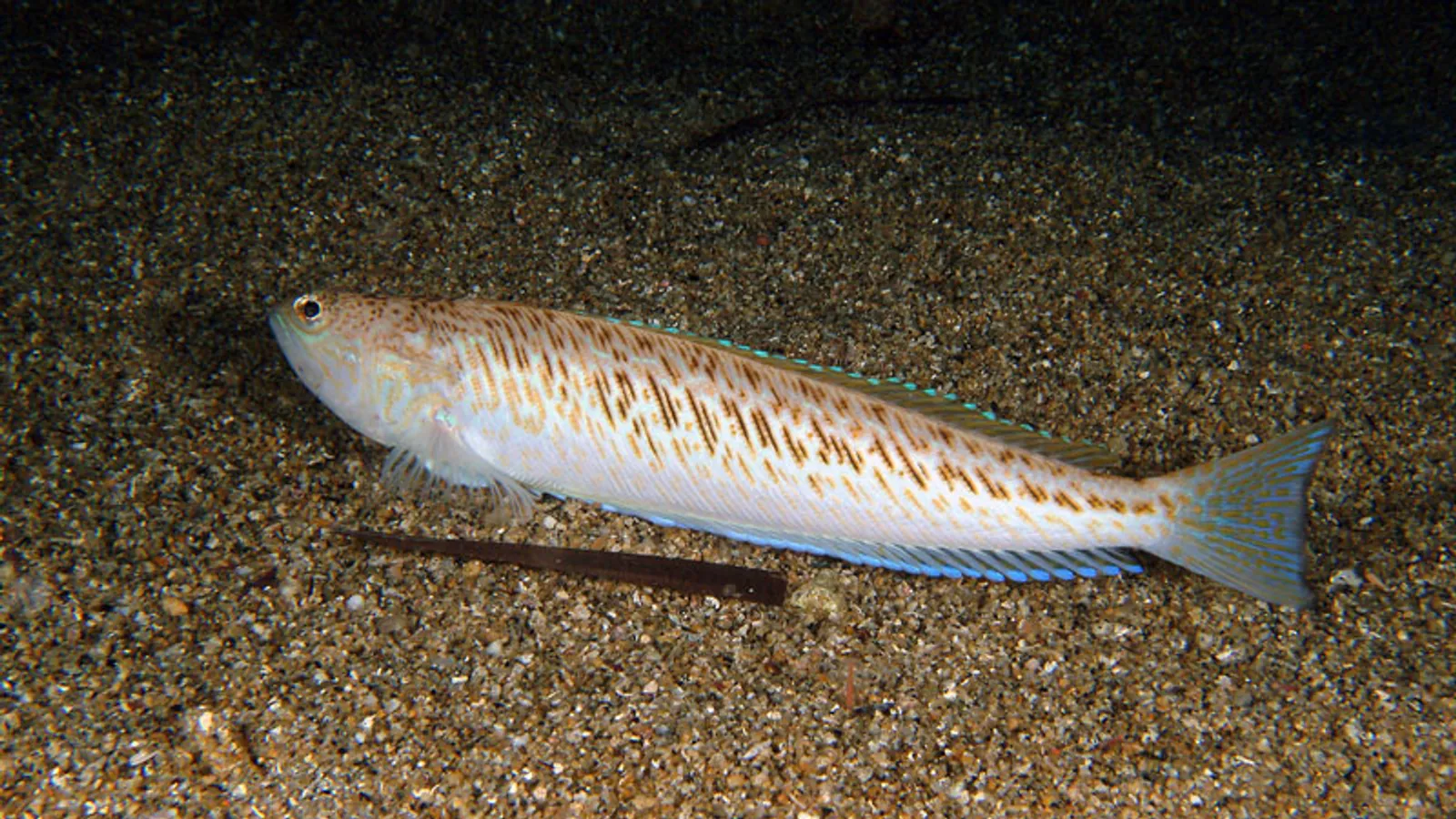
— Where the name comes from
Trachinus comes from the Greek trachýs, “rough, harsh”, and draco is the dragon. The Italian tracina derives from the same Greek. Among Mediterranean bathers it is known by dozens of dialect names — spider fish, aragna, sea viper — and nearly all of them point to an animal that stings without being seen.
— Facts
- Group
- Fish · Actinopterygii · Chondrichthyes
- Order
- Perch-likes
- Habitat
- Sandy and muddy bottoms from a few centimetres to 150 metres
- Range
- The eastern Atlantic, the Mediterranean, the Black Sea
- Size
- 25–35 cm, up to 45 cm; 150–400 g
- Diet
- Small fish, crustaceans, molluscs
- Lifespan
- 14 years
— Characteristics
- 01
It buries itself leaving out only the eyes and the first dorsal fin.
- 02
The five dorsal spines and those on the gill covers are venomous.
- 03
Its eyes are on top of the head and its mouth points upwards.
— What sets it apart
It is the venomous animal that stings most people in Europe, and it nearly always happens in thirty centimetres of water: buried in beach sand, it stays invisible until somebody puts a foot on it. The venom is heat-labile, and the most effective remedy — known to Mediterranean fishermen for centuries and confirmed by toxicology — is to immerse the affected part in water as hot as can be borne for half an hour: the proteins denature and the pain, which is ferocious, drops within minutes.
