
Marbled electric ray
Torpedo marmorata
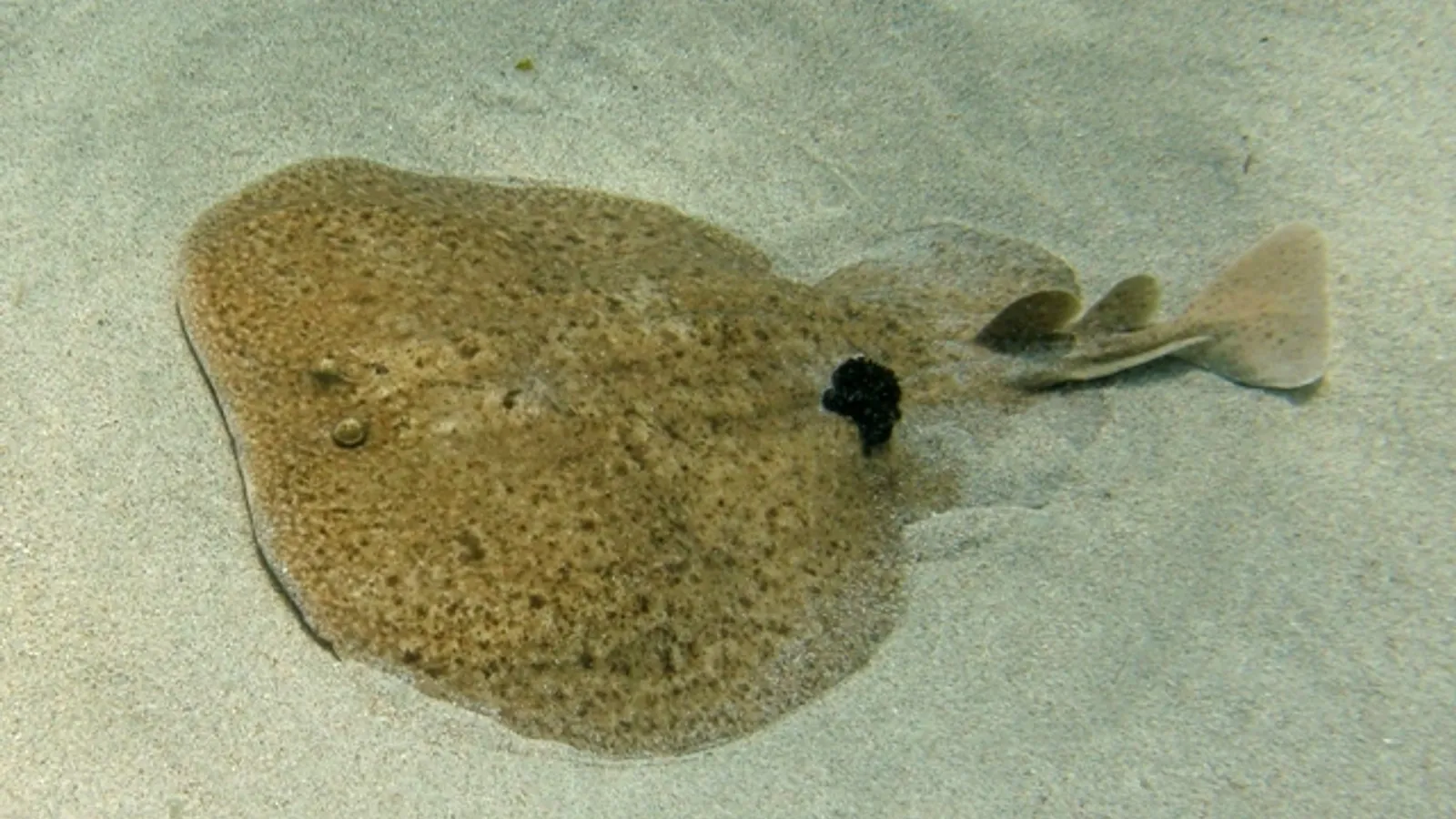
— Where the name comes from
Torpedo comes from the Latin torpere, “to be numb”: the Romans named the fish after what it does, and from that fish, by a roundabout route, come both the naval torpedo and the adjective “torpid”. Marmorata describes the marbled pattern of the back. It is one of the few cases in which a weapon is named after an animal that harms nobody.
— Facts
- Group
- Fish · Actinopterygii · Chondrichthyes
- Order
- Electric rays
- Habitat
- Sandy bottoms and seagrass beds down to 200 metres
- Range
- The eastern Atlantic and the Mediterranean
- Size
- 30–60 cm, 1–3 kg
- Diet
- Small fish stunned by the discharge
- Lifespan
- 20 years
— Characteristics
- 01
On each side of the head it has an electric organ made of modified muscle.
- 02
The discharge reaches two hundred volts: painless but unpleasant for people.
- 03
It hunts buried, covering its prey with its pectoral fins.
— What sets it apart
In the first century AD the physician Scribonius Largus prescribed laying a live torpedo on the head for headache and under the feet for gout: it is the first documented electrical therapy in history, and it arrived before electricity. Seventeen centuries later Alessandro Volta studied precisely the electric organ of these fish — made of thousands of cells stacked one on another like discs — and from it took the idea of the battery. The cell in our pocket descends, by analogy, from a Mediterranean ray.
