
Common stingray
Dasyatis pastinaca
— Where the name comes from
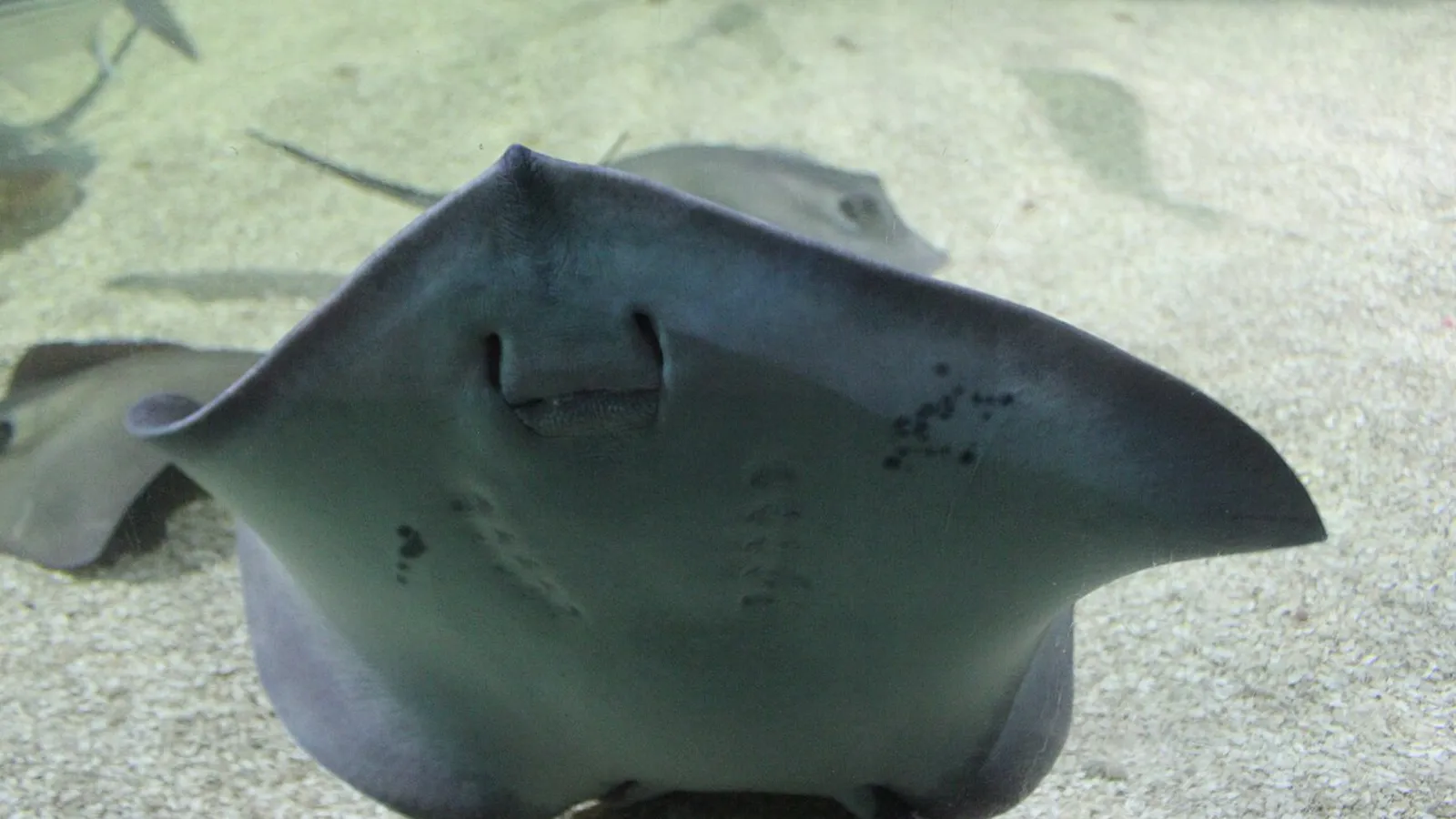
Dasyatis is “rough ray”, from dasýs and batís; pastinaca is the Latin name both of this fish and of the parsnip: both tapered and pointed. The Italian name inherited the double meaning, and around half the Mediterranean it is simply the trigone, from the Greek trygṓn.
— Facts
- Group
- Fish · Actinopterygii · Chondrichthyes
- Order
- Stingrays
- Habitat
- Coastal sandy and muddy bottoms down to 200 metres
- Range
- The eastern Atlantic, the Mediterranean, the Black Sea
- Size
- 45–60 cm across, up to 1.4 m; 5–15 kg
- Diet
- Crustaceans, molluscs, worms, small fish
- Lifespan
- 15 years
— Characteristics
- 01
It carries one or two serrated spines on the tail, linked to a venom gland.
- 02
It never attacks: it strikes only if trodden on.
- 03
It digs in the sand by blowing water from its spiracles.
— What sets it apart
Its spine found its way into Greek myth: according to a tradition reported by Apollodorus, Odysseus was killed by his son Telegonus with a spear tipped with a stingray’s barb, and the prophecy that he would die “from the sea” was fulfilled that way. The spine is a modified scale, serrated backwards, that breaks off in the wound: it hurts enormously and kills only if it strikes the chest, which is very rare and which the world learned from the death of Steve Irwin in 2006.
