
Spotted eagle ray
Aetobatus narinari
— Where the name comes from
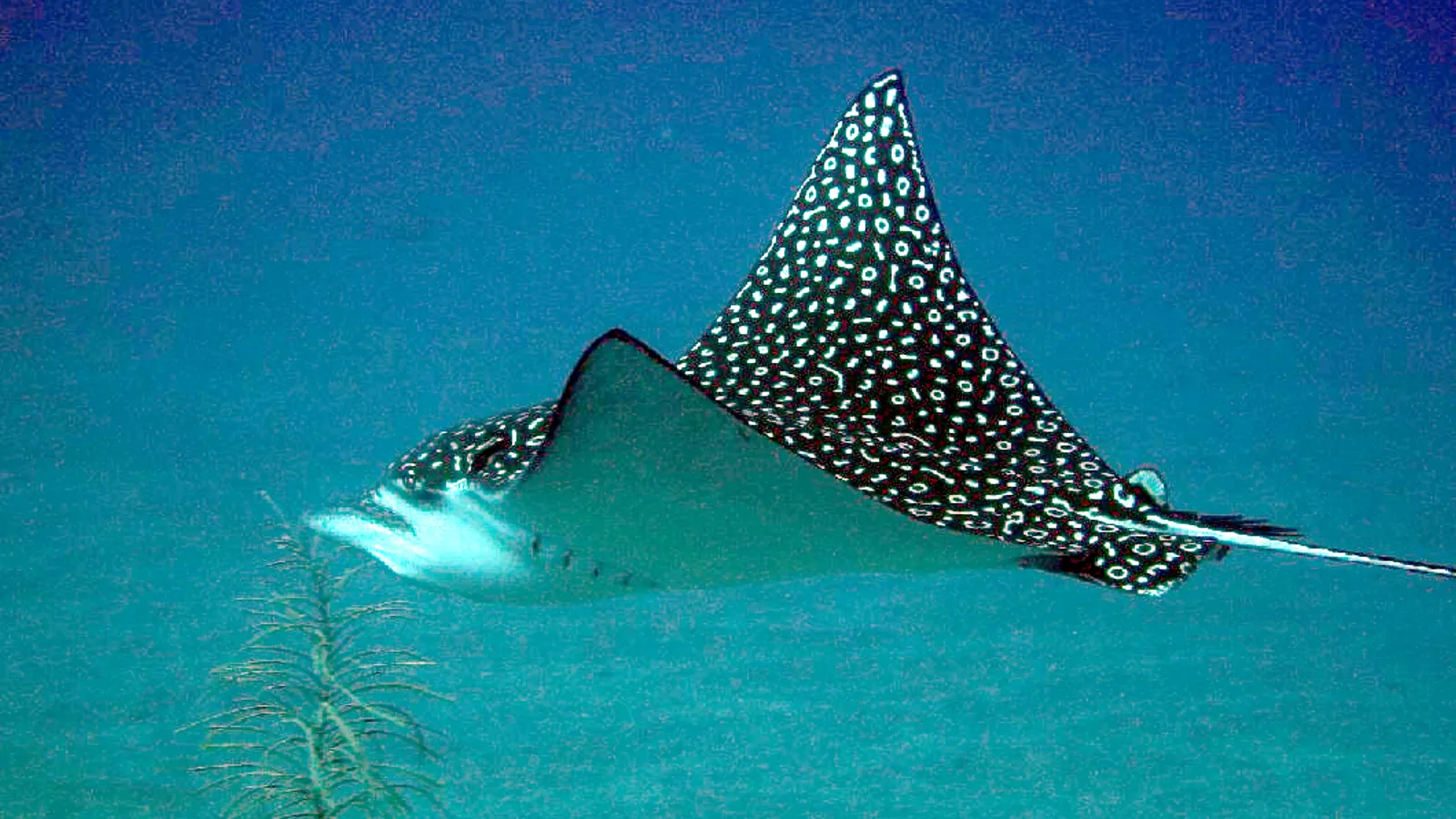
Aetobatus is “eagle ray”, from aetós and batís, for the way it flies underwater beating its pectoral fins like wings; narinari comes from a Brazilian indigenous name collected by Portuguese naturalists. The pattern of white spots on the dark back differs in every individual and allows them to be told apart one by one.
— Facts
- Group
- Fish · Actinopterygii · Chondrichthyes
- Order
- Stingrays
- Habitat
- Lagoons, coral reefs, sandy bays down to 80 metres
- Range
- Tropical seas worldwide
- Size
- 1.5–2.5 m across, up to 3.3 m; 100–230 kg
- Diet
- Bivalves, gastropods, crustaceans, octopus
- Lifespan
- 20 years
— Characteristics
- 01
It leaps clear of the water, sometimes several times in a row.
- 02
It digs in the sand with a snout shaped like a duck’s bill.
- 03
It has ribbon-like dental plates that grind shells like a millstone.
— What sets it apart
It eats bivalves whole and spits out the fragments. The palate carries broad dental plates that mill the shell, and the ray then separates the contents from the shards by working the mouthful back and forth before swallowing only the soft part: beneath an oyster bed frequented by these animals the bottom is covered in splinters. Why they leap clear of the water nobody knows: the hypotheses run from shedding parasites to communication, and none of them quite holds.
