
Ocellate river stingray
Potamotrygon motoro
— Where the name comes from
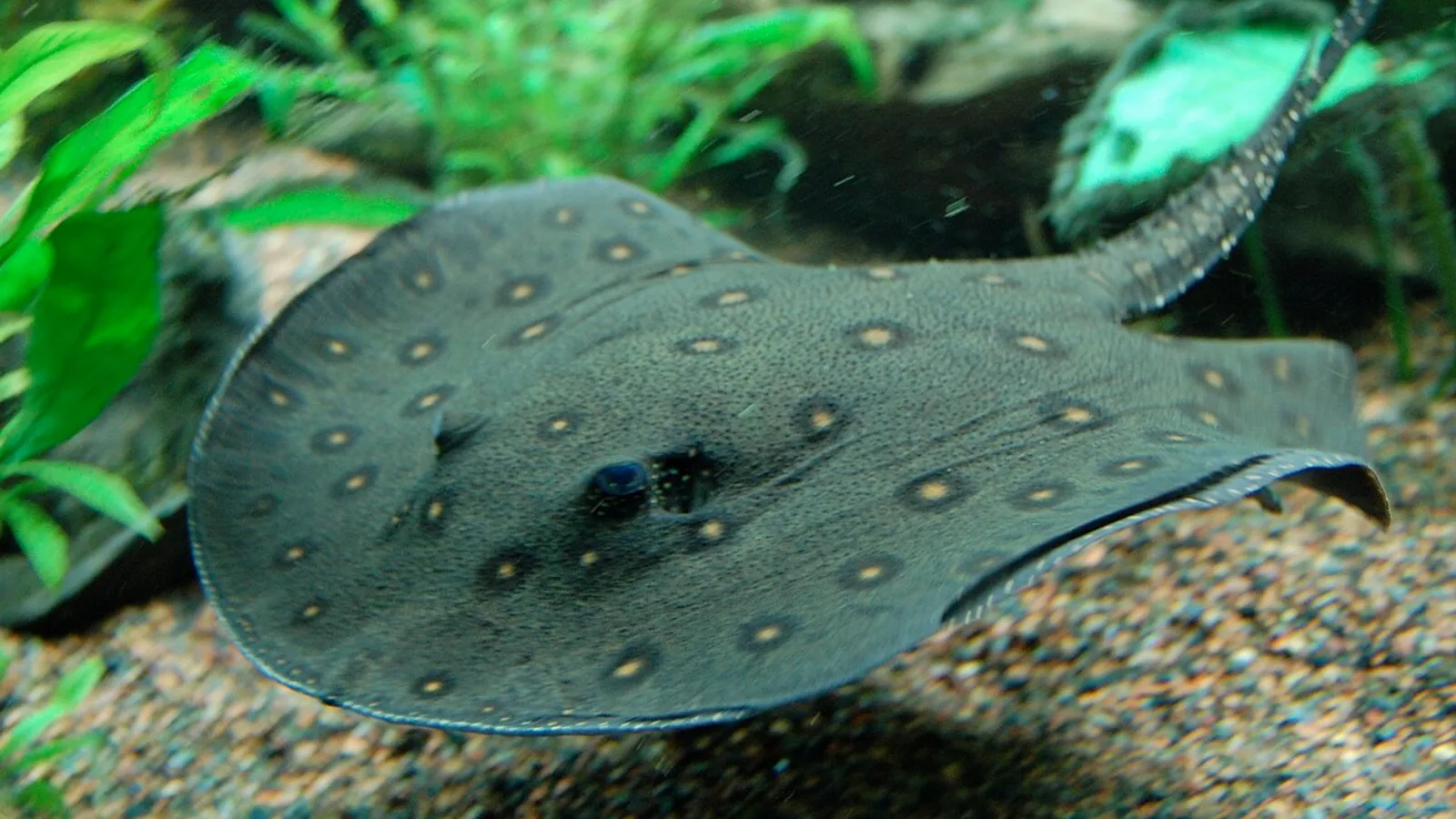
Potamotrygon is “river stingray”, from potamós and trygṓn: a ray living where rays should not be. Motoro is a South American indigenous name. The ocelli — yellow spots ringed in black, like eyes — give the common name and are its signature on the murky river bed.
— Facts
- Group
- Fish · Actinopterygii · Chondrichthyes
- Order
- Stingrays
- Habitat
- Rivers, oxbows and freshwater lagoons with sandy bottoms
- Range
- The Amazon, Orinoco and Paraná basins
- Size
- 40–50 cm across, up to 100 cm; 5–15 kg
- Diet
- Aquatic insects, crustaceans, molluscs, small fish
- Lifespan
- 15 years
— Characteristics
- 01
It is one of very few rays that live entirely in fresh water.
- 02
Its sting causes some of the most painful wounds in Amazonia.
- 03
It bears fully formed young after three months of gestation.
— What sets it apart
Every other cartilaginous fish fills its blood with urea to avoid dehydrating in the sea; these rays have lost that capacity, which means they could not return to the sea even if they wanted to. It is the proof that they have been in fresh water for a very long time: when the Andes rose, tens of millions of years ago, an arm of the proto-Amazon that drained to the Pacific was shut inside the continent, and with it the rays that lived there. They are the legacy of a river that changed direction.
