
Beluga sturgeon
Huso huso
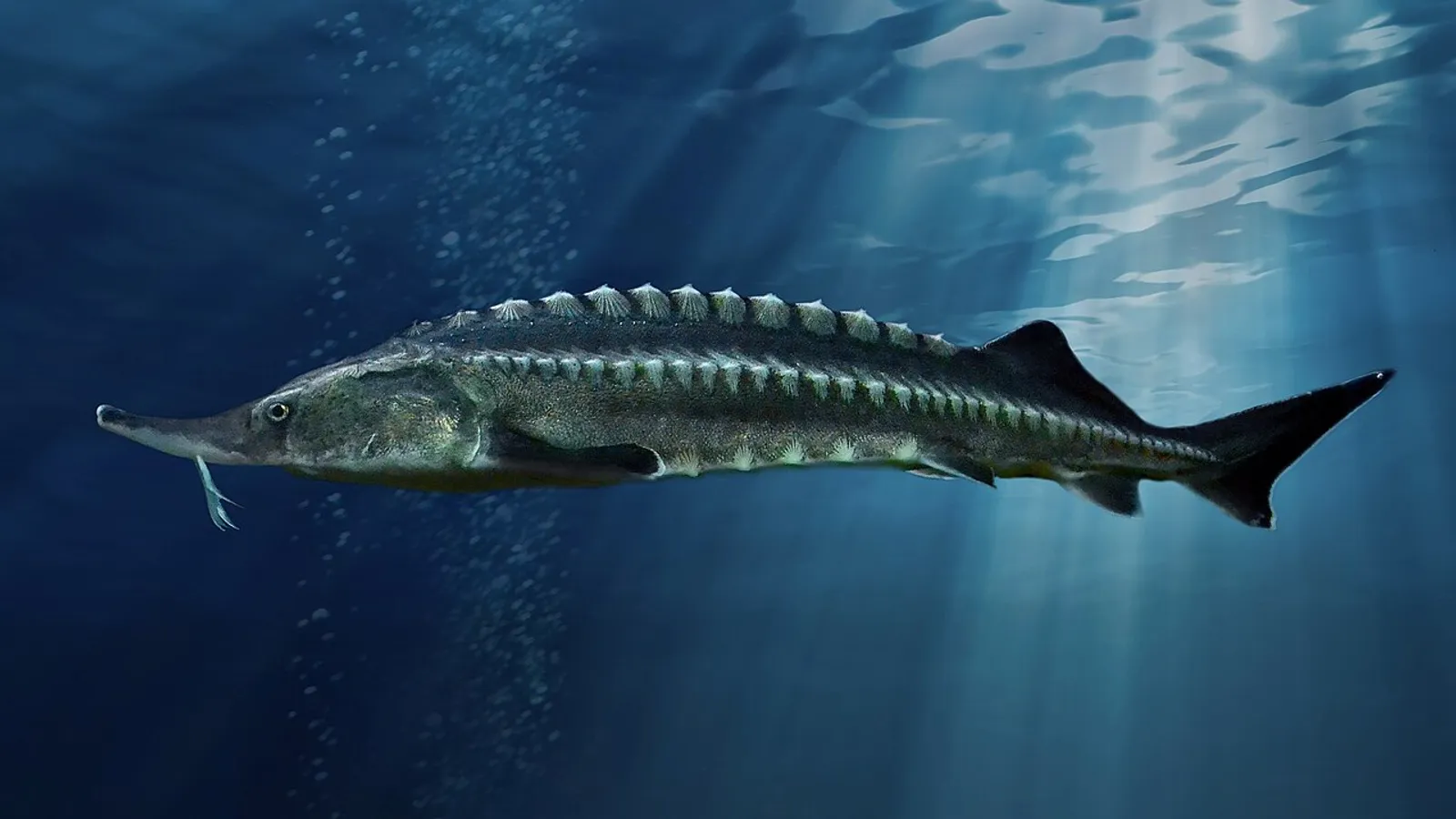
— Where the name comes from
Huso is the medieval Latin name of the sturgeon, of Germanic origin, repeated twice in the binomial. Beluga comes instead from the Russian belyj, “white”, and names both this fish and the white whale of the Arctic: two entirely unrelated animals sharing a name because both are large and pale.
— Facts
- Group
- Fish · Actinopterygii · Chondrichthyes
- Order
- Sturgeons
- Habitat
- The Caspian and Black Seas; rivers to spawn
- Range
- The Caspian, the Black Sea, formerly the northern Adriatic
- Size
- 2–5 m, historically up to 7 m; 100–1,000 kg
- Diet
- Fish, molluscs, Caspian seals in the largest individuals
- Lifespan
- over 100 years
— Characteristics
- 01
It is the largest freshwater fish in the world.
- 02
Females breed for the first time at around twenty.
- 03
Its skeleton is almost entirely cartilage, as in sharks.
— What sets it apart
The caviar that bears its name is worth more per kilo than any other food on Earth, and that has nearly erased it: a mature female may hold fifteen per cent of her weight in eggs, and to take them she must be killed before she has spawned. Add the dams on the Volga and the Danube, which cut the migration routes, and the result is a species that lives more than a century and that in thirty years has nearly gone from the Caspian: almost every animal left is now born on a farm.
