
Song thrush
Turdus philomelos
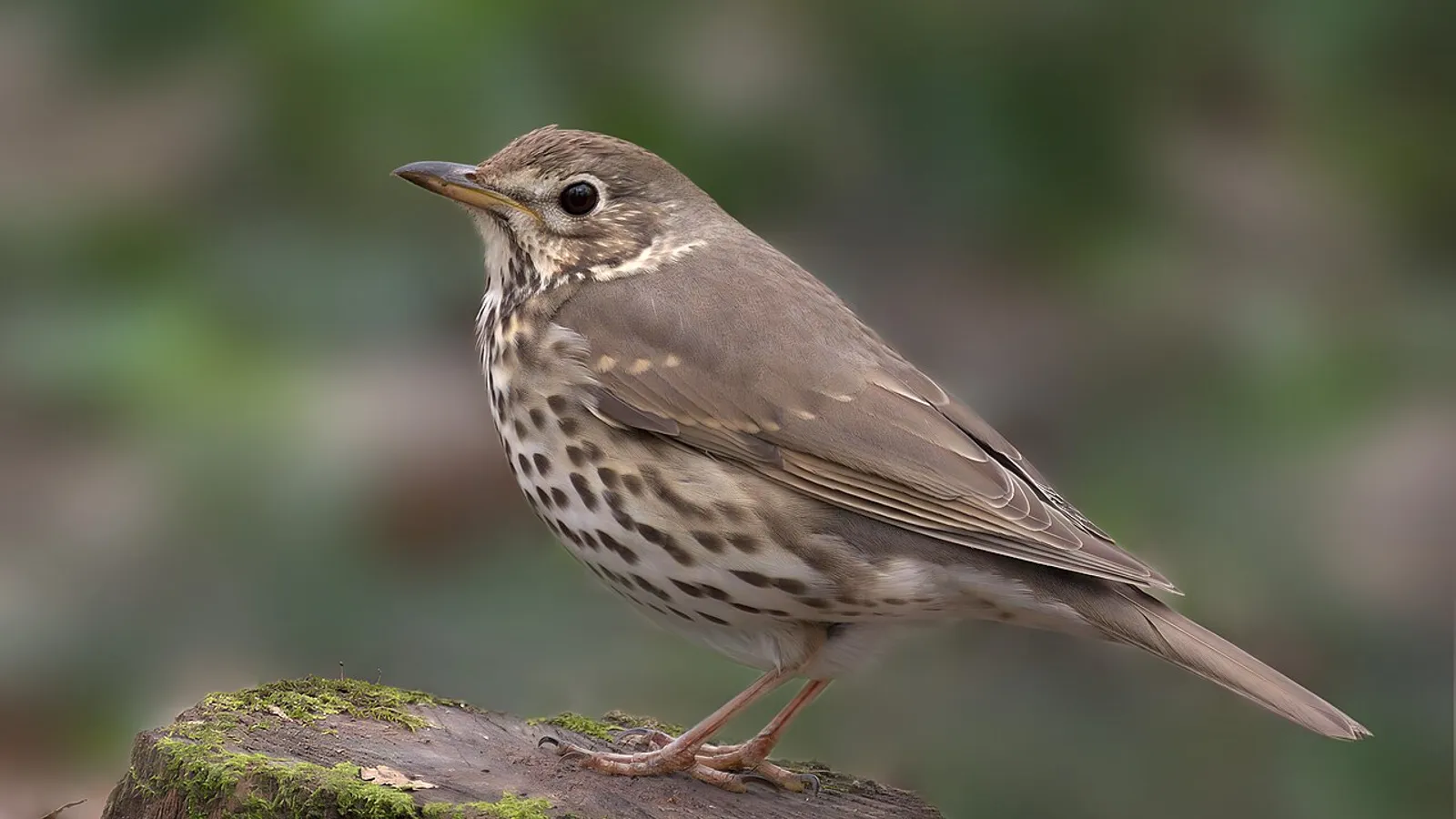
— Where the name comes from
Philomelos in Greek means “song-loving”, from philéō and mélos, the melody: the name alludes to Philomela, the princess turned into a nightingale, but applied to a thrush it becomes simply a compliment. The Italian bottaccio comes from the fact that in autumn it fattens on berries until it looks like a small cask, and it is the name the hunters gave it.
— Facts
- Group
- Birds · Aves
- Order
- Passerines
- Habitat
- Woodland, gardens, parks, olive groves, hedges
- Range
- Europe and western Asia; winters around the Mediterranean
- Size
- 20–24 cm, wingspan 33–36 cm, 50–107 g
- Diet
- Earthworms, snails, insects, berries
- Lifespan
- 3 years in the wild
— Characteristics
- 01
The pale breast is covered in dark arrowhead spots.
- 02
It repeats every phrase of its song two or three times before moving on.
- 03
It migrates at night, and its contact call can be heard over cities.
— What sets it apart
It has an anvil. It picks a stone or a projecting root and returns to it always, holding the snail by the rim of the shell and swinging it sideways until it breaks; a ring of fragments builds up around the stone and tells passers-by that a thrush works there. It is one of the few European birds to use a fixed object as a tool, and in droughts, when the earthworms go deep, it is the difference between eating and not.
