
House mouse
Mus musculus
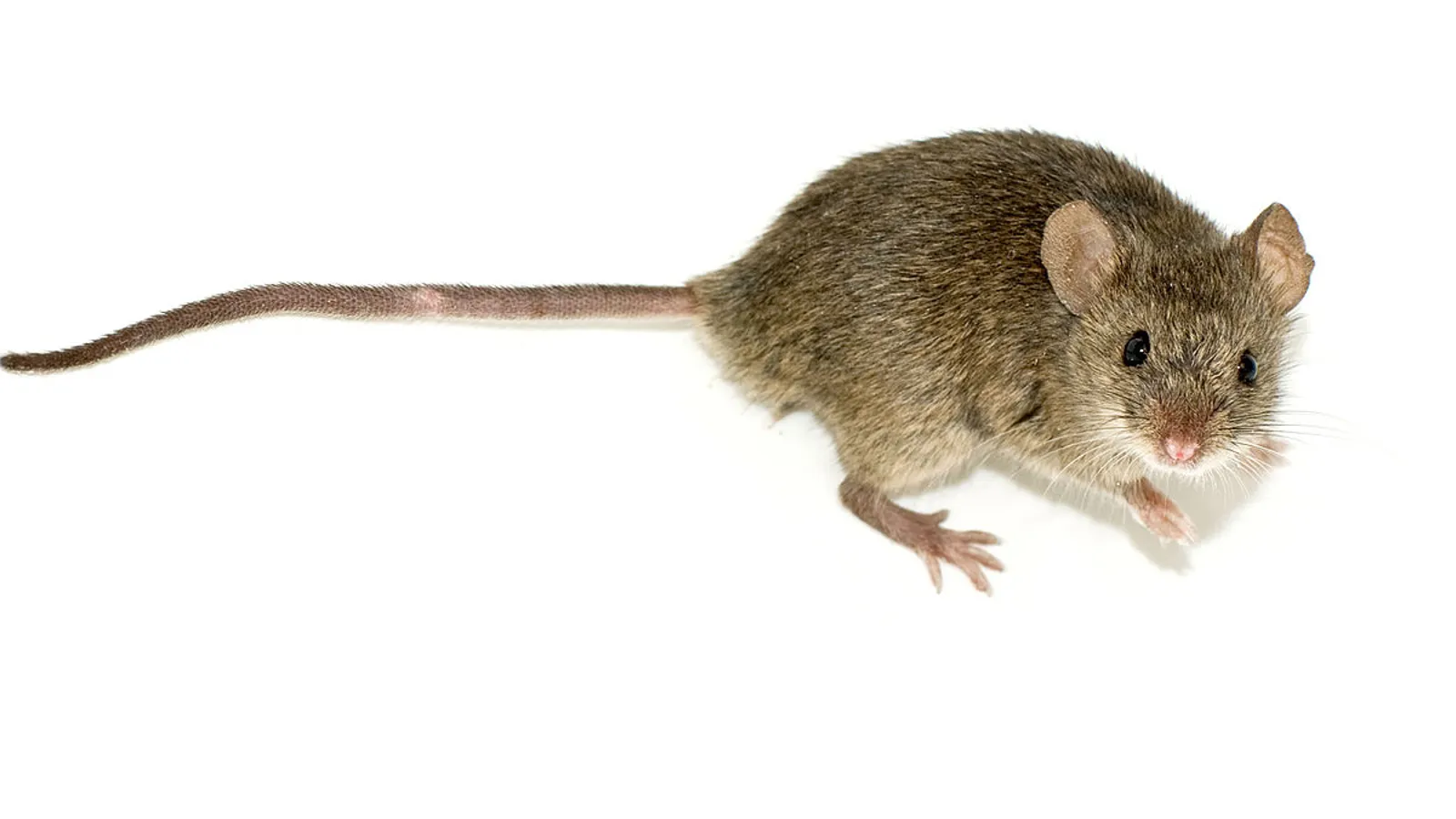
— Where the name comes from
Mus is the Latin for mouse, from the Indo-European root *mūs that runs across nearly all of Eurasia: the Greek mŷs, the Sanskrit mū́ṣ, the English mouse. Musculus is its diminutive, “little mouse” — and from there comes our word muscle, because the biceps flexing under the skin looked to whoever was watching like a mouse running. Every time we say muscle we are naming a rodent.
— Facts
- Group
- Mammals · Mammalia
- Order
- Rodents
- Habitat
- Houses, warehouses, cultivated fields, practically wherever people live
- Range
- Cosmopolitan, following humans onto every continent and almost every island
- Size
- 7–10 cm long plus as much again of tail, 12–30 g
- Diet
- Omnivore — seeds, grain, roots, insects, scraps
- Lifespan
- 1–2 years in the wild
— Characteristics
- 01
Its incisors grow about 3 mm a week all life long and must be worn down constantly.
- 02
It passes through any gap it can fit its skull into, even six millimetres.
- 03
The males give out ultrasonic songs structured into repeated phrases, inaudible to us.
— What sets it apart
Modern biology is largely written in this animal: its genome was sequenced in 2002, it shares the great majority of protein-coding genes with us, and tens of thousands of genetically defined lines exist. But the most widely used laboratory strain in the world, C57BL/6, descends from mice bought in the early 20th century from Abbie Lathrop, a Massachusetts breeder who sold pet mice from her porch and who, without being a professional scientist, carried out with Leo Loeb the first research on the heritability of tumours.
