
Nutria
Myocastor coypus
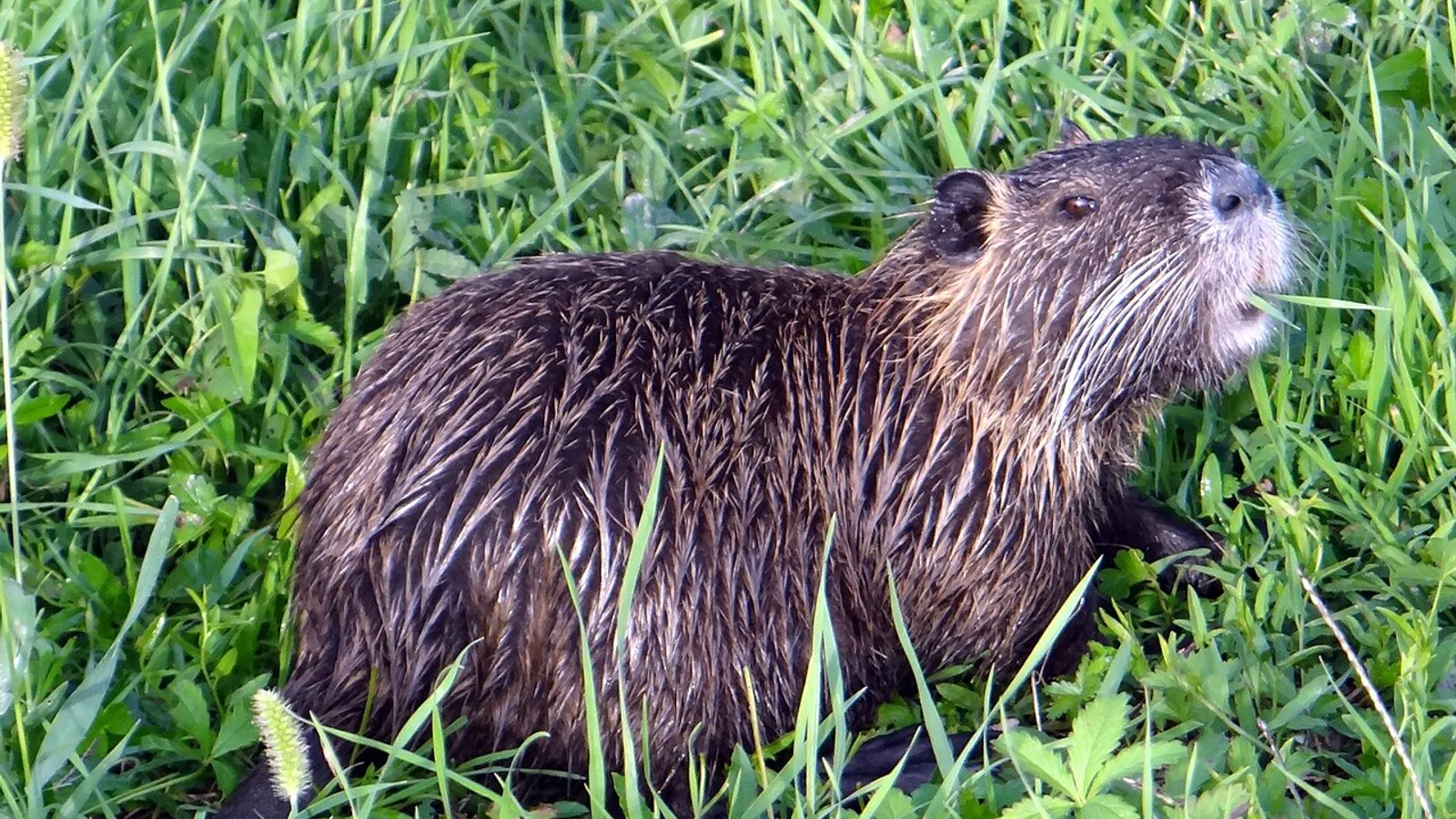
— Where the name comes from
A name wrong three times over. Myocastor is Greek and means “mouse-beaver”; coypus is the Spanish rendering of the Mapudungun koypu, the true name given by the peoples of Chile. Nutria is instead the Spanish for otter, from the Latin lutra, and in South America it named the pelt: Europeans took the name of the fur and attached it to the wrong animal. In Spanish, to this day, nutria is the otter and this creature is the coipo.
— Facts
- Group
- Mammals · Mammalia
- Order
- Rodents
- Habitat
- Canals, ditches, river banks and marshes with dense vegetation
- Range
- Native to temperate South America; introduced and now established in Europe, North America and East Asia
- Size
- 45–60 cm long plus 30–45 of tail, 5–9 kg
- Diet
- Herbivore — reeds, aquatic roots, rice and maize crops
- Lifespan
- About 6 years
— Characteristics
- 01
The incisors are bright orange from iron-rich enamel, which makes them harder.
- 02
The female’s teats are set high on her flanks: the young suckle while she swims.
- 03
It digs burrows up to six metres long into banks, weakening levees and waterworks.
— What sets it apart
It reached Italy in the 1920s for fur farming, and stayed for the opposite reason: when the market collapsed, many farms simply opened the cages. Today it is an invasive species, and the worst damage it does is not by eating but by digging — banks riddled with its burrows give way, and the bill is paid by land reclamation boards and by farming. It is the exemplary case of an ecological problem that arises not from an animal, but from a fashion that ended badly.
