
European hare
Lepus europaeus
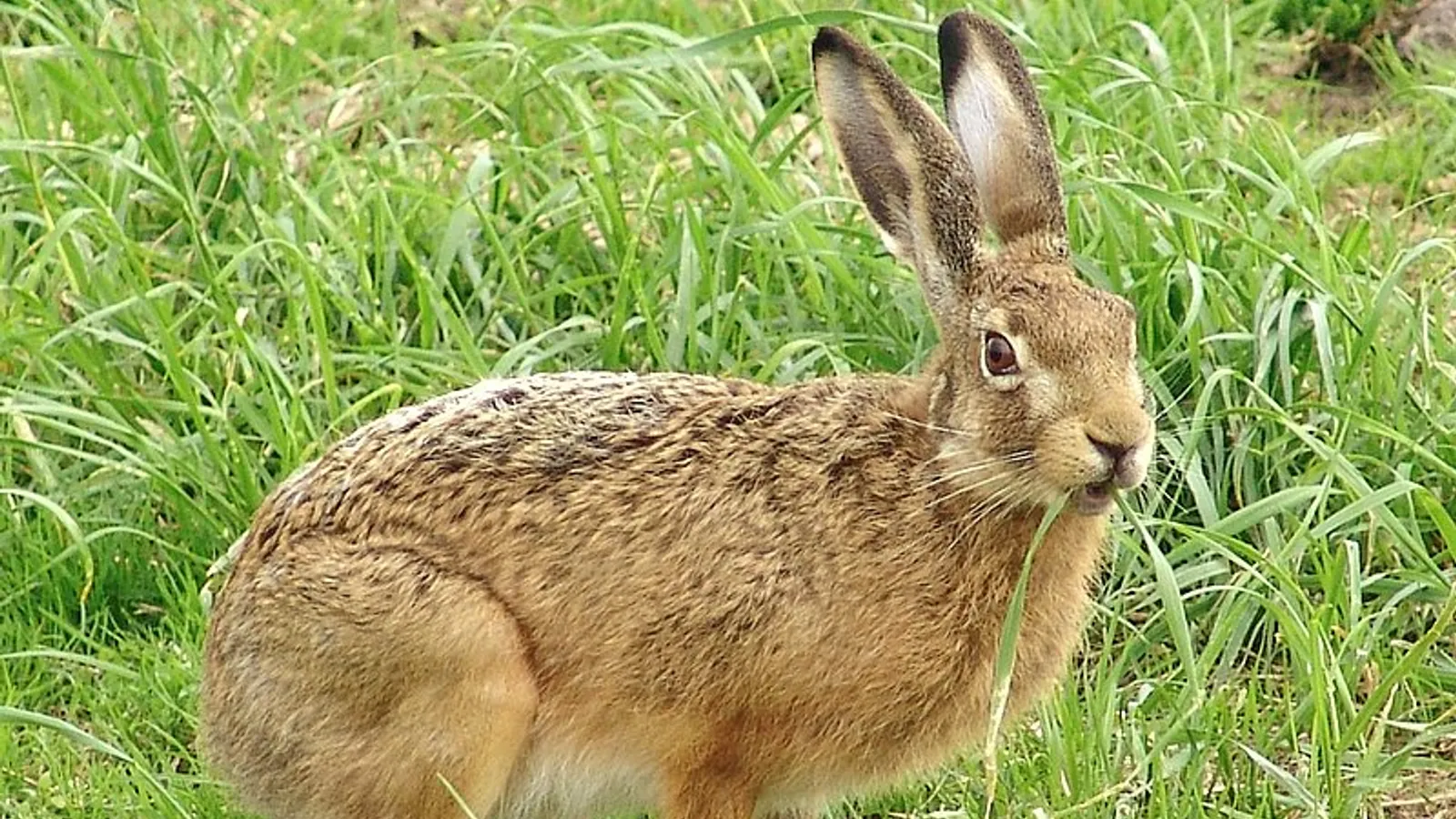
— Where the name comes from
Lepus, lepŏris is Latin and gave directly the Italian lepre, the French lièvre, the Spanish liebre. The origin is probably pre-Indo-European Mediterranean, the same very old layer of vocabulary as other words tied to hunting. From it comes the family of the leporids, and from it the Italian leprotto: a root that in Italian has never stopped generating.
— Facts
- Group
- Mammals · Mammalia
- Order
- Lagomorphs
- Habitat
- Open fields, arable land, grassland, woodland edges
- Range
- Europe and western Asia; introduced to South America, Australia and New Zealand
- Size
- 50–70 cm long, 3–5 kg
- Diet
- Herbivore — grasses, shoots, bark in winter
- Lifespan
- 3–4 years in the wild
— Characteristics
- 01
It runs at 70 km/h and turns at right angles without slowing.
- 02
It digs no burrow: it gives birth in the open in a simple hollow in the ground, the form.
- 03
The leverets are born already furred and open-eyed, able to run within hours.
— What sets it apart
The female can conceive while she is already pregnant. It is called superfetation: a few days before giving birth she comes into oestrus again and conceives a second litter, which begins developing before the first is born. In a short breeding season full of predators that margin is worth an extra litter a year. It is a rare phenomenon, long disputed in mammals, and was demonstrated with certainty in the European hare only in 2010, thanks to ultrasound.
