
American pika
Ochotona princeps
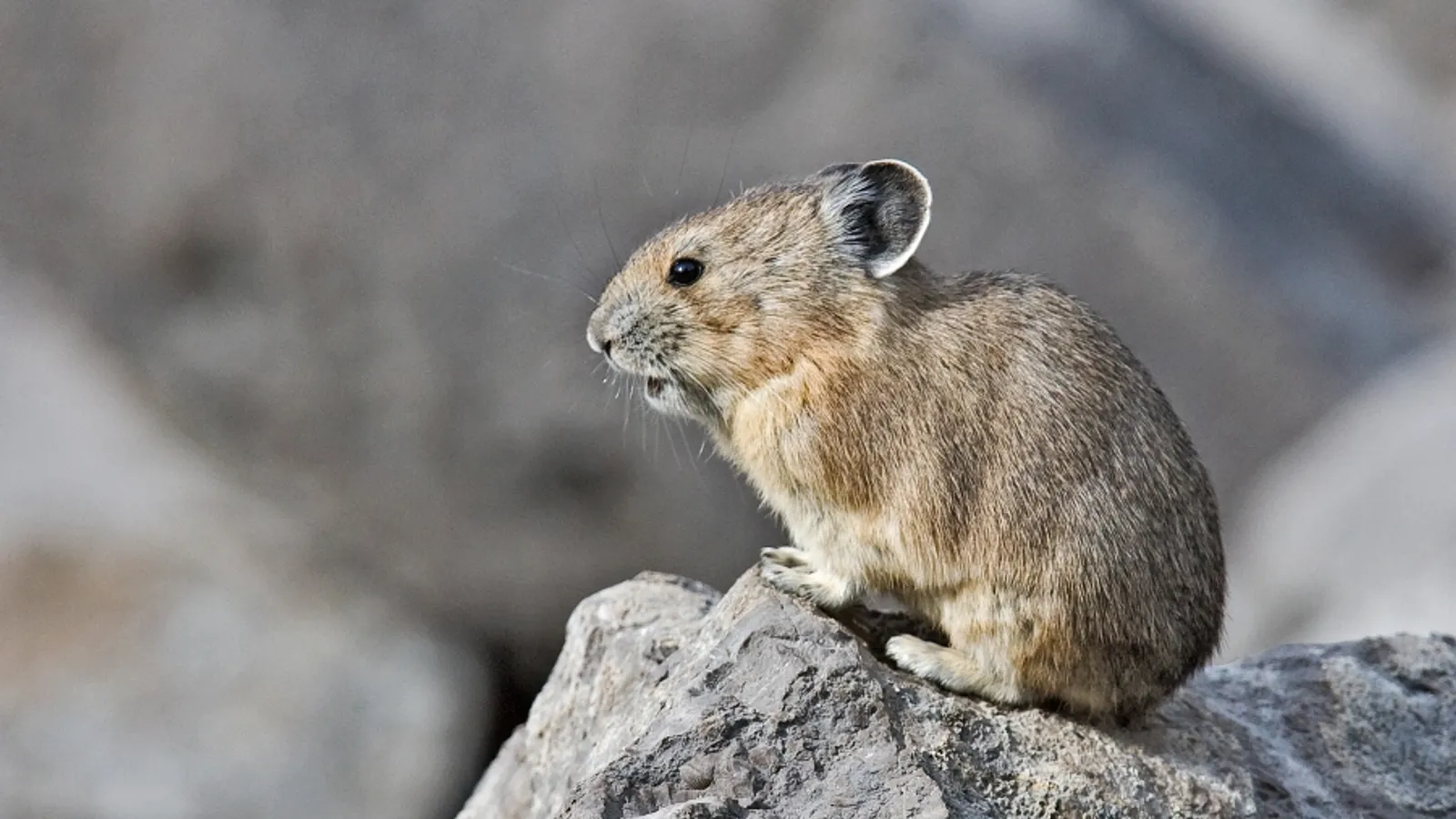
— Where the name comes from
Ochotona comes from the Mongolian ogdoi, the name the peoples of Central Asia gave these animals: one of the very few Mongolian terms to enter zoological nomenclature. Princeps is Latin, “the first”, an epithet of honour reserved for the type species. Pika is probably of Tungusic-Siberian origin, and reproduces the sharp whistle with which the animal signals danger.
— Facts
- Group
- Mammals · Mammalia
- Order
- Lagomorphs
- Habitat
- High-altitude scree and boulder fields, between 2,500 and 4,000 metres
- Range
- The mountains of western North America, from British Columbia to New Mexico
- Size
- 16–22 cm long, 120–175 g
- Diet
- Herbivore — grasses, mosses, lichens, alpine flowers
- Lifespan
- 6–7 years
— Characteristics
- 01
It does not hibernate: it spends the summer building haypiles that must last it the whole winter.
- 02
A single haypile can hold over twenty kilos of vegetation, dried in the sun and turned like laundry.
- 03
It has no visible tail and is a relative of rabbits, not rodents, despite the look of it.
— What sets it apart
It lives wrapped in a coat designed for frost, and that leaves it extremely vulnerable to heat: a few hours above 25 °C can kill it by hyperthermia. As temperatures rise the populations are retreating upwards, mountain by mountain, and on several Great Basin summits they have already vanished. Once at the top, however, the staircase ends and there is nowhere left to go. It is for this reason one of the most used indicators for measuring climate change in the mountains.
