
European mole
Talpa europaea
— Where the name comes from
Talpa is Latin and stays identical in Italian, one of the most stable animal names in the language. The etymology most often accepted links it to a root meaning “to dig”. In many other European languages the name alludes instead to the heap the animal leaves at the surface: the German Maulwurf is “earth thrower”, and the English mole comes from a word meaning a caster of clods. We named the act, they named the result.
— Facts
- Group
- Mammals · Mammalia
- Order
- Hedgehogs and moles
- Habitat
- Deep damp soils of meadows, pasture, gardens and broadleaf woodland
- Range
- Continental Europe, from northern Spain to Russia; in Italy mainly in the north and along the Apennines
- Size
- 11–16 cm long, 70–130 g
- Diet
- Insectivore — earthworms above all, plus grubs and soil insects
- Lifespan
- 3–5 years
— Characteristics
- 01
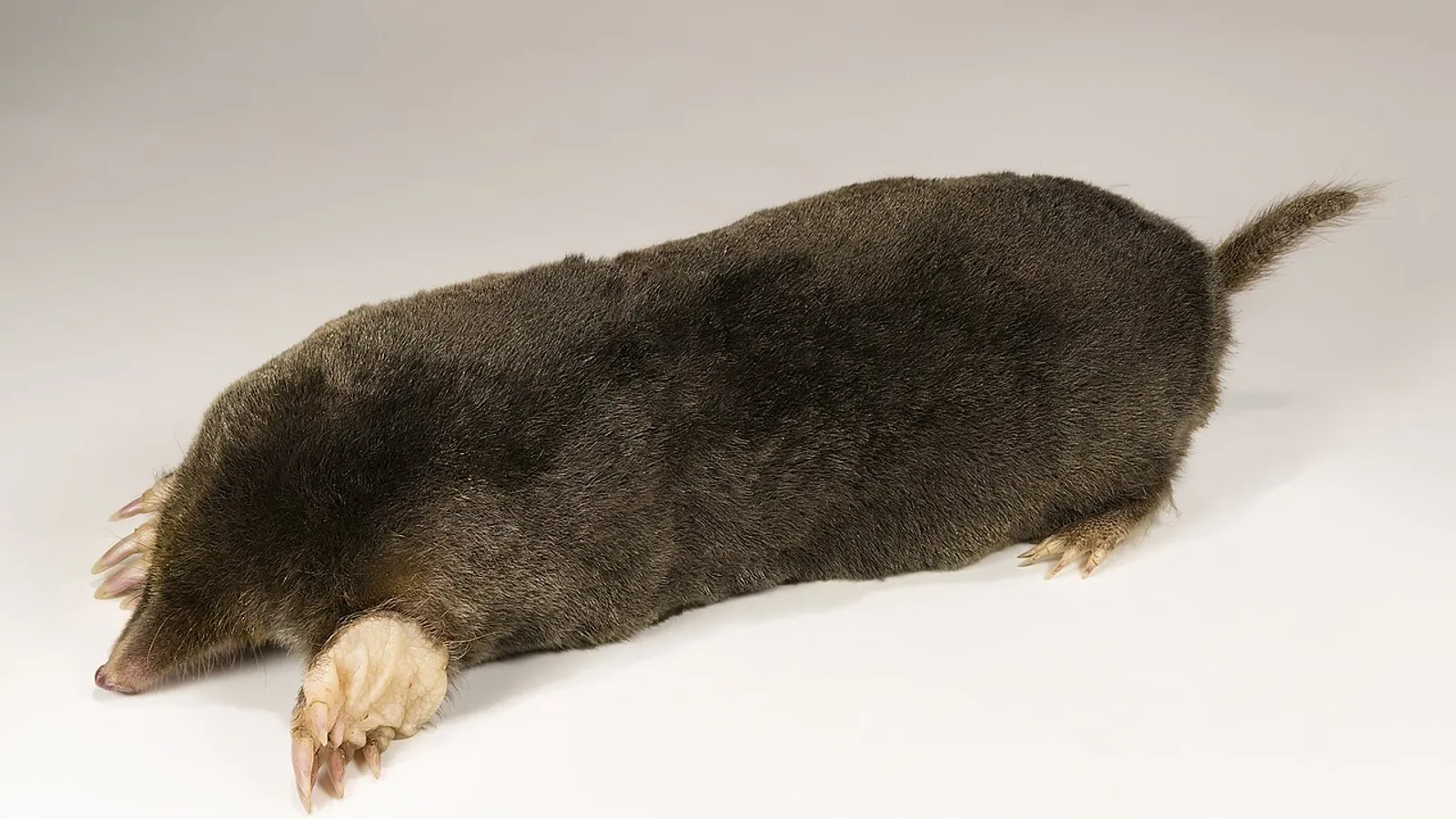
It digs up to twenty metres of tunnel a day with forelimbs turned outwards like spades.
- 02
It has a false sixth finger at the wrist, a widened bone that extends the surface of the hand.
- 03
Its blood carries a particular haemoglobin, which works even with very little oxygen.
— What sets it apart
The tunnels are not corridors for getting somewhere: they are traps. Earthworms that break into the tunnel are left exposed, and the mole runs the circuit at regular intervals collecting whatever has fallen in — a fishing net dug into the earth. When it catches more than it needs it paralyses them with a bite to the head without killing them and stores them in a larder chamber: caches have been found holding hundreds of live, motionless worms, kept fresh for winter.
