
Ground pangolin
Smutsia temminckii
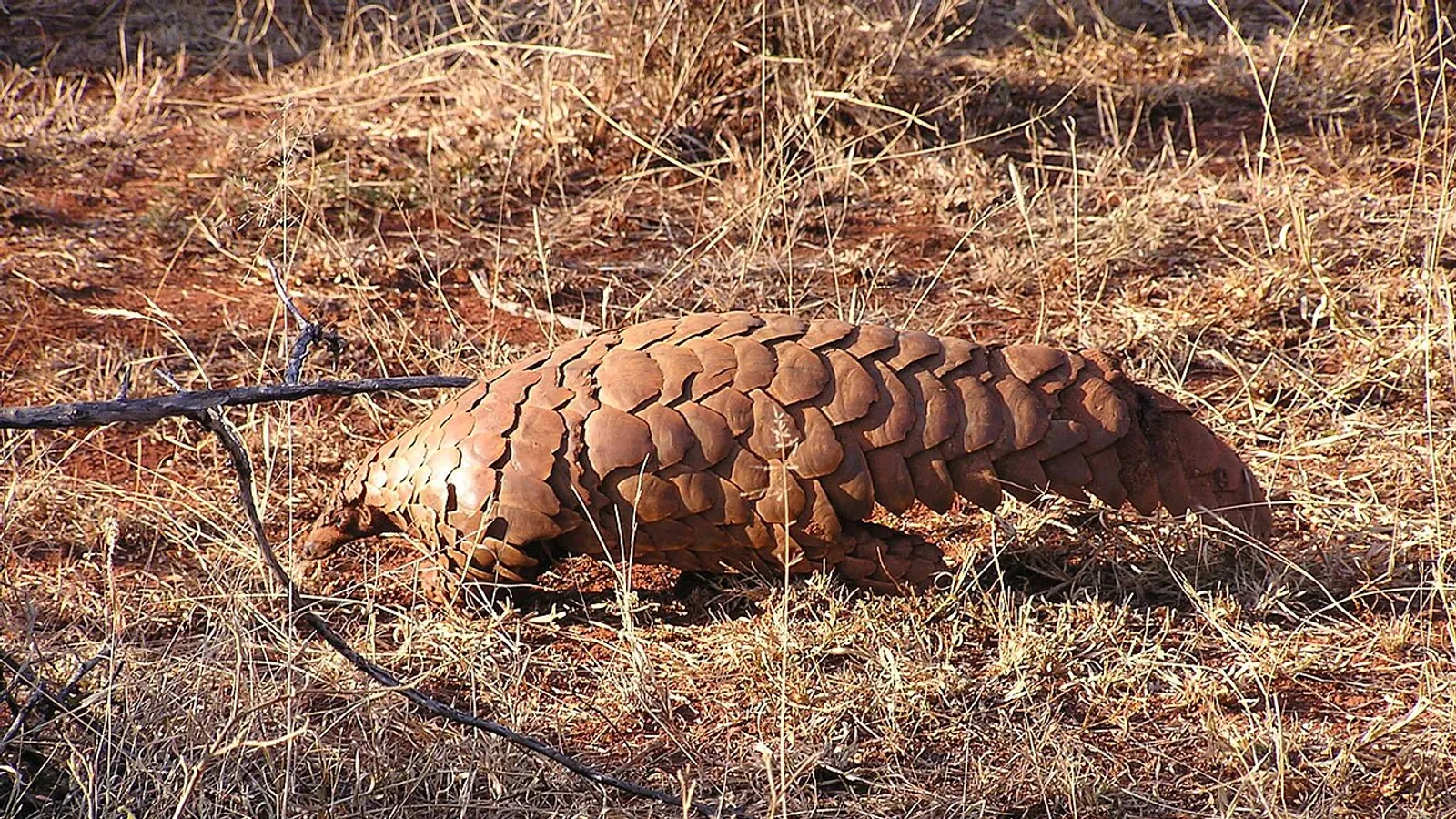
— Where the name comes from
Pangolin comes from the Malay peng-guling, “the one that rolls up”, and it is an exact description of the only defence this animal has. The name of the order, Pholidota, is Greek: pholís, “scale”. The epithet recalls Coenraad Jacob Temminck, a Dutch zoologist of the 19th century and the first director of the Leiden museum — one of those names that appear dozens of times in zoology, attached to the animals other people sent him.
— Facts
- Group
- Mammals · Mammalia
- Order
- Pangolins
- Habitat
- Savannah, bushland, arid grassland with termite mounds
- Range
- Eastern and southern Africa, from Chad and Sudan to South Africa
- Size
- 40–60 cm long plus 30–50 of tail, 7–18 kg
- Diet
- Ant eater — ants and termites
- Lifespan
- About 20 years
— Characteristics
- 01
It is the only mammal in the world covered in scales, made of the same keratin as our nails.
- 02
It has no teeth: it grinds insects in a muscular stomach holding pebbles swallowed on purpose.
- 03
It walks on its hind legs with the forelimbs held up, their claws serving only to dig.
— What sets it apart
Rolling into a ball works perfectly against lions and hyenas, which tire and move on. Against a human being who bends down and picks it up it is the worst defence possible. Precisely for that reason the pangolin is now among the most trafficked mammals on the planet: hundreds of thousands taken in a few years, for scales used in traditional medicine — keratin, chemically indistinguishable from a human fingernail. An animal that survived tens of millions of years with a single strategy has met the one predator against which that strategy hands it over.
