
Japanese macaque
Macaca fuscata
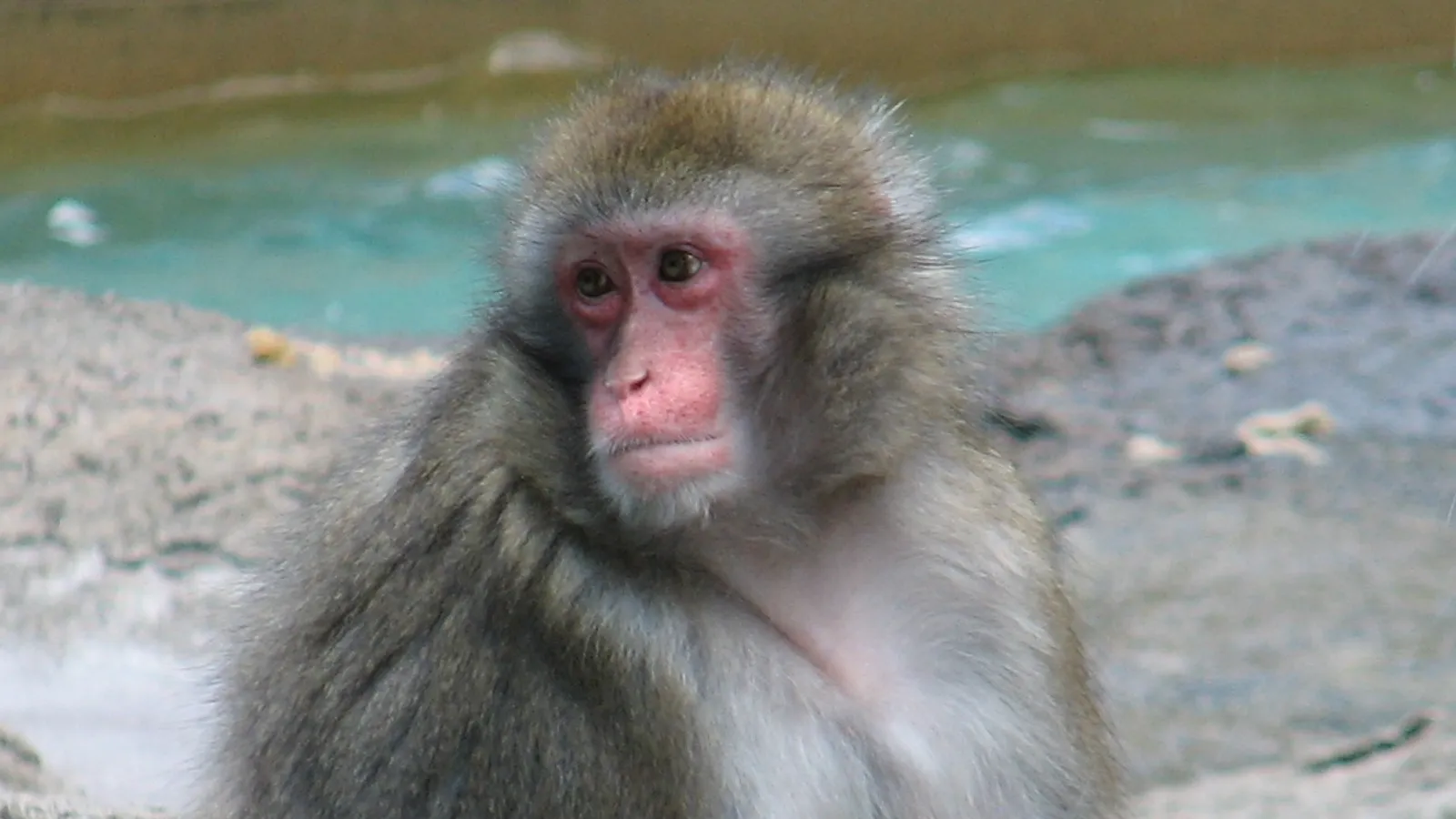
— Where the name comes from
Macaca comes from the Portuguese macaco, which the navigators took from a Bantu language of central Africa — makaku, “monkeys” — and then applied to Asian species that had nothing to do with Africa. Fuscata is Latin, “darkened”, from fuscus. The Japanese name, nihonzaru, says simply “monkey of Japan”: it is the only non-human primate that lives so far north.
— Facts
- Group
- Mammals · Mammalia
- Order
- Primates
- Habitat
- Temperate and subalpine forest, from the coast up to 3,000 metres
- Range
- Japan: Honshū, Shikoku, Kyūshū and smaller islands
- Size
- 50–60 cm long, 8–14 kg
- Diet
- Omnivore — fruit, seeds, leaves, bark, insects, molluscs
- Lifespan
- 25–30 years
— Characteristics
- 01
It lives where winter falls to −15 °C and snow lies for months: no wild primate goes further north.
- 02
Some populations spend the winter immersed in hot springs, coming out only to eat.
- 03
The societies are matrilineal: the females stay in the group they were born into, the males leave.
— What sets it apart
In 1953, on the island of Kōshima, a young female called Imo carried a sand-covered sweet potato into a stream and washed it. Within a few years the gesture had spread among her age-mates and then to the mothers, and later generations learnt it as infants; later still some switched to sea water, perhaps for the salt. It is the first documented case of a cultural innovation transmitted through a wild animal population, and it began with an individual who had a name and a date.
