
Damaraland mole-rat
Fukomys damarensis
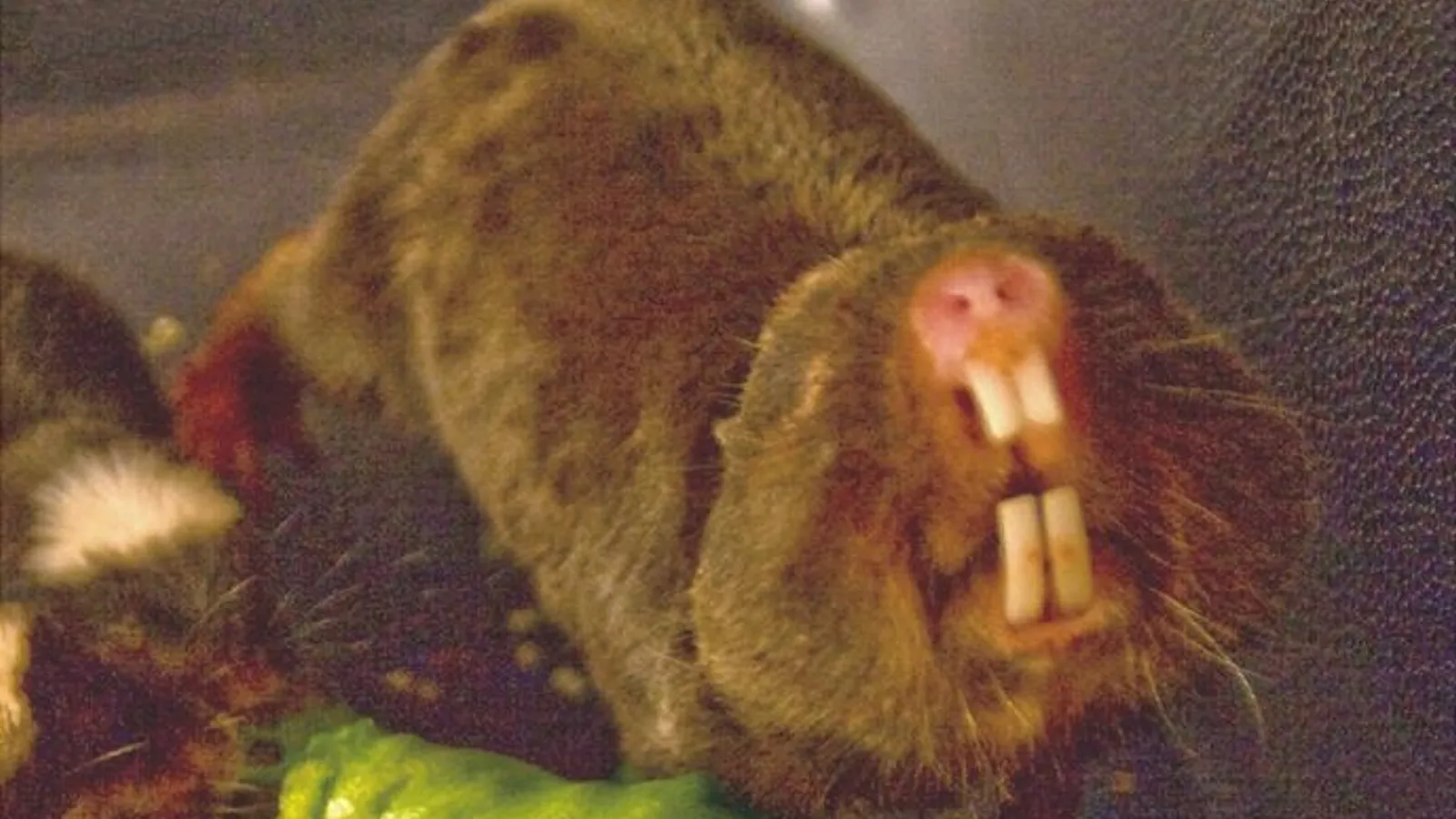
— Where the name comes from
Fukomys takes its first part from fuko, the name of the mole-rat in several Bantu languages of southern Africa, and joins it to the usual Greek mŷs: a linguistic hybrid that unusually acknowledges the people who had always known the animal. Damarensis points to Damaraland, the region of northern Namibia.
— Facts
- Group
- Mammals · Mammalia
- Order
- Rodents
- Habitat
- Arid sandy soils of the savannah, always underground
- Range
- Namibia, Botswana, Zambia, Zimbabwe, northern South Africa
- Size
- 12–18 cm, 130–200 g
- Diet
- Tubers and roots, often enormous relative to the animal
- Lifespan
- over 20 years
— Characteristics
- 01
It lives in colonies of twenty to forty with a single breeding female.
- 02
It digs only after rain, when the sand yields: in one night it makes tens of metres.
- 03
The non-breeders stay sterile as long as the queen is alive.
— What sets it apart
It is one of only two eusocial mammals known, along with the naked mole-rat: a society with a queen, workers that dig and individuals specialised in defence, organised like a termite colony. The reason lies in the food — desert tubers are large and very scarce, and finding one means digging for hundreds of metres: one animal alone could never manage it, a team can. Eusociality here arises not from kinship but from the geography of the larder.
