
Cape mole-rat
Georychus capensis
— Where the name comes from
Georychus is “earth digger”, from gê, the earth, and orýssō, to dig — the same root as “oryctology”, the old name for the study of fossils. Capensis names the Cape of Good Hope. It is the only member of its genus, a solitary in taxonomy as well.
— Facts
- Group
- Mammals · Mammalia
- Order
- Rodents
- Habitat
- Damp sandy soils, grassy slopes, gardens of the Cape region
- Range
- South-western South Africa and a few isolated populations to the east
- Size
- 15–20 cm, 120–260 g
- Diet
- Geophyte bulbs, roots, tubers
- Lifespan
- 6 years
— Characteristics
- 01
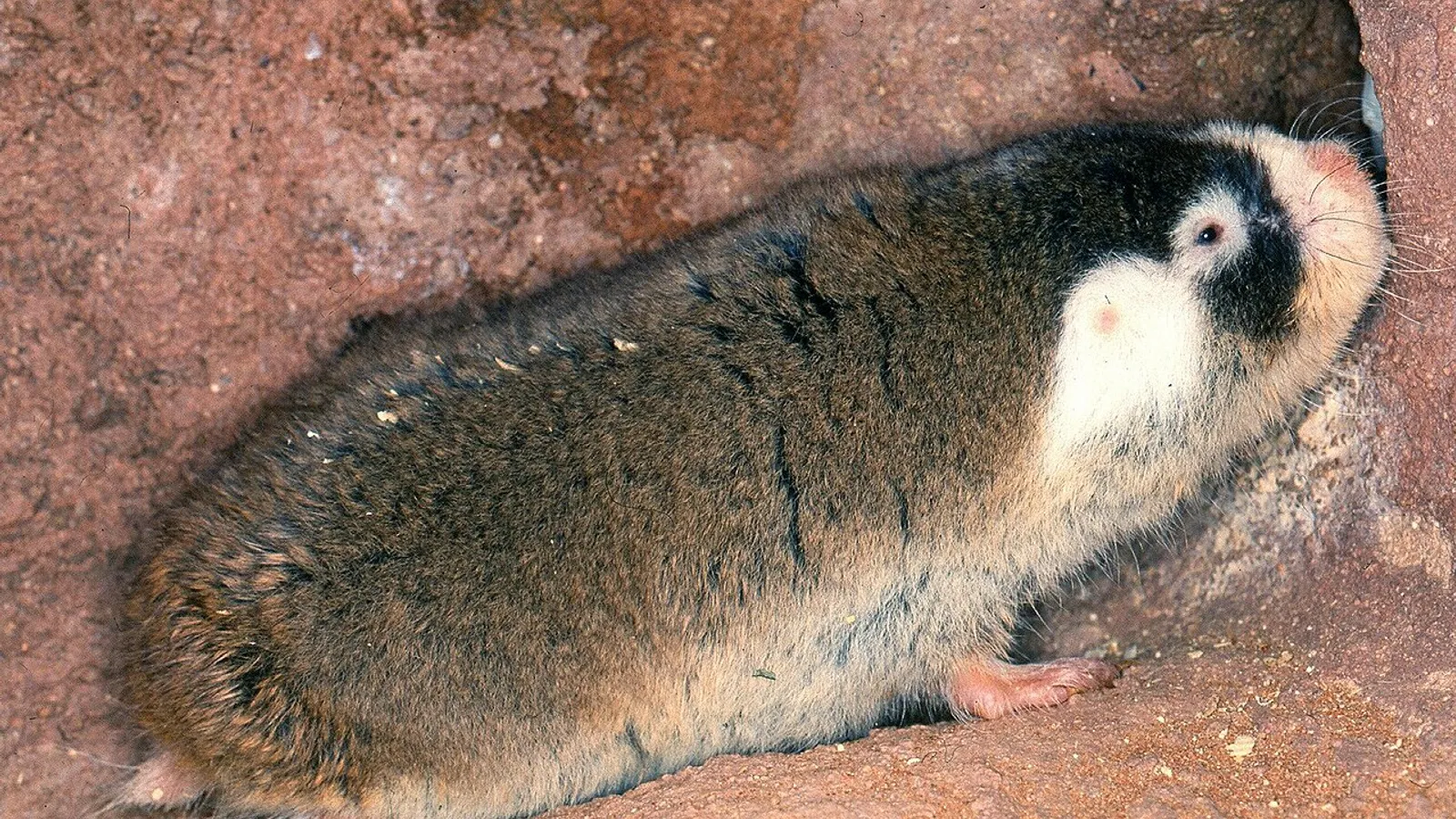
It has a striking black and white facial mask, unusual in a blind animal.
- 02
It lives strictly alone: contact between adults is aggressive, except for mating.
- 03
It digs in the Cape region, where geophyte bulbs are extremely abundant.
— What sets it apart
Males and females court one another by drumming, and they do it in different rhythms. Each sex beats its hind feet against the floor of the tunnel in sequences that travel through the soil for tens of metres: the male with one cadence, the female with another, and mating follows when the two drums synchronise. It is the only way to find one another for blind, hostile animals each living in its own labyrinth, and one of the few documented cases of seismic courtship in mammals.
