
Cape dune mole-rat
Bathyergus suillus
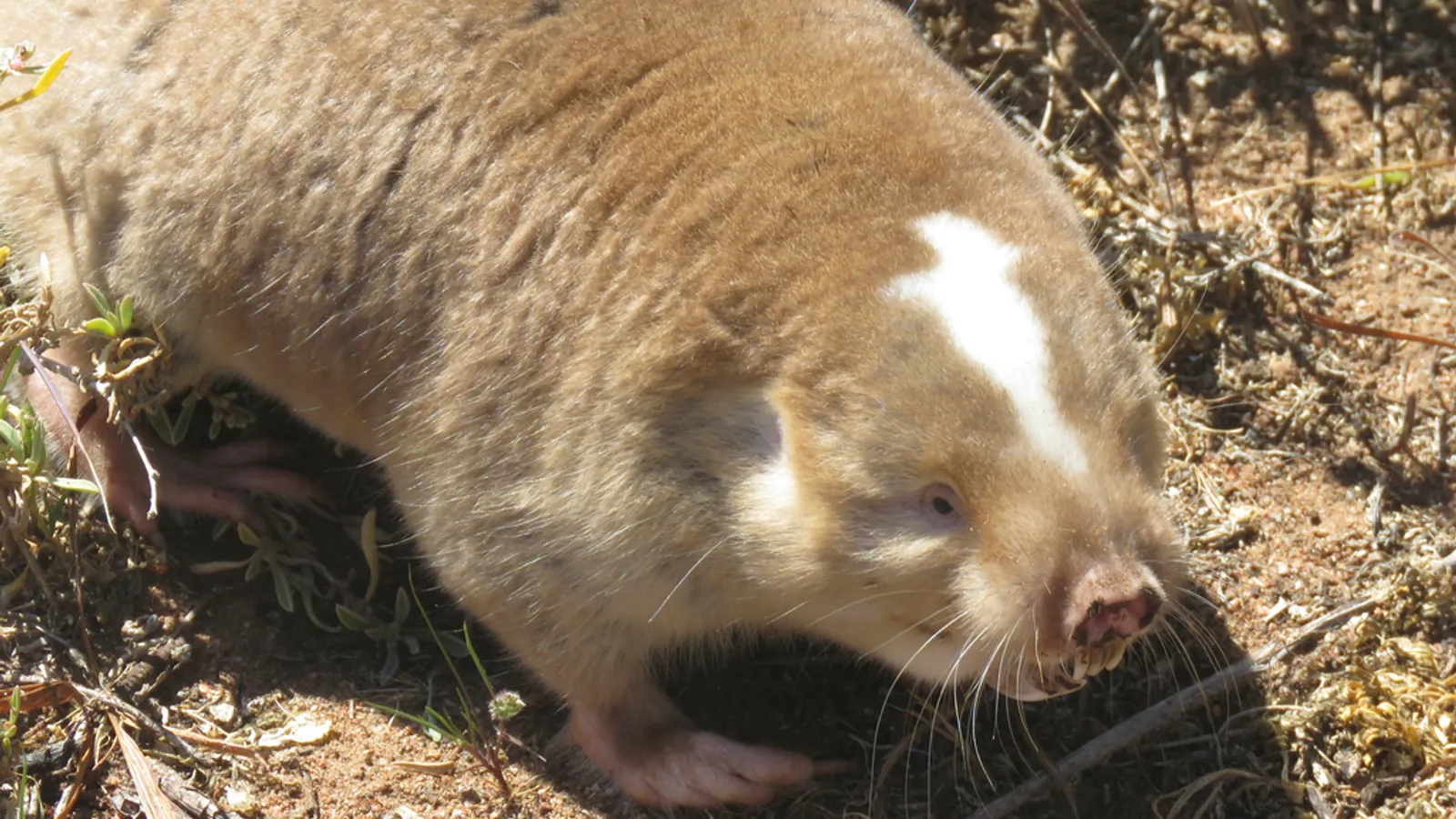
— Where the name comes from
Bathyergus is “that works deep”, from bathýs and érgon. Suillus means “piggish”, from sus, the pig: it alludes to the broad bare snout and perhaps to the call. It is the largest burrowing rodent in the world, and the only one in its family that digs with its claws instead of its teeth — which in the sand of coastal dunes works better.
— Facts
- Group
- Mammals · Mammalia
- Order
- Rodents
- Habitat
- Coastal sands, consolidated dunes, sandy grassland
- Range
- South Africa, Western Cape province
- Size
- 25–33 cm, tail 4–7 cm, 0.6–1.8 kg
- Diet
- Bulbs, roots, tubers, stems pulled underground
- Lifespan
- 8 years
— Characteristics
- 01
It has enormous front claws, adapted to loose sand.
- 02
A single animal can shift half a tonne of sand in a month.
- 03
It is solitary and aggressive towards its own kind.
— What sets it apart
Its tunnels are the reason certain stretches of South African dune stay covered in flowers. By turning over the sand it brings buried seed to the surface and creates micro-relief where water lingers: the spectacular blooms of the Cape region, which draw tourists from all over the world, are partly the by-product of the labour of an animal none of those tourists will ever see.
