
Indian crested porcupine
Hystrix indica
— Where the name comes from
Hystrix is the Greek name of the porcupine, usually read as a compound of hŷs, the pig, and thríx, hair: “the pig with hairs”, that is the animal whose hair has hardened. From it comes the Italian istrice too. Indica names the subcontinent, though the species reaches the eastern Mediterranean and the Caucasus.
— Facts
- Group
- Mammals · Mammalia
- Order
- Rodents
- Habitat
- Rocky ground, arid scrub, cropland, stony desert
- Range
- From the Near East and the Caucasus to India and Central Asia
- Size
- 70–90 cm, tail 8–17 cm, 11–18 kg
- Diet
- Roots, tubers, bulbs, bark, fallen fruit
- Lifespan
- 20 years in captivity
— Characteristics
- 01
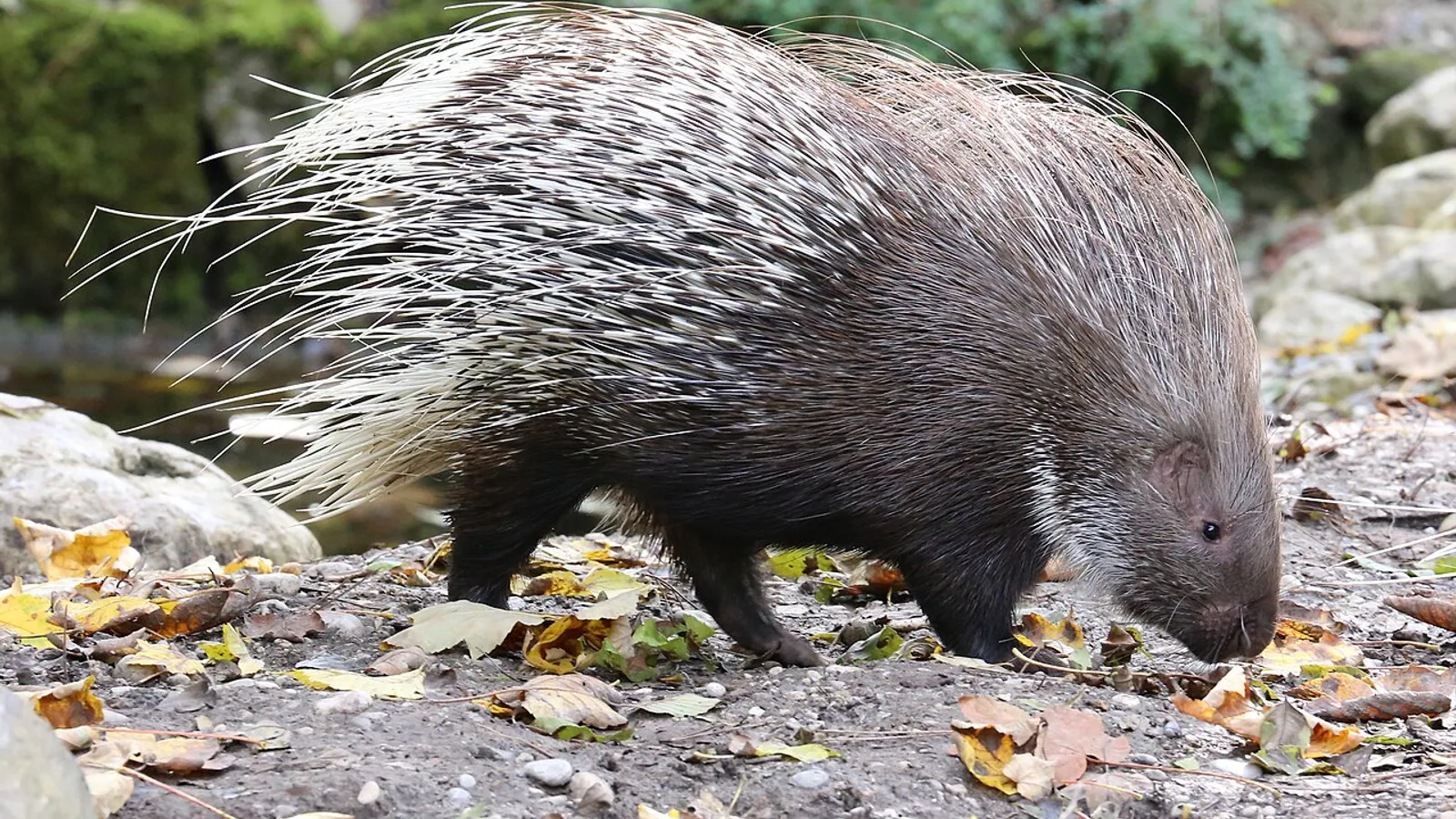
The longest quills pass thirty centimetres and detach on contact.
- 02
It rattles the hollow quills of its tail to produce a warning clatter.
- 03
It lives in stable pairs that share the same burrow for years.
— What sets it apart
It does not throw its quills, whatever twenty-four centuries of stories may say: Pliny wrote it, Aristotle implied it, and hunters across half the world have repeated it. What it does is reverse sharply into its attacker, and since the quills detach at the slightest contact and stay embedded, whoever finds them in a leopard’s face may easily believe they were hurled. The wounds that follow become infected and can kill a big cat: the porcupine is among the most dangerous prey on the Asian savannah.
