
Northeast African mole-rat
Tachyoryctes splendens
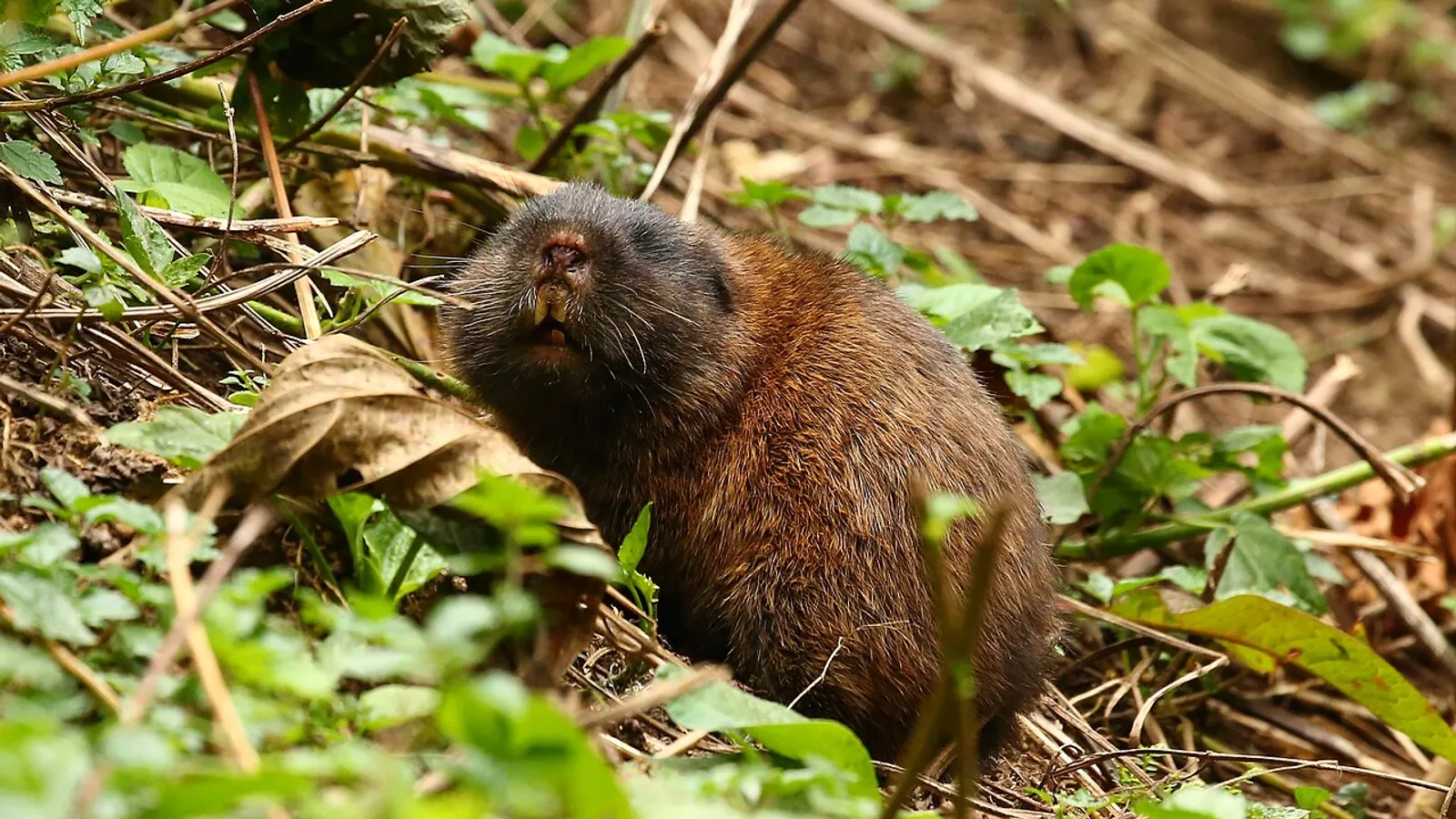
— Where the name comes from
Tachyoryctes is “swift digger”, from tachýs and orýktēs, and it is no naturalist’s exaggeration: it opens tunnels at a speed that makes it impossible to follow by digging. Splendens, “shining”, refers to the glossy silky fur, surprisingly beautiful for an animal that lives underground and that nobody sees.
— Facts
- Group
- Mammals · Mammalia
- Order
- Rodents
- Habitat
- Highland grassland, deep volcanic soils, cropland
- Range
- East Africa: Ethiopia, Kenya, Uganda, Tanzania
- Size
- 16–21 cm, tail 4–6 cm, 160–280 g
- Diet
- Roots, tubers, bulbs, grasses pulled down from below
- Lifespan
- 4 years
— Characteristics
- 01
It digs with its incisors and pushes the earth out with its head and forelimbs.
- 02
It is solitary and territorial: two adults in the same tunnel fight.
- 03
It leaves rows of earth mounds on the surface, aligned along the tunnel.
— What sets it apart
It is the animal that turns over the East African Highlands. On a hectare of Ethiopian pasture hundreds of its mounds can be counted, and the volume of earth this species brings to the surface every year is comparable to a light ploughing: it mixes the layers, buries organic matter and changes the movement of water in the soil. Agronomists treat it as a pest, soil scientists as a geological agent, and both are right.
