
Northern birch mouse
Sicista betulina
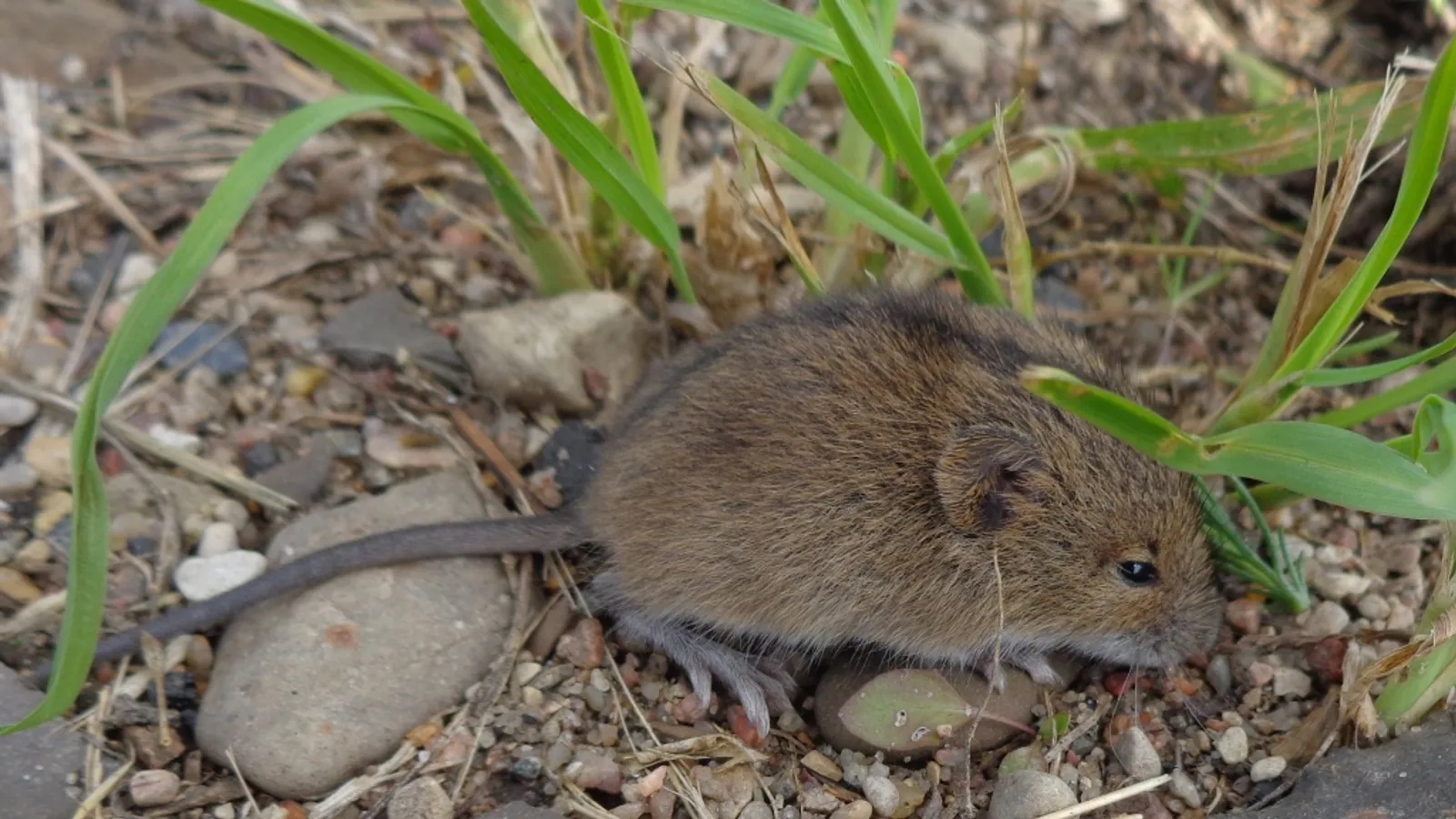
— Where the name comes from
Sicista comes from a Tatar word for small rodents, gathered by Russian naturalists. Betulina is “of the birches”, from the Latin betula, itself a loan from Gaulish: the word the Celts used for the tree reached Pliny’s Latin and from there all the Romance languages and scientific nomenclature.
— Facts
- Group
- Mammals · Mammalia
- Order
- Rodents
- Habitat
- Damp birch woodland, peat bogs, shrubby meadows
- Range
- From central and northern Europe to Siberia and Lake Baikal
- Size
- 5–8 cm of body, tail 8–11 cm, 5–13 g
- Diet
- Insects, seeds, berries, shoots
- Lifespan
- 3 years
— Characteristics
- 01
It has a sharp black line down the whole back, from neck to tail.
- 02
It hibernates eight months a year, the longest of any European mammal.
- 03
The semi-prehensile tail helps it climb stems.
— What sets it apart
It sleeps longer than any other mammal in Europe: in Scandinavian populations hibernation begins in August and ends in May, leaving barely three months to eat, mate, raise a litter and put the fat back on. The whole life cycle is compressed into a window that elsewhere would barely suffice for one brood, and that makes it one of the European animals most vulnerable to warm winters, which wake it when there is still nothing outside to eat.
